Hospice Care Options in the Coachella Valley
The word "hospice" tends to land in a family the way a closed door does — final, frightening, the end of trying. I have sat with enough Coachella Valley families through this season to know that the fear usually comes from not understanding what hospice actually is. So let me start by saying the thing most people learn far too late: hospice is not giving up. It is changing what you are fighting for. Instead of fighting the illness, you turn the whole team's attention to comfort, dignity, and time well spent — and that turn, made early enough, often gives a family the very thing they were most afraid of losing.
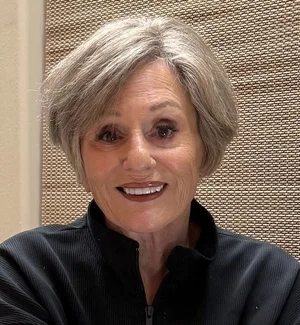
I am Margot, a portrait photographer in Palm Desert. This is not a medical page, and I am not a clinician. But my work has carried me into a great many living rooms during this exact chapter, and I have watched families navigate hospice well and watched others struggle with it for lack of plain information. This guide is my attempt to give you the plain information — what hospice is, how it is paid for, what it provides, how to choose a provider here in the valley, and the questions worth asking — so that you can spend your energy on your person instead of on the paperwork.
What hospice actually is
Hospice is a model of care for people who are nearing the end of life, usually understood to be the last six months or so. It is not a place, though there are inpatient hospice facilities. For the great majority of families, hospice is a service that comes to you — to the home, to the assisted living apartment, to the skilled nursing room — bringing a coordinated team focused entirely on comfort rather than cure.
Here is the distinction that matters most: when someone enters hospice, the goal of care shifts. Treatments meant to cure the underlying disease (more chemotherapy, more aggressive interventions, the next surgery) are generally set aside, while everything that eases suffering — pain medication, oxygen, anti-nausea care, help with breathing and sleeping and resting comfortably — is dialed all the way up. The illness is no longer the enemy to be beaten. Comfort and presence become the whole point.
A few things people are often surprised to learn:
- Hospice is a covered benefit, not an out-of-pocket luxury (more on the money below).
- It includes the medications, equipment, and supplies related to the terminal illness — the hospital bed, the wheelchair, the oxygen concentrator.
- It does not mean a nurse lives in your home. Visits are scheduled, with a team on call around the clock for emergencies.
- A person can leave hospice and return to curative treatment if they choose, or if their condition improves. People do graduate from hospice.
- Choosing it earlier almost always serves the family better than choosing it in the final days.
Hospice vs. palliative care — they are not the same thing
These two get tangled constantly, and the confusion costs families comfort they could have had sooner.
Palliative care is comfort-focused care that can begin at any stage of a serious illness, even alongside aggressive curative treatment. You can be doing chemo, planning more surgery, fully intending to beat the thing — and still have a palliative team managing your pain, nausea, and stress. There is no six-month clock and no requirement to stop other treatment. Eisenhower Health in Rancho Mirage and the valley's other hospital systems offer palliative consultations, and it is entirely reasonable to ask for one early.
Hospice is a specific kind of palliative care for the final months, after curative treatment has been set aside. Think of palliative care as the larger umbrella and hospice as the part of it reserved for the end of life.
If your loved one is seriously ill but not yet at the hospice stage, ask their physician about a palliative care referral now. Families routinely tell me afterward that they wish they had asked months earlier.
When to consider hospice
The formal threshold is a physician's judgment that, if the illness runs its expected course, the person likely has six months or less to live. But prognosis is an estimate, not a sentence — many people live longer, and the benefit simply renews as long as they remain eligible. You are not signing up to die on schedule.
Practical signs that it may be time to have the conversation:
- Repeated hospitalizations or ER trips in Rancho Mirage, Palm Springs, or Indio for the same condition
- A clear decline despite treatment — weight loss, increasing weakness, more time in bed, less interest in food
- Treatments that now cause more suffering than benefit
- The person saying, in their own words, that they are tired and ready to stop fighting the disease
- A doctor answering "I would not be surprised if this person died within a year" honestly with no
You do not need to wait for a physician to raise it. You can ask. Say plainly: "Is it time to talk about hospice?" Most doctors are relieved to have the door opened, because many hesitate to bring it up first.
How hospice is paid for
This is the question that quietly worries people most, and the answer is usually reassuring.
Medicare
Most hospice patients in the Coachella Valley are covered by the Medicare Hospice Benefit (Part A). For eligible patients it covers the hospice team's visits, medications related to the terminal diagnosis, medical equipment and supplies, and bereavement support for the family — generally with little to no out-of-pocket cost. There may be a small copay (a few dollars) for prescription drugs and a modest charge for respite stays, but the day-to-day care is covered. Given how many retirees and snowbirds live here, this covers the majority of valley families.
Medi-Cal and Medicaid
California's Medi-Cal program also covers hospice for those who qualify, with benefits very similar to Medicare's. If your loved one is dual-eligible (both Medicare and Medi-Cal), coverage is robust.
Veterans
The valley is home to a large veteran population, and this matters: the VA covers hospice care as part of its medical benefits, and veterans can often receive it through community hospice providers coordinated with the VA. If your loved one served, ask specifically about veteran-focused programs — some local hospices participate in the We Honor Veterans program and provide recognition ceremonies and care attuned to military experience, including the particular needs of combat veterans at the end of life.
Private insurance
Most private and employer plans include a hospice benefit, and Medicare Advantage plans must cover at least what Original Medicare does. Call the plan and confirm which local providers are in network before you choose.
The honest summary: for the great majority of families here, cost is not the barrier to hospice. The barrier is usually waiting too long to start.
What the hospice team provides
One of the most comforting things about hospice is that you are not handed a single nurse and left alone. You receive an interdisciplinary team, each member visiting on their own schedule:
- A hospice physician or medical director who oversees the plan of care, often in coordination with your own doctor.
- Registered nurses who manage symptoms, adjust medications, and teach the family what to watch for. A nurse case manager becomes your main point of contact.
- Hospice aides (CNAs) who help with bathing, grooming, and personal care — often the visits families come to treasure most.
- A social worker who helps with everything around the care: advance directives, family meetings, practical logistics, emotional support, and connecting you to community resources.
- A chaplain or spiritual counselor, available to people of any faith or no faith, to sit with the larger questions this season raises.
- Trained volunteers who can sit with your loved one so you can rest, run errands, or simply breathe.
- Bereavement support for the family, which continues for roughly 13 months after the death — grief counseling, support groups, and check-ins. This is one of the most underused gifts hospice offers.
And crucially, a 24/7 on-call line. At two in the morning, when breathing changes or pain spikes and panic sets in, you call, and a nurse answers. For families caring for someone at home, that single phone number is what makes it possible.
The four levels of hospice care
Hospice is not one-size-fits-all. Medicare defines four levels, and a good provider moves between them as needs change:
- Routine home care — the most common. The team visits on a schedule wherever the person lives (private home, assisted living, or skilled nursing facility).
- Continuous home care — during a short crisis of severe symptoms, more intensive nursing care at home to avoid a hospital trip.
- General inpatient care — for symptoms that cannot be managed at home, care moves temporarily to a hospital or inpatient hospice unit until things stabilize.
- Respite care — a short stay (up to five days) in a facility so the family caregiver can rest. I will say more about this, because exhaustion is real and respite is underused.
Where hospice happens in the valley
Because hospice follows the person rather than the address, you have real choices about where these final months unfold:
- At home. Most families choose this — a familiar living room in Palm Desert, La Quinta, or Indio, with the team coming to them. It allows pets, grandchildren, favorite chairs, and the comfort of one's own bed.
- In assisted living or memory care. If your loved one already lives in a community in Rancho Mirage or Palm Desert, hospice layers on top of that care; the two teams coordinate.
- In a skilled nursing facility. Same arrangement — hospice supplements the nursing home's staff.
- In an inpatient hospice setting or hospital, for the general inpatient level when symptoms require it.
For snowbird families especially, "where" is a heavy question. I will come back to it.
How to choose a hospice provider in the Coachella Valley
There are a number of hospice agencies serving the valley, from Palm Springs and Cathedral City out through Palm Desert, Rancho Mirage, Indian Wells, La Quinta, Indio, and Coachella. Several national companies operate here alongside smaller and nonprofit agencies, and the hospital systems — Eisenhower Health in Rancho Mirage, Desert Regional Medical Center in Palm Springs, and JFK Memorial Hospital in Indio — can all provide referrals. (Providers, ownership, and contact details change, so please confirm current specifics directly rather than relying on any list.)
Here is the thing worth knowing: you usually get to choose. A hospital discharge planner may hand you one name, but you are not obligated to take it. You can interview more than one agency, and you should.
What to weigh:
- Nonprofit vs. for-profit. Both can be excellent, but it is a fair question to ask, and nonprofits sometimes offer broader community and charitable services. Ask either kind how they are structured.
- Medicare ratings and family reviews. Medicare's Care Compare website publishes hospice quality data and family-survey results (CAHPS). It is worth a look.
- How quickly they can start. When a family is ready, a day matters. Ask how fast they can complete the admission.
- After-hours reality. Ask specifically: who answers the 2 a.m. call, and how fast can a nurse physically get here? In our spread-out valley, response time differs between, say, central Palm Desert and outlying Coachella.
- Veteran and faith-specific programs, if those matter to your family.
- Continuity. Will the same nurse and aide come, or a rotating cast? Familiar faces matter enormously at the end of life.
Questions to ask a hospice agency
When you call, do not be shy. Good agencies welcome these:
- How long has the agency served the Coachella Valley, and are you Medicare-certified?
- Who will be on my loved one's team, and how often will each member visit?
- What is your average response time for an after-hours emergency in our area?
- How do you handle pain and symptom crises — can you provide continuous care at home to avoid the hospital?
- What inpatient facility do you use if symptoms cannot be managed at home?
- What bereavement support do you offer the family, and for how long?
- Do you have programs for veterans?
- Can we meet the team before we decide?
A note for snowbird families
Our valley fills each winter with people who live here from November through April and elsewhere the rest of the year, and serious illness does not respect that calendar. Hospice raises a specific, tender logistical question for these families: stay or go?
Hospice benefits are generally location-based, organized around where the person lives. If your mother is on hospice in Indian Wells and the family wants to bring her home to be near grandchildren in another state, that is usually possible — but it means transferring to a new hospice agency in the destination, coordinating the move, and accepting that travel itself can be hard on someone who is very ill. These decisions are best made early, with the hospice social worker's help, before a crisis forces a rushed answer. If summer is approaching and the support network that fills your winter is about to scatter, name that out loud to your team and plan for it. The quiet desert months can be especially isolating for a caregiver, and the team can help arrange more volunteer and respite support to compensate.
Respite care and caring for the caregiver
If you are the family member doing the daily caregiving, I want to speak to you directly for a moment. This work is a marathon, often run on no sleep and a great deal of love, and you cannot do it indefinitely without rest. Medicare's hospice benefit includes respite care — a short stay (up to five days) for your loved one in a contracted facility so that you can sleep, recover, or simply leave the house without worry. Families routinely feel guilty using it. Please don't. A rested caregiver is a better caregiver, and using respite is part of how you last the whole way through.
Lean on the volunteers, too. Let the chaplain or social worker carry some of the emotional weight. I have written more about protecting yourself through this season in my guide to self-care for family caregivers, and if you are mourning a loss that has not yet happened, my anticipatory grief resource hub may be a comfort.
Common questions
Does choosing hospice mean we are giving up hope?No. It means redirecting hope — toward comfort, toward good days, toward time with the people who matter. Many families tell me the hospice months were more peaceful and connected than the frantic treatment months that came before.
Can my loved one keep their own doctor?Often yes. The hospice medical team typically coordinates with your existing physician rather than replacing them. Ask each agency how they handle this.
What if we choose hospice and then change our minds?You can revoke hospice at any time and return to curative treatment, then re-elect hospice later if you wish. It is not a one-way door.
Will they over-medicate my loved one?A reasonable fear, honestly held. Good hospice care aims for comfort and presence — managing pain while keeping the person as alert and themselves as possible. Talk openly with the nurse about your wishes; the plan can be adjusted.
How long can someone stay on hospice?As long as they remain eligible. The benefit is structured in periods that renew with physician recertification. People who stabilize can stay for many months, and some improve enough to leave hospice entirely.
Is hospice only for cancer?No. It serves people with advanced heart, lung, kidney, and liver disease, dementia and Alzheimer's, ALS, and general decline of old age, among others.
Mistakes families wish they had avoided
- Waiting too long. This is the one I hear most. Families who enroll in the final days often say, "I wish we'd had these people for the last three months, not the last three days." Earlier is gentler.
- Not asking about hospice themselves. Doctors sometimes wait to be asked. Ask.
- Choosing the first name handed to you without knowing you could interview others.
- Skipping the bereavement support the hospice offers the family afterward — it is included and it helps.
- Refusing respite until burnout becomes its own crisis.
- Putting off the things that aren't medical — the words, the stories, the photographs — assuming there will be a calmer time later. In this season, later is not guaranteed.
Where my work fits in this — gently
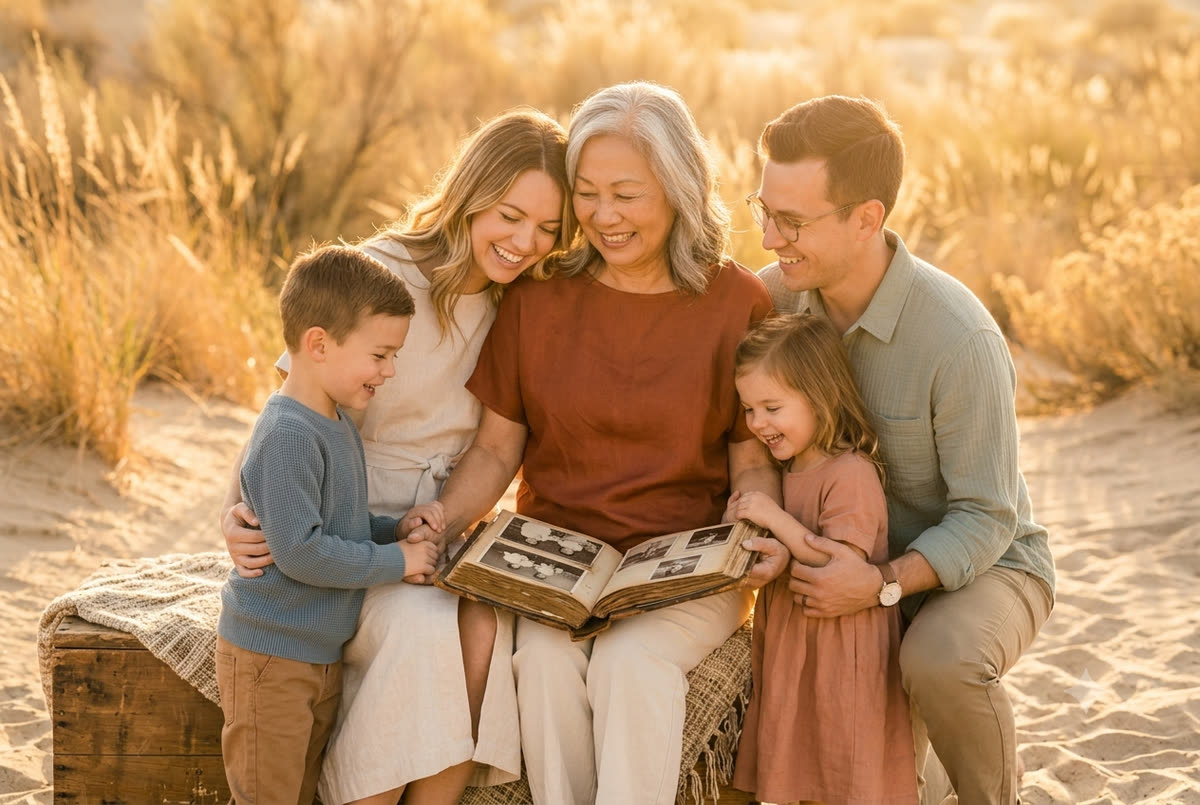
I will be honest about why a portrait photographer wrote a hospice guide, because it is the heart of why I do this. Over the years I have come to believe that one of the kindest, most lasting things a family can do during these months is to make portraits while there is still time — not the hospital version of a person, but the real one: the laugh, the hands, the way they hold a grandchild, the face everyone wants to remember.
Hospice tends to open up a little room for this. Pain is better managed, the frantic treatment schedule has quieted, and there are often good hours in the day. Almost all of my work happens right in the home — the familiar chair by the window, the soft natural light coming through it, the surroundings a person knows by heart. When someone feels up to a little fresh air, we might step out to a shaded patio or a nearby garden or park for a few minutes in the gentle evening light, but only ever as far as the day allows. There is nothing to perform. We are simply holding onto what is true and dear. If that speaks to you, I have written about what these visits are like in my guides to in-home end-of-life photo sessions and to how photography can help with grief.
And please hear this: you do not need to hire anyone. Your phone is enough to capture a great deal. Photograph the hands. Record their voice telling a favorite story. Get the ordinary moments, not only the posed ones. Those imperfect, real images become the things a family treasures most.
A gentle word to close
Hospice is not the moment hope ends. It is the moment a whole team of skilled, compassionate people steps in beside you so that your loved one can be comfortable and you can stop carrying the weight alone. If you are standing at this threshold for someone you love here in the desert, start by simply asking their doctor the question, or calling an agency to talk — you can interview them without committing to anything.
And if a day comes when holding onto these faces in photographs would mean something to your family, I would be honored to help — quietly, in your own home, on a good afternoon. You can reach out to me here whenever the timing feels right, even if it is only to ask a question.
Whatever you are carrying today, I am thinking of you and your family.