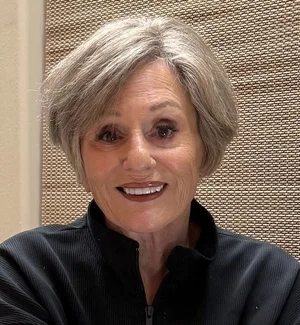
A Life Well Lived: Tribute Portraits
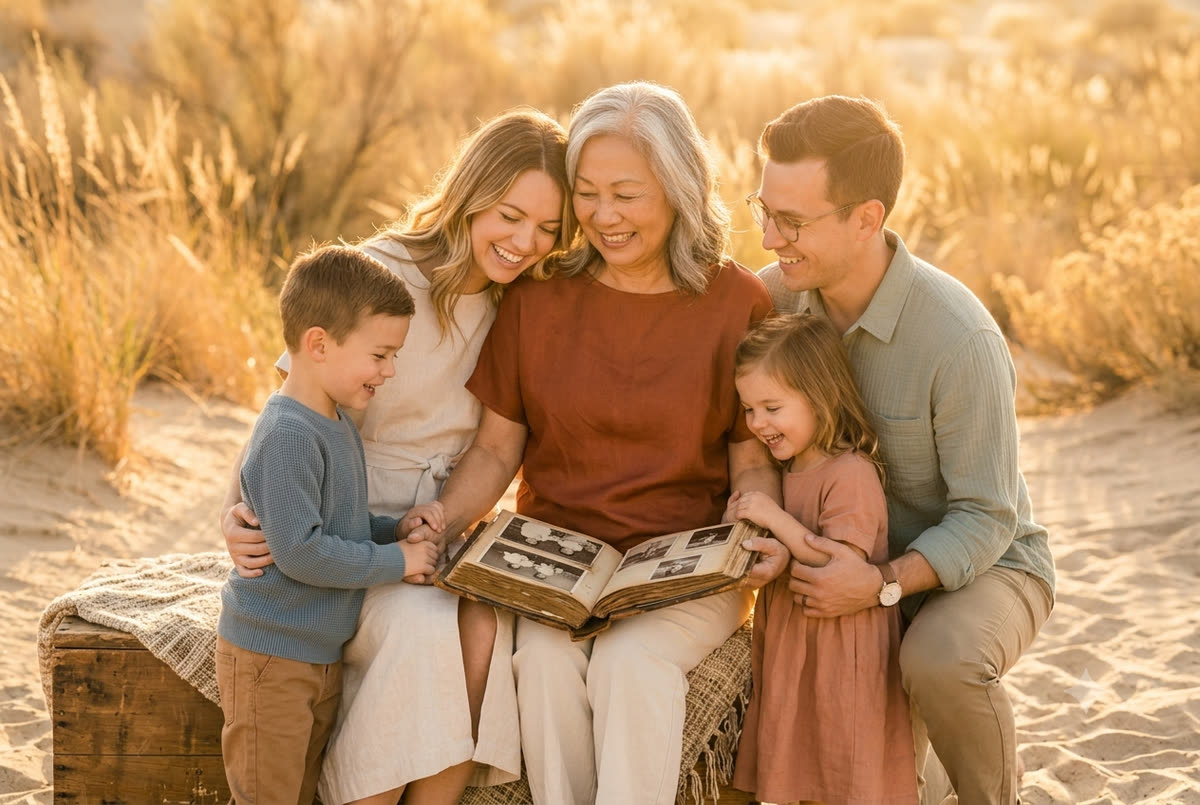
Most of us carry a thousand pictures of the people we love and not one we'd actually frame. They're blurry, half-cropped, caught mid-sentence at a party — proof someone was there, but not a likeness that holds who they were. Families tell me this all the time about a parent or grandparent: plenty of photos, none that looks like him. That gap — between the pictures we accumulate and the image that truly holds a person — is what a tribute portrait is meant to close.
A tribute portrait is a photograph made to honor a life: usually an elder, sometimes a parent or grandparent, occasionally someone facing illness, and now and then someone we've already lost, recreated with care from the images we have. It is not a quick headshot and it is not a snapshot at a party. It is a deliberate, unhurried sitting whose whole purpose is to say this is who they were, and this is what they meant to us. If you've found this page, you're probably weighing whether to do this for someone you love. I want to walk you through what it really involves, so the decision feels clear rather than overwhelming.
What a tribute portrait actually is
People use a few different phrases for this, and they overlap: tribute photography, legacy portraits, heritage portraits, honor portraits, sometimes "celebration of life" photography when it's tied to a milestone or a memorial. Underneath the labels, they all answer the same need — to create one true image of a person at a meaningful point in their life, made with the intention that it will outlive the moment.
I draw a gentle distinction between two situations, because they call for slightly different care:
- A living tribute — made while the person is here, often to mark a big birthday, an anniversary, a retirement, or simply a season of life where the family wants something lasting. These are the ones I most encourage people not to put off.
- A memorial or commemorative tribute — made after a loss, often for a service or a memorial wall, working from existing photographs to produce a single dignified portrait. These are tender, and I'll talk about them below.
The thread connecting both is that a tribute portrait is about character more than appearance. We are not chasing a flawless, retouched face. We are after the set of the jaw, the hands that built or held or worked, the particular way someone's eyes go when they're amused. That's the part that makes a family stop in the hallway six months later.
Why people in the Coachella Valley do this now
The desert has a particular rhythm to it, and that rhythm shapes when families think about portraits like these. So many of our households here are built around an elder — a parent or grandparent the whole family orbits when they visit. The idea usually surfaces during a gathering, when three or four generations are finally in the same place at once: while everyone's here, let's finally do this.
I'd also say, plainly, that the desert draws retirees, and a tribute portrait is most precious when it's made a little earlier than feels urgent. The most common thing I hear is, "I wish we'd done this two years ago." Almost no one says they did it too soon. If the thought has crossed your mind, that's usually the signal.
There's also something fitting about making these images here specifically. If your father spent thirty winters playing golf in Indian Wells, or your mother has held court at the same table at her club in Rancho Mirage for a decade, this landscape is part of the story. We don't have to pretend the portrait was made in a studio in another city. The desert can be in it, honestly.
Where we might photograph
Almost all of my tribute sittings happen in one of two places: in the person's own home, or in a calm, familiar local spot — a garden, a club lawn, a courtyard close to where they live. Those are where elders are most at ease and most themselves, and ease is everything in this work. Here are the approaches I use most, in the order I reach for them, and how to think about choosing.
In their home
This is where I do most of my tribute work, and for good reason. Home is where elders are most themselves — and where the things that tell their story already live. The reading chair, the bookshelves, the kitchen where they've cooked the same Sunday meal for forty years, the window with the good afternoon light. I build the portrait around soft, natural window light wherever I can, adding only a gentle fill when a room needs it. Photographing at home means we don't ask a frail or tired person to travel, and the surroundings are true rather than borrowed. We can make a beautiful, formal portrait in a familiar living room without it ever feeling like a production.
A nearby garden, lawn, or courtyard
If the person is mobile and enjoys being outside, a familiar local spot can be lovely — and it keeps the effort low. For these sittings I schedule golden hour, the soft window just after sunrise or in the last warm light before sunset, when the desert glows, shadows go gentle, and skin looks kind. That timing matters more with elders than with anyone else.
Places I return to for portraits with elders, chosen for shade, easy footing, and minimal walking:
- The shaded garden paths and lawns at a resort or club the family already belongs to — familiar, dignified, and a few steps from somewhere to sit.
- A public garden like Sunnylands in Rancho Mirage, or a quiet residential garden, where there's beauty without a hike.
- A favorite patio or courtyard at home or in their community, late in the day.
I keep these sittings short and seated whenever needed. Comfort comes first; we are never marching anyone across gravel for a photograph.
In a studio-style setting
Sometimes a clean, timeless studio portrait is exactly right — a simple background, controlled light, the focus entirely on the face and hands. This is often the best choice for the most formal version of a tribute, the one meant to be printed large and framed. We can also combine: a formal seated portrait plus a few warmer, environmental frames in the same session.
Preparing for the sitting
The preparation for a tribute portrait is mostly about story, not logistics. Before the day, I like to have a real conversation — with the person if they're able, and with the family. A few things I gently ask:
- What do you want this portrait to say? "Strong and dignified" leads to a very different image than "warm and laughing." Both are wonderful; I just want to make the right one.
- What should they wear? Solid, classic colors photograph best and date least. I steer people away from busy patterns, brand-new logos, and anything that pulls the eye off the face. A favorite sweater they actually wear beats a stiff outfit bought for the occasion.
- Are there objects that belong in the frame? A wedding ring worn for sixty years, a violin, a service medal, a worn Bible, a dog, a hat. These props are not clutter — they're vocabulary. Often the most moving tribute portraits are the ones that include the hands holding something that mattered.
- What time of day is the person at their best? This matters enormously with elders. Many people are brightest mid-morning and fade by late afternoon. I would rather build the whole session around someone's good hour than fight their tiredness for the sake of prettier light.
Practical comfort notes for sitting with elders
- Plan for a short session — often 45 minutes to an hour of actual photographing, with breaks. I never rush, but I also don't exhaust anyone.
- Keep water, a chair, and any needed medication close.
- If there's hearing loss, a calm room and a familiar family member nearby makes everything easier.
- Hair and a light touch of grooming on the day, but please don't over-style. We want them recognizable to the people who love them.
A great deal of my job in these sessions is simply patience and presence. I'm not firing off a hundred frames hoping one works. I'm watching, talking, waiting for the person to settle and forget the camera a little — and then we find the one honest expression that the family will recognize instantly.
Tribute portraits when someone is ill
Some families come to me during a serious illness, wanting a portrait while there's still time. I take this work very seriously and very gently. We plan around energy and treatment days, keep the session brief, and often photograph at home or at bedside. I'll make formal frames and quiet, tender ones — hands clasped between a parent and child, a grandchild on the bed, the small intimacies that turn out to matter most. There is no version of "looking sick" we're documenting; we're photographing the person, who is still entirely themselves.
If this is your situation, please reach out sooner rather than later, even just to talk. Scheduling can be flexible and quick when it needs to be.
Memorial portraits from existing photos
When someone has already passed, a tribute can still be made — by working carefully from the photographs the family already has. People often need this for a service, a memorial display, or simply a proper framed portrait to replace a low-resolution phone snapshot. Depending on what exists, I can:
- Restore and gently retouch an older print — repairing cracks, fading, and damage.
- Improve and enlarge a beloved but small or blurry image as far as the source honestly allows.
- Help the family choose which image truly captures the person, which is often the hardest and most important part.
I'm honest about limits: I can't invent detail that the original never held. But far more is possible than most people expect, and bringing a faded photograph back to dignity is some of the most meaningful work I do.
After the session: making it last
A tribute portrait that lives in a phone or a hard drive isn't finished. The whole point is permanence, so I steer every family toward something physical and lasting:
- A large framed print for the wall — the one that stops people in the hall.
- Archival prints for each family member, so the image isn't held by only one person.
- A small album or folio when we've made a series rather than a single image — wonderful for a milestone birthday or anniversary.
Print on good paper, framed properly, kept out of direct desert sun, a real portrait will outlast all of us. That's the entire idea.
If you're thinking more broadly about preserving your family's story, you might also find it helpful to read about multi-generational family portraits for when several generations are in town, or about restoring and preserving old family photographs. And if this portrait is tied to a big milestone, my thoughts on milestone birthday and anniversary sessions may be useful as you plan.
A few honest mistakes to avoid
- Waiting for a "better time." The better time is almost always now. The regrets I hear are never about doing it early.
- Over-retouching. Smoothing away every line erases exactly what made the face theirs. I keep the character.
- Treating it like errands. Don't stack the sitting between a doctor's appointment and lunch. Give the person an unhurried, good-energy window.
- Forgetting the hands. So much of a life shows in the hands. Don't hide them in every frame.
- Stopping at the digital file. Print it. Frame it. Give copies to the family.
When you're ready
A tribute portrait is one of the few things you can give someone — and give your whole family — that genuinely grows more valuable with every passing year. It costs a single quiet afternoon now, and it returns a lifetime of being able to look someone in the eye long after.
If there's a parent, grandparent, or someone dear whose portrait you've been meaning to make, start by telling me about them — what they're like, what their good hours are, what would feel right. From there I can sketch out exactly how a sitting in their home, or somewhere familiar nearby, would go. Send me a note here and let's get it on the calendar while the thought is in front of you.