Anticipatory Grief Resource Hub

If you are reading this, you may be living inside one of the hardest spaces a person can occupy: loving someone who is still here, while also beginning to grieve the loss you can feel coming. Maybe it is a parent in hospice care in Rancho Mirage. Maybe it is a spouse facing a diagnosis you did not expect. Maybe it is your own health, and you are quietly thinking about the people you will leave behind. Whatever brought you here, I want you to know that what you are feeling has a name, that it is normal, and that you are not doing anything wrong by feeling it.
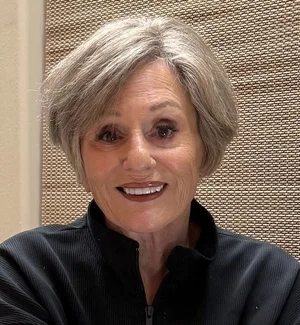
I am Margot, a portrait photographer here in Palm Desert, and over many years of sitting with families in the most tender seasons of their lives, I have learned that grief does not always wait for a funeral. Sometimes it arrives early, while there is still time, still breath, still a hand to hold. This page is meant to be a calm, honest place to understand that experience — and to find both the practical and the emotional resources that exist for it right here in the Coachella Valley.
What is anticipatory grief?
Anticipatory grief is the mourning we do before a loss actually happens. It is the sorrow that shows up when we know, or strongly sense, that someone we love is going to die — whether that is in weeks, months, or an uncertain stretch of time. Researchers and hospice professionals have used the term for decades, and most people who experience it are surprised to learn it is so common, because it can feel strange and even shameful to grieve someone who is still alive.
It is not the same as ordinary worry. It is a real grief process, with many of the same features as grief after a death:
- Deep sadness that comes in waves, often without warning
- Anxiety about the future and what life will look like "after"
- Anger — at the illness, at doctors, at God, sometimes at the person who is leaving
- Guilt, especially the guilt of feeling relief, exhaustion, or wanting it to be over
- Rehearsing the loss in your mind, imagining the phone call, the empty chair, the holidays
- Pulling away emotionally to protect yourself, or clinging more tightly than ever
- Physical symptoms: trouble sleeping, appetite changes, a tight chest, bone-deep fatigue
If you recognize yourself in that list, please take a breath. None of it means you love the person less. In many ways, anticipatory grief is love with nowhere safe to go yet.
Anticipatory grief is not a sign you are giving up
This is the misunderstanding I hear most often, and I want to address it gently and directly. Beginning to grieve does not mean you have stopped hoping, stopped fighting, or stopped showing up. Caregivers sometimes feel that allowing the grief in is a kind of betrayal — as if naming the fear out loud will make it come true.
It will not. Your mind is simply trying to prepare you, a little at a time, for something enormous. You can hold hope and grief in the same hand. You can plan the next chemo appointment and also let yourself cry in the car in the Eisenhower Health parking lot. Both are true. Both are allowed.
Who experiences it
Anticipatory grief is not only felt by the person who is ill. It moves through an entire family, often differently for each member:
- Spouses and partners, who are losing their person and their shared future at the same time
- Adult children, often juggling caregiving with their own families and jobs, sometimes flying back and forth across the country to the desert
- Young children and grandchildren, who may not have the words but absolutely feel the change in the home
- The patient themselves, who may be grieving the loss of independence, of plans, of watching grandchildren grow up
- Close friends and chosen family, whose grief is real even when the world does not give them much room to express it
Each of these people is on their own timeline. One family member may want to talk constantly; another may go quiet and busy themselves with logistics. Neither is wrong. A lot of family friction in this season comes from expecting everyone to grieve in the same way at the same speed.
The Coachella Valley adds its own layer
Our desert is a beautiful place to live, but it shapes this experience in specific ways, and I think it helps to name them.
Many families here are part of the snowbird community — people who winter in Palm Desert, Indian Wells, or La Quinta from November through April and live elsewhere the rest of the year. When a serious illness arrives, families are often scattered across time zones, and the question of where someone will spend their final season becomes very real. Do you stay near the cardiologist in Rancho Mirage, or go home to be near the grandchildren in Minnesota? There is rarely a clean answer.
Our seasons matter too. The valley empties out in the brutal heat of July and August, and the social support that fills a winter calendar can thin dramatically just when a caregiver needs it most. If you are facing a hard summer here, please be especially intentional about not isolating — the quiet months can make grief louder.
And the light here does something I have never seen anywhere else. The golden hour over the Santa Rosa Mountains, the long pink dusk across the Coachella Valley — it has a way of holding still moments open. I will come back to that, because it matters to how we remember.
Practical ways to cope
There is no formula, but there are things that genuinely help. These come from professionals and from the families I have walked alongside.
Let yourself feel it without judgment
Name the feeling when it comes. "This is anticipatory grief." Naming it robs it of some of its power to frighten you. You do not have to fix the feeling or talk yourself out of it. You only have to let it pass through.
Talk about it with someone safe
Anticipatory grief thrives in isolation. A grief counselor, a hospice social worker, a trusted friend, a pastor or rabbi, or a support group can all help carry the weight. You do not need to protect everyone around you by staying silent.
Say the things now
This is perhaps the most important thing I can offer you. One of the rare gifts of anticipatory grief is time — time that sudden loss does not give. If there are things to say — gratitude, forgiveness, "I love you," "you mattered," the stories you want to hear told one more time — say them while there is someone to hear them. Families almost never regret saying too much. They regret the words they swallowed.
Tend to the body
Grief lives in the body. Sleep when you can, drink water (especially in our heat), step outside in the cooler morning hours, eat something nourishing even when you have no appetite. Caregiving is a marathon, and you cannot pour from an empty cup.
Accept and ask for help
Let people bring meals. Let someone sit with your person so you can take a walk on the El Paseo loop or simply nap. Asking for help is not weakness — it is how you last.
Make memories on purpose
You do not have to wait for a "good" day. A shared cup of coffee on the patio, a drive up to Joshua Tree before the heat, reading aloud, looking through old photo albums together — these ordinary moments become the ones you treasure. Which brings me to something close to my heart.
How photographs help in this season
I want to be honest about why I do this work, because it is woven into everything on this page. As a Legacy photographer, I have come to believe that one of the kindest things a family can do during anticipatory grief is to make portraits while there is still time — not waiting, not "when things settle down," because in this season things often do not settle.
There is a particular comfort in photographs that I have watched families discover again and again:
- They give you something to do together that is gentle, warm, and not about illness for a little while.
- They capture the real person — the laugh, the hands, the way they hold a grandchild — not a hospital version of them.
- They become an anchor for memory, especially for young children and grandchildren who may not otherwise remember a great-grandparent's face or voice.
- They let the person who is leaving see themselves as cherished, which is its own quiet healing.
Most of these sessions happen right where the person is most at ease: in their own home, in a sunlit living room or beside a favorite window in Palm Desert, where soft natural light is forgiving and nobody has to go anywhere. If the person feels up to it, a nearby park, garden, or shaded backyard patio in the gentle wash of golden hour works beautifully too. The pace simply follows the person — never the other way around. There is nothing to perform. We are simply trying to hold onto what is true and dear. If this speaks to you, I have written more about what these sessions are like in my guide to legacy and end-of-life portrait sessions, and about the broader practice of preserving family stories before they are lost.
I should say plainly: you do not need to hire anyone to do this. Your phone can capture a great deal. Photograph the hands. Record a short video of their voice telling a favorite story. Get the everyday moments, not just the posed ones. Those imperfect, real images are gold.
Helping children through anticipatory grief
Children grieve, even very young ones, and they take their cues from us. A few things that help:
- Tell the truth in simple, honest words. Avoid phrases like "going to sleep" that can confuse or frighten. It is okay to use the words "dying" and "death" gently and age-appropriately.
- Let them ask questions and answer them honestly, even "I don't know."
- Keep routines where you can — school, meals, bedtime. Stability is comforting.
- Let them help in small ways: drawing a picture, picking flowers, sitting nearby. Inclusion is better than protection here.
- Make their own keepsakes — a handprint, a recorded story, a photograph with their grandparent. These become priceless.
Common questions
Is it normal to feel relief?Yes. Relief — at the thought of suffering ending, or of a long caregiving season ending — is one of the most common and most guilt-inducing feelings in anticipatory grief. It does not mean you want them gone. It means you are human and you are tired.
Will grieving now make the actual loss easier?Sometimes, somewhat. Many people find that having begun to process the loss in advance softens the initial shock. But anticipatory grief does not "use up" your grief or exempt you from mourning afterward. Both are real, and both deserve care.
What if we have unresolved conflict with the person?This season can surface old wounds. You are allowed to seek peace without forcing a perfect reconciliation. A counselor or chaplain can help you find words. Sometimes the work is internal — forgiving for your own sake — and that is valid too.
How long does anticipatory grief last?As long as the uncertain season lasts, which can be exhausting precisely because there is no clear endpoint. Be patient and gentle with yourself.
Mistakes to avoid
- Isolating yourself. Grief grows in the dark. Reach out, even when it is the last thing you feel like doing.
- Waiting for the "right time" to say or do the important things. The right time is now.
- Neglecting your own health until you become a second patient.
- Expecting your family to grieve identically. Make room for different styles and speeds.
- Putting off photographs and recordings. This is the one I plead with families about. You will never wish you had fewer pictures of someone you love.
Local and national resources
You do not have to navigate this alone, and the Coachella Valley has real support to offer. (Please confirm current details directly, as programs and contacts change.)
- Hospice and palliative care: Several hospice providers serve Palm Desert, Rancho Mirage, La Quinta, Indio, and the surrounding valley, and most include grief and bereavement support for families — often at no cost and continuing for months after a loss. Eisenhower Health in Rancho Mirage is a central resource for palliative care referrals.
- Grief support groups: Many local hospice organizations, faith communities, and counseling centers across the valley run grief and caregiver support groups. Ask your hospice social worker for a current list, including any specifically for anticipatory grief or caregivers.
- Faith communities: Churches, synagogues, and other congregations throughout Palm Desert and Palm Springs offer pastoral care and grief ministries regardless of membership.
- Counseling: Licensed therapists in the valley specialize in grief and end-of-life issues; many offer telehealth, which can help during the summer or when family is out of town.
- National lifelines: If you or someone you love is in crisis, call or text 988 (the Suicide and Crisis Lifeline) any time. For caregiver support, the Family Caregiver Alliance and CaringInfo (from the National Hospice and Palliative Care Organization) offer free, trustworthy guidance online.
A gentle word to close
If you take one thing from this page, let it be this: anticipatory grief is not a failure of hope or faith. It is the shape love takes when it knows it is going to be tested. You are allowed to feel all of it — the sorrow and the love and the exhaustion and even the relief — and you are allowed to make this season as full of presence and tenderness as you possibly can.
Say the words. Hold the hands. And if it would bring you comfort to hold onto these faces and these days in photographs, I would be deeply honored to help, gently and at whatever pace feels right for your family — usually right in your own living room, where everyone can just be themselves. Whenever you would like to talk it through, you can find me through my contact page.
Whatever you are carrying today, I am holding you in my thoughts.