Anticipatory Grief vs. Normal Grief

There is a sentence I have heard in a hundred different forms over the years, almost always said quietly, almost always followed by an apology for saying it at all: My mother is still alive — so why does it already feel like I'm at her funeral? People who feel this way often worry that something has gone wrong inside them. They think that grieving a person who is still holding their hand means they have somehow given up on them. What they are describing is anticipatory grief — and the very thing that confuses them, the way it feels so much like the grief they expect to feel later, is exactly what makes it so hard to name.
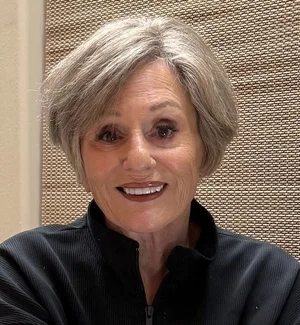
I am Margot, a portrait photographer here in Palm Desert, and though I am not a counselor, I have spent many years quietly present in the most tender seasons of families' lives. More than once, usually in a lowered voice, someone has asked me some version of this: What is the difference between grieving someone before they go and grieving them after? It is a more useful question than it first appears, because understanding the difference can take a great deal of the fear and self-judgment out of a season that is already heavy enough.
So let me try to lay it out plainly.
The short answer
Normal grief — what professionals often call conventional or post-loss grief — is the mourning that begins after someone has died. It is grief looking backward at a loss that has already happened.
Anticipatory grief is the mourning that begins before the loss, while the person is still living, usually after a terminal diagnosis or a steady decline. It is grief looking forward at a loss it can see coming.
Both are real grief. Both involve sorrow, longing, anger, and a thousand small adjustments of the heart. They share most of the same symptoms. But the direction they face — backward at what is gone, or forward at what is coming — changes the experience in ways that matter, and that is what this article is really about.
If you have only a moment, that is the whole of it. But the texture is where the comfort lives, so stay with me.
What they have in common
It helps to start with the overlap, because people are often surprised by how much the two forms of grief resemble each other. Whether you are grieving in advance or in the aftermath, you may feel:
- Waves of sadness that arrive without warning — in the car, in the grocery aisle, in the middle of a sentence
- Anger, sometimes sharp and unfocused: at the illness, at doctors, at God, at the unfairness of timing
- Anxiety about the future and what life will look like on the other side
- Guilt, including the particularly painful guilt of feeling relief or exhaustion
- Trouble sleeping, appetite changes, a heaviness in the body, a tightness in the chest
- A strange numbness, or the sense of moving through the days behind glass
These are the shared bones of grief. If you recognize them, you are not broken and you are not overreacting. You are mourning. The question is simply which kind — and often, the answer is both at once, in layers.
The differences that actually matter
1. Anticipatory grief is grief without permission
This is the difference I see weigh on people most. When someone dies, the world gives you a container for your grief. There is a funeral, a casserole on the porch, cards in the mailbox, an obituary, bereavement leave from work. People know to say "I'm so sorry." The grief is recognized.
Anticipatory grief has none of that scaffolding. Your person is still here, so to the outside world there is "nothing to grieve yet." You may feel you have no right to your own sorrow — that crying over someone who is sitting in the next room is somehow disloyal or premature. Researchers sometimes call this disenfranchised grief: grief that society does not fully acknowledge, so you end up carrying it in private.
I cannot say this strongly enough: the absence of permission does not make the grief less valid. It only makes it lonelier. Naming it for what it is — "I am grieving my father while he is still alive, and that is a normal thing to do" — gives back some of the permission the world withholds.
2. The two griefs face opposite directions
Normal grief is largely about the past — memories, the empty chair, the unfinished conversation, the absence that grows sharper at holidays. It is reconciliation with what was.
Anticipatory grief is haunted by the future. It rehearses the loss: you imagine the phone call, the last breath, the first morning waking up in a world that no longer contains them. You grieve not only the person but the future you were supposed to have with them — the trips you will not take, the wedding they will not attend, the grandchildren they will not watch grow up. This forward-facing quality is exhausting in a specific way, because the mind keeps drafting a goodbye it cannot yet deliver.
3. Anticipatory grief comes with a clock you cannot read
After a death, grief has no deadline, but it does have a starting point. You know when it began.
Anticipatory grief lives inside uncertainty. Will it be weeks? Months? Years? Will there be a hard winter and then a surprising, gentle spring? Hospice timelines shift. Diagnoses defy predictions. This not-knowing is its own particular torment — you brace and brace and brace, and the bracing itself wears you down. Some families describe the cruelty of a "false alarm," steeling themselves for a goodbye that does not come, then feeling guilty for the disappointment underneath their relief. None of that is a character flaw. It is what living beside an unreadable clock does to a person.
4. Anticipatory grief can be interrupted by joy — and that is allowed
Here is the difference that, I think, holds the most hope. When you grieve before a loss, the person is still here. You can still hear their voice, hold their hand, make them laugh, ask them the question you have always wondered about. Anticipatory grief and ordinary, ongoing love sit side by side in the same day.
This is disorienting at first — how can you be mourning someone you just shared a milkshake with? — but it is also the rare gift hidden in this hard season. Post-loss grief would give almost anything for one more afternoon. Anticipatory grief still has afternoons left. What you do with them matters enormously, and I will come back to that.
5. Caregiving is woven through anticipatory grief
Most people grieving after a death are no longer providing physical care. But anticipatory grief usually runs alongside active caregiving — medications, appointments at Eisenhower Health in Rancho Mirage, sleepless nights, the slow role-reversal of parenting your own parent. You are grieving and laboring at the same time, often with no margin to feel either fully. The fatigue is not only emotional; it is the bone-deep depletion of doing hard physical work while your heart is breaking. If that is you, please read what I have written about coping with a parent's terminal diagnosis, because the caregiver's grief deserves its own care.
"Does grieving early mean I'll grieve less later?"
This is the question almost everyone eventually asks, usually hoping the answer is yes. The honest answer is: sometimes, a little — but not the way you might think.
Anticipatory grief does not "use up" your grief like a prepaid account. You do not get to mourn now and skip the mourning later. Many people are surprised, even ashamed, to find themselves devastated after a death they had been preparing for over months or years. If that happens to you, nothing has gone wrong. The early grief and the later grief are different rivers, not the same one drained in advance.
What anticipatory grief can do is soften the initial shock and — this is the real gift — give you time. Time to say the things. Time to resolve what can be resolved. Time to be present. Studies of bereavement are genuinely mixed on whether grieving early eases grieving later, and I would not promise you it will. But I have watched, again and again, that families who use the anticipatory season — who say the words, who gather, who hold on deliberately — tend to grieve afterward with fewer regrets braided into their sorrow. The grief is still enormous. It just carries less "I wish I had."
When grief tips into something that needs more help
Both kinds of grief are normal, even when they feel unbearable. But grief can sometimes deepen into clinical depression or — in the post-loss form — what professionals now call prolonged grief disorder, where months pass and the grief does not loosen its grip at all, crowding out the ability to function. Signs worth taking seriously, in either season, include:
- Thoughts of not wanting to be alive, or that others would be better off without you
- Complete withdrawal from everyone and everything for weeks
- Inability to get out of bed, eat, or care for yourself or those who depend on you
- Heavy reliance on alcohol or other substances to get through the day
If any of that is present, please reach out to a doctor, a grief counselor, or a hospice social worker — and if there is any thought of self-harm, call or text 988, the Suicide and Crisis Lifeline, at any hour. Needing more help is not weakness. It is one of the wisest things a grieving person can do.
A note for the desert
There are a few things about grieving here in the Coachella Valley that I think are worth naming, because they shape both forms of grief in particular ways.
Many of our families are snowbirds — here from November through April, scattered across the country the rest of the year. Anticipatory grief in a snowbird family often means grieving across time zones, agonizing over whether to keep a parent near their cardiologist in Rancho Mirage or move them home near the grandchildren. And when a loss does come in the off-season, the support network that fills a winter calendar can be thousands of miles away.
Our summers matter too. When July and August arrive and the valley empties out in the heat, both the grieving and the dying can feel forgotten. If you are facing a hard summer here — anticipatory or after a loss — please be deliberate about not disappearing into the quiet. The off-season can make grief much louder.
And our light does something tender. The long gold of a desert evening over the Santa Rosa Mountains has a way of holding a moment open a beat longer than it should. I have come to think of that light as a kind of quiet permission to stop, and look, and remember — whichever side of a loss you are standing on.
What helps, in both seasons
Much of what eases grief is the same whether the loss is coming or already here:
- Name it honestly. "This is grief." "This is anticipatory grief." Naming takes away some of its power to frighten you.
- Refuse to grieve alone. A grief counselor, a hospice bereavement group, a pastor or rabbi, a trusted friend. Both forms of grief thrive in isolation, so reach toward people even when you would rather not.
- Tend the body. Water — especially in our heat — sleep when you can, a short walk in the cool of the morning, food even without appetite.
- Let different people grieve differently. In one family, one person will want to talk constantly and another will go silent and busy. Neither is wrong, and a great deal of family friction comes from expecting matched grief.
- Say the things. In anticipatory grief, say them to the person while they can hear you. In grief after a loss, say them aloud, or in a letter, or at the grave — the heart still needs to speak them.
Where photographs fit
I would not be honest if I did not tell you why this subject lives so close to me. The single sharpest difference between anticipatory grief and grief after a loss is that one of them still has the person in the room — and that is the one window that closes for good.
When a family asks me to make portraits during the anticipatory season, what we are really doing is gathering proof. Proof of the laugh, the hands, the way a grandfather rests his palm on a grandchild's head, the particular tilt of a mother's smile. Almost always we do this right where the family already feels safe — in their own living room in the soft light from a window, on a shaded patio, or in a familiar garden or local park a few minutes from home — never anywhere that asks more of a tired body than it can give. Afterward, in grief, those images become something a memory alone can never quite hold — they keep the face and the warmth from blurring. I have written more about what these gentle, slow-paced sessions are like in my legacy and end-of-life portrait session guide, and you do not need to wait for a "good day" or for things to "settle down," because in this season they rarely do.
And please hear this clearly: you do not need to hire anyone. Your phone is enough. Photograph the hands. Record a minute of their voice telling the story you have heard a hundred times. Get the ordinary Tuesday, not just the posed portrait. Whatever you capture now, your grieving self will be grateful for later. If you would like a fuller map of this whole season, I keep an anticipatory grief resource hub with local Coachella Valley support gathered in one place.
The heart of it
Anticipatory grief and grief after a loss are not rivals, and one is not more "real" than the other. They are two chapters of the same love — one written while there is still a hand to hold, the other written in the quiet afterward. If you are in the first chapter, the great mercy is that you still have time, and time spent present and tender is never wasted. If you are in the second, the great mercy is memory, and the people and pictures that help you keep it.
Wherever you are standing in this, you are not doing it wrong, and you are not alone. If holding onto these faces and these days would bring you comfort, I would count it a privilege to help you do it. You can find me through my contact page, and a conversation is a good place to begin.
Be gentle with yourself today. Whatever you are carrying, I am thinking of you.