Creating New Memories in Hospice
When someone we love enters hospice, the question that surprises many families is not "how do we say goodbye" but "what do we actually do now." The days are quieter than they used to be. Visits get longer and softer. And in the space that opens up, a lot of people find themselves wanting to make the time matter — to fill it with something other than waiting.
I want to tell you, plainly and from years of sitting in these rooms with families: there is a great deal you can still do. Hospice is not only an ending. It is also a window, sometimes short and sometimes longer than anyone expected, where new memories are still possible. Small ones. Tender ones. Ones the rest of the family will hold onto for the rest of their lives.
This is written for the people in the Coachella Valley who are looking after a parent at Eisenhower's hospice care in Rancho Mirage, or at home in Palm Desert with a hospice nurse coming by, or in a quiet room at a care facility in La Quinta or Indio. I'll be honest about what works, what to skip, and how to make the most of the time without exhausting the person you're caring for.
First, lower the bar — way down
The biggest mistake I see loving families make is aiming too big. They plan an elaborate reunion, a long outing, a perfect day. Then the person they're doing it all for is too tired to enjoy any of it, and everyone feels the disappointment underneath the smiles.
In hospice, energy is the budget. Some days there's a little; some days there's almost none. The most meaningful things are usually the smallest:
- A favorite song playing while you both just sit.
- Reading aloud — a chapter, a psalm, the sports page, an old letter.
- Hand cream and a slow hand massage.
- A bite of something they've been craving, even if it's just a spoonful.
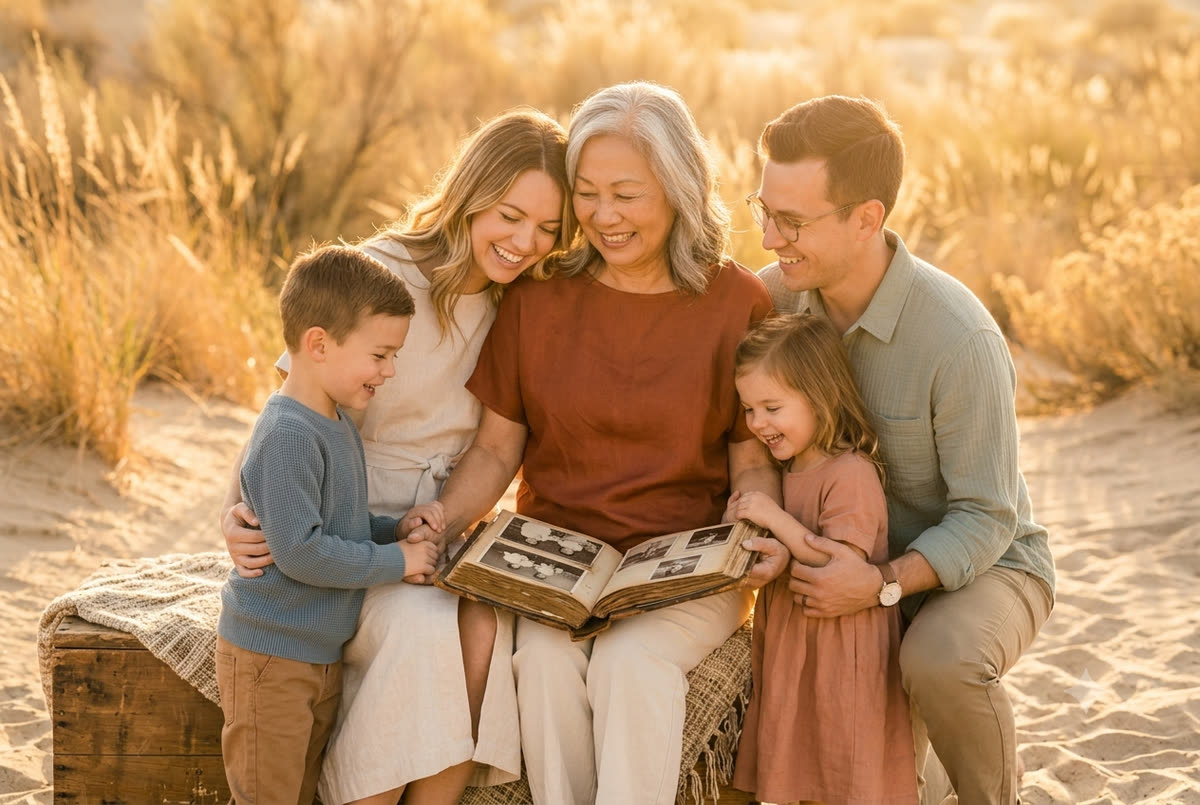
- Looking at one photo album, not ten.
When you measure success by connection instead of production, almost everything becomes possible, and nothing feels like a failure.
Things to do in hospice that genuinely matter
Here are the activities I've watched bring real comfort and even joy. Pick a few. You won't get to all of them, and that's exactly right.
Tell and record the stories
Most of us never asked our parents the questions we wish we had. Hospice is, painfully and beautifully, the last good chance.
Sit with your phone's voice recorder running and ask open, easy things:
- "How did you and Dad actually meet? The real version."
- "What were you like at my age?"
- "What's a time you were proud of yourself that we never knew about?"
- "Who taught you to cook / fish / drive / pray?"
- "What do you want the grandkids to know about you?"
You don't need fancy gear. A phone on the nightstand catching their voice — the laugh, the pauses, the way they say your name — becomes priceless the moment it's the only place that voice still lives. Keep sessions to ten or fifteen minutes. You can always come back tomorrow.
Make something with their hands in it
Tangible objects carry grief well. Consider:
- A handprint in air-dry clay or simple ink (hospice staff often have ink kits, or bring a child's washable stamp pad).
- A few lines in their own handwriting — a recipe, a blessing, "I love you" — even shaky now, it's theirs.
- A thumbprint pressed into a pendant.
- A lock of hair tucked into a small envelope.
Years from now, a grandchild will press their hand to that handprint and feel the size of the person they came from.
Bring the world to the bedside
If an outing isn't realistic — and often it isn't — bring the outside in:
- A small vase of desert blooms, or a branch of citrus blossom in spring.
- A bowl of dates from Indio, if they grew up around here; the smell alone can open a flood of memory.
- A short video call with someone far away.
- The window blinds opened to the morning light, before the desert heat builds.
Mark the occasions, even early
Don't wait for the "real" date. Celebrate the birthday in August even if it's not until October. Have the anniversary dinner now. Open one Christmas present in July. People in hospice are often deeply moved to be present for a milestone they feared they'd miss — and you will be so glad you didn't wait.
Let the senses lead
When words get hard, the senses still reach people. Familiar smells, a worn quilt, a particular hymn, the feel of a pet's fur. If they had a dog, ask the facility about a visit; many Coachella Valley hospice programs welcome therapy and family pets. Touch, in particular, communicates when nothing else can.
On taking photographs — yes, you can, and here's how
I'm a portrait photographer, so people are sometimes surprised when I gently encourage families to make pictures during hospice. They worry it's morbid, or intrusive, or that they'll be remembered "like this."
Here's what I've learned. Almost no one regrets the photos they took. Many, many people regret the ones they didn't.
You are not photographing illness. You are photographing love — the hand-holding, the foreheads pressed together, the great-grandchild asleep on the bed, the daughter brushing her mother's hair. Those frames are not about how someone looked at the end. They're about who was there, and how much they were cared for.
A few thoughts on doing it tenderly:
- Photograph the moments, not the pose. Don't ask them to smile and sit up. Catch the real thing — the listening, the laughing, the quiet.
- Get the details. Hands always. Wedding rings, the texture of a favorite blanket, reading glasses on the side table, three generations' hands stacked together.
- Use the soft light. Open a window and turn off the overhead fluorescents. Window light is kinder to everyone and far more beautiful than a harsh ceiling fixture.
- Include yourself. Hand the phone to a nurse or set a timer. You belong in these pictures too.
- It's okay to ask consent and to stop. Read the room. Some moments are meant only to be lived.
If it would help to have someone else hold the camera so the whole family can simply be together, that is part of what I do. I work quietly and slowly, and I follow the family's lead entirely — at the bedside, at home, or wherever your person is being cared for. I've written more about this in what a legacy session looks like, and about the particular ache of photographing a parent before it's too late.
What anticipatory grief does to all of this
There's a specific kind of grief that arrives before the loss — anticipatory grief. You're mourning someone who is still here. It is real, it is exhausting, and it can quietly sabotage your best intentions.
It might show up as numbness when you expected tears, or irritability with the people you love most, or a strange guilt for laughing. It can make you avoid the room because being there hurts, and then make you feel terrible for avoiding it. None of that means you're doing it wrong. It means you're grieving in advance, which is one of the hardest things a heart can be asked to do.
A few things that help families I've worked with:
- Let the visits be imperfect. You don't have to be profound. Sitting in silence is a gift.
- Trade off. Caregiving and memory-making both run on a tank that empties. Take shifts so no one burns out and resents it.
- Say the things now. "Thank you." "I forgive you." "I love you." "I'll be okay." Hospice nurses will tell you these are the words that let people rest.
- Forgive yourself for the hard days. You will snap, or cry at the wrong time, or wish it were over and then hate yourself for wishing it. That is the territory. You are still doing it with love.
If this is where you are, you may find comfort in reading about making the most of the final chapter together.
Working with hospice staff and what's allowed
Hospice teams in the valley — whether through Eisenhower Health, a home hospice agency, or a residential facility — are some of the most compassionate people you'll ever meet, and most of what you're hoping to do, they will help with. Just ask. In my experience they will gladly:
- Time medications so your person is most alert for a visit or a celebration.
- Help with positioning, comfort, and a little grooming before family photos.
- Bend "rules" for the things that matter — extra visitors, a pet, a small gathering, a child on the bed.
- Tell you, gently and honestly, where things stand, so you know whether to do the big thing today rather than next week.
That last point matters more than anything else in this article: when in doubt, sooner. Energy and clarity generally don't increase over time in hospice. The visit you're considering for "when things settle down" is best had this week.
A short answer to the question underneath the question
People search for "things to do in hospice" but what they usually mean is, how do I not waste this time, and how do I keep from falling apart. So here is the shortest version I can give you:
Show up. Bring the music and the photos and the old stories. Hold the hand. Say the true things. Take the pictures even though it's hard. Let it be small. Let it be imperfect. The memories you're making now — the ones that feel almost too ordinary to count — are the ones the whole family will reach for at every Thanksgiving for the rest of their lives.
When you'd like a hand holding the camera
If part of what you're hoping for is to gather the family and have someone gently make photographs so you can all just be present together, I'd be honored to help. I photograph these sessions quietly and without any rush, at the bedside or at home anywhere in the Coachella Valley, and I'll always follow your family's pace and your person's comfort first.
If talking it through would help — even if you're only turning the idea over — send me a note and tell me a little about your person. Whatever you decide, I hope these days hold more tenderness than you expect.