Coping With a Parent's Terminal Diagnosis

The morning after my own father's diagnosis, I remember standing in the kitchen unable to decide whether to make coffee. Something that ordinary had become impossible, because making coffee meant the day was going to keep going, and I wasn't ready for it to. If you have just heard the word "terminal" attached to your mother or father, you may know that exact paralysis — the way the world keeps insisting on being normal while everything inside you has stopped.
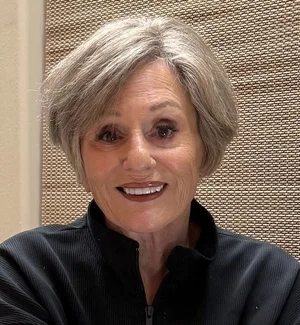
I am a portrait photographer, not a grief counselor or a hospice nurse. But over many years here in the desert I have sat with a lot of families in this particular season, often with a camera nearby and just as often with it set down. I have watched adult children figure out how to be a son or a daughter and a caregiver and a grieving person all at once, sometimes in the same hour. What follows is what I have learned from them, and from my own family. I hope some of it lands gently for you.
The first days: you do not have to be okay
There is a strange pressure, when a parent is dying, to immediately become competent. To have a binder. To know the questions to ask the oncologist. To research clinical trials at two in the morning. Some of that will come, and some of it genuinely helps. But the first days are not for managing — they are for absorbing a shock that the body and mind take in slowly, in waves.
A few things that tend to be true in those early days:
- Grief can start now, while your parent is still alive. This is real, it has a name — anticipatory grief — and it does not mean you are giving up on them or "writing them off." You can grieve and hope at the very same time. If it helps to understand what you're feeling, I wrote more about that in understanding anticipatory grief.
- You will feel things you didn't expect. Relief, anger, numbness, irritation at small things, guilt for laughing. None of these make you a bad child. Grief is not tidy, and it rarely arrives in the order the books suggest.
- You don't have to tell everyone right away. Decide together with your parent who gets to know, and when. You are allowed to protect a little quiet while you find your footing.
If you take nothing else from this page: there is no correct way to feel right now, and you are not behind.
Talking with your parent — and letting them lead
One of the hardest and most important parts of this time is the conversation itself. Many adult children tiptoe, afraid that naming the truth will somehow make their parent give up. In my experience the opposite is usually true. Most parents already know. What they are often waiting for is permission to talk about it honestly with the person they raised.
You don't need a script. A few openings that have helped families I know:
- "I want to make the most of this time with you. Is there anything you want to do, or say, or sort out while we can?"
- "Are you scared? I am. Can we be scared together for a minute?"
- "Tell me a story I've never heard. I want to keep them."
That last one matters more than people realize. A terminal diagnosis turns the ordinary facts of a parent's life — how they met your mother, the name of their childhood dog, why they left Ohio for California — into things that will soon exist only if someone caught them. Ask now. Write the answers on your phone, in your notes app, on a napkin. You will not remember as much as you think you will, and the smallest details become the most precious ones.
Let your parent lead on tone, too. Some want to plan their service down to the hymn. Others want to talk about the Dodgers and not the diagnosis, and that is its own kind of dignity. Following their lead is a form of love.
The practical layer: what actually needs doing
I am wary of turning grief into a to-do list, because it isn't one. But there is a practical scaffolding underneath this season, and getting some of it in place early frees you to be present later, when presence is all that's left. A rough map:
Medical and care decisions
- Ask the care team directly: what does the road likely look like, and what matters most to my parent — time, comfort, or independence? Those answers shape everything else.
- Learn the difference between curative treatment, palliative care, and hospice. Hospice is not "giving up"; it is a shift toward comfort and quality of life, and families almost universally tell me afterward they wish they'd called sooner.
- In the Coachella Valley, hospice and palliative services are well established. Eisenhower Health in Rancho Mirage has a strong palliative program, and there are several reputable home-hospice agencies that serve Palm Desert, La Quinta, Indio, and Palm Springs. Ask the discharge planner or social worker at the hospital for names — connecting you is literally their job.
Legal and financial
- Make sure there is an advance directive and a named medical power of attorney, so your parent's wishes are honored if they can't speak for themselves. California has free POLST and advance directive forms.
- Locate the important documents while you still can ask where they are: will or trust, insurance, account logins, the safe-deposit key. Gather, don't act — there's time.
Care logistics
- If you are the one flying in — and many of us in the desert are split between here and adult kids elsewhere — get clear early on who is "boots on the ground" and who supports from afar. Resentment between siblings usually grows in the gaps where no one named who was responsible.
- Accept help in specific terms. "Bring dinner Tuesday" gets a yes; "let me know if you need anything" never does.
You will not do all of this perfectly, and you don't need to. Done imperfectly and on time beats perfect and too late.
Caring for yourself without guilt
Caregivers are astonishingly good at disappearing. You will be tempted to pour everything into your parent and treat your own needs as a luxury you'll get to "after." Please hear this from someone who has watched it go wrong: a depleted caregiver cannot give. Your sleep, your food, your ten minutes outside are not selfish — they are the fuel for everything you are trying to give.
Small, desert-specific permissions:
- Step outside at the end of the day. Even in summer, our evenings cool, and there is something steadying about watching the light go amber over the Santa Rosas while you let yourself feel whatever you're feeling.
- Take the early walk before the heat — around the lake at Civic Center Park in Palm Desert, or any quiet stretch — and let it be the one part of the day that asks nothing of you.
- Find your one person who lets you say the ugly true things without flinching. The exhaustion, the "I wish this were over," the fear. Saying them out loud robs them of some of their weight.
If you find yourself unable to function, or sinking somewhere you can't climb out of, reach out to a grief counselor or your parent's hospice team — most hospices offer family support and bereavement services, often for over a year afterward, at no extra cost.
On photographs, gently
This is the part where, as a photographer, I have to be honest about my own bias — so take it for exactly what it is. When a parent is dying, many families think about pictures and then talk themselves out of it. They don't look like themselves. It feels morbid. Now isn't the time. I understand all of those feelings, and I'd only offer one quiet thought against them.
You will not, later, wish you had fewer pictures of your hand in your father's, or of your mother laughing at something only the two of you found funny. The images people treasure most are almost never the posed, healthy, everything's-fine ones. They are the honest, in-between ones — a parent's hands, the back of a head bent over a grandchild, three generations crowded onto one couch. Those are the frames that turn out to be the whole story.
If a formal session feels like too much, it probably is, and that's fine. But take the phone photo. Record thirty seconds of their voice saying your name. And if you do want someone to quietly document a gathering or a last good day, I almost always do this work right where your family already lives it — in your parent's own home, in the soft window light of the room where they read or nap or hold court at the kitchen table, or out on a familiar patio or a nearby park if a change of scene lifts everyone. No studio, no production, no fuss, just present — that is some of the most meaningful work I do, and I approach it with enormous care. I've written separately about legacy portraits when time is short if you ever want to think it through.
What no one tells you
A handful of true things that surprised the families I've walked beside, offered so they don't surprise you quite as hard:
- The waiting is its own grief. The stretch between the diagnosis and the end can be long, and it has a heaviness all its own. You are allowed to be tired of it without loving them any less.
- There will be ordinary days inside the extraordinary one. You'll argue about the thermostat. You'll watch a dumb movie. Those ordinary hours are not wasted time — they may be the ones you miss the most.
- Grief after the death of someone you've already been grieving can feel different — sometimes lighter, sometimes heavier, often confusingly both. That doesn't mean you grieved wrong beforehand.
- The relationship keeps going. It changes form, but you will keep talking to them, keep hearing their advice in your head, keep cooking their recipes. Death ends a life, not a bond.
You are doing better than you think
If you have read this far, you are almost certainly a person trying hard to do right by someone you love, in circumstances no one prepares us for. There is no gold star at the end of this, no grade. There is only love, expressed clumsily and exhaustedly and completely, which is the only way any of us have ever managed it.
Be gentle with yourself. Ask the questions while you can. Catch the small stories. And if, somewhere in this season, you decide you'd like a few honest photographs to hold onto — of your parent, of your family, of this fierce and tender time — I would be honored to make them, in the comfort of your own home or a familiar spot nearby, working softly around whatever the day allows. When it would help to have someone there for that, reach out to me here and we'll figure out the gentlest way to do it.
Holding you and your family in my thoughts.