Talking to Children About a Dying Grandparent

There is a particular silence that falls over a household when a grandparent is dying and there are young children in it. The adults are trying to hold everything — the hospice schedule, the phone calls, their own grief — and somewhere in the middle of it is a six-year-old asking why Grandpa sleeps so much now, or a teenager who has gone quiet and stopped coming to dinner. Parents bring this to me often — sometimes in the car after a session, sometimes in a quiet email late at night: What do I actually say to them?
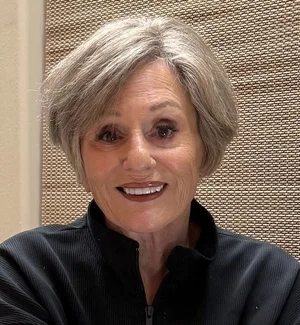
I am Margot, a portrait photographer here in Palm Desert, and I want to be clear about what I am and am not. I am not a grief counselor or a child psychologist. But for many years I have been invited into families during exactly this season — the months when a grandparent is fading and everyone is trying to make the time count — and I have watched a great many parents navigate this conversation, some gracefully and some with regret afterward. What follows is what I have learned from them, gathered together with the guidance that the hospice social workers and child-life specialists I have come to know in this valley give again and again. My hope is that it makes the next hard conversation a little less frightening to begin.
Start from one principle: children handle the truth better than the unknown
The single most important thing to understand is this: children almost always cope better with a hard truth, told gently and honestly, than with a vague mystery they are left to fill in alone. A child who senses that something is terribly wrong but is told "everything is fine" does not feel reassured. They feel confused, and often they decide the unspoken thing must be their fault. Their imagination is almost always darker and stranger than reality.
So the goal is not to protect a child from the truth. It is to give them the truth in a size they can carry, in words they understand, with you beside them. That is a very different thing from a brutal, overwhelming download of medical facts. Honesty and gentleness are not opposites here. They are partners.
Use plain, accurate words — and skip the soft metaphors
This is the advice that surprises parents most, because it runs against our instinct to cushion. Child-life specialists are nearly unanimous on it: use the real words. Dying. Death. Died. Avoid the gentle-sounding substitutes that feel kinder but actually muddle a young child's understanding:
- "Grandma is going to sleep." A young child may then become terrified of bedtime, or of letting anyone nap.
- "We're going to lose Grandpa." A literal-minded five-year-old wonders why you don't simply go find him.
- "Grandma passed away" / "we lost her" / "she went to a better place." These can leave a child waiting for the person to come back, or quietly resentful that the person chose a better place over staying with them.
You can absolutely fold in your family's faith and your own beliefs about what comes after — many families here do, and it brings real comfort. Just anchor it to the plain fact first: the body stops working, and the person dies and does not come back to their body. Then add what your family believes about the soul, heaven, or what happens next. The concrete truth gives the spiritual comfort something solid to rest on.
A simple, honest script for a younger child sounds like this: "Grandpa is very, very sick. He has an illness called cancer, and the doctors have tried everything they can, but they can't make his body better. His body is wearing out, and that means he is going to die. It is not because of anything anyone did. We are all going to be sad, and that is okay, and we are going to take care of each other."
What "dead" actually means to a child (and why you may repeat yourself)
Adults forget that the concept of death — that it is permanent, universal, and means all body functions stop — is something children acquire gradually. When a grandparent is dying, you are often teaching that concept and delivering the news at the same time. It helps enormously to know what your child can actually grasp.
Toddlers and very young children (under 3)
They have almost no concept of death and live entirely in the present. They will mostly register the disruption around them — that the grown-ups are upset, that the routine has changed. Keep their world as steady as you can. Plenty of holding, naps on schedule, the same bedtime. Simple words are fine: "Grandma is so sick that her body is going to stop working." They will not understand it the way you do, and that is okay.
Preschoolers (roughly 3–5)
This is the age where the soft metaphors do the most harm. Preschoolers are concrete and literal, and they generally do not yet understand that death is permanent — they may ask, perfectly cheerfully, when Grandpa is coming back, days after he has died. This is normal. They are also in the thick of magical thinking: they may believe their angry thought or their bad behavior caused the illness. Say plainly and more than once: nothing you did or thought made this happen, and it is not catching. Expect to answer the same questions over and over. Each repetition is them doing the work of understanding.
School-age children (roughly 6–12)
Around this age children come to understand that death is final and happens to everyone, including the people they love and eventually themselves. That realization can bring a wave of anxiety — fears about their own health, or yours. ("Are you going to die too?") Answer honestly and reassuringly: "Everyone dies someday, but most people live a very long time. I plan to be here to take care of you for a long, long time." School-age kids are curious and may ask startlingly direct, biological questions — what happens to the body, what a funeral is, whether it hurts. Answer simply and factually. Their curiosity is not morbid; it is how they make the unfamiliar manageable.
Teenagers
Teens understand death as fully as adults do, but that does not make this easier for them — sometimes the opposite. They may grieve hard and hide it, retreat to their rooms or their friends, or seem strangely indifferent as a form of self-protection. Resist reading withdrawal as not caring. Give them real information, treat them as the near-adults they are, and invite rather than require their participation — in visits, in caregiving, in goodbyes. Let them know that whatever they feel, including anger or numbness or relief, is allowed. A teenager who is offered a genuine role, like recording a grandparent's stories or choosing music for a gathering, often finds that far more bearable than being managed.
Have the conversation well — the how matters as much as the words
- Pick a calm, private moment. Not in the car on the way somewhere, not right before school or bed. Somewhere quiet, with time to spare afterward, where a child can fall apart or ask anything without an audience.
- Tell siblings together if you can, then follow up one-on-one. Older children may need more detail; younger ones need it simpler. But hearing it together keeps it from becoming a secret some of them carry and others don't.
- Lead with a warning sentence. "I have something sad and important to tell you." It lets a child brace, and it signals that this matters.
- Say less than you think, then wait. Give the core truth in a few sentences and then stop. Let their questions guide how much more you offer. You do not have to deliver everything at once.
- Let them see you cry. Many parents fight to stay composed, believing they must be strong. But a child who sees you sad and still functioning learns something priceless: that you can feel this much and survive it, and so can they. Tears are not a failure of the conversation. They are part of it.
- Tolerate the "wrong" reaction. A child may go back to playing, ask if they can have a snack, or laugh. This is not callousness; young children grieve in short bursts and then step out of it to feel normal again. Let them.
- Keep the door open. End with "You can ask me anything, anytime, even if it seems silly." Then expect the real questions to surface days later, at odd moments — in the bath, at the grocery store, at 9 p.m.
Questions children ask — and honest ways to answer
"Is it my fault?" No. Say it clearly and as often as needed. "Nothing you did, said, or thought caused this. Illnesses are not punishments."
"Are you going to die too? Am I?" "Everyone dies someday, but most people live a very, very long time. I am healthy, and I expect to be here with you for many more years." Honest, but weighted toward reassurance.
"Where do you go when you die?" Answer from your own beliefs, and it is genuinely okay to say "Different people believe different things, and in our family we believe…" It is also okay to say "I don't know for certain, and nobody does." Children can handle an honest "I don't know" far better than a confident answer that later unravels.
"Will Grandma be in pain?" Reassure them about comfort care, because it is true and it matters: "The doctors and nurses are making very sure she is comfortable and not hurting."
"Can I catch it?" Especially with cancer or a stroke, say plainly that it is not contagious and they cannot give it to anyone or get it from a hug.
Visiting, caregiving, and goodbyes
One of the hardest decisions is whether to bring children to the bedside, especially in the final weeks. There is no single right answer, but the prevailing guidance is gentle and clear: let children choose, with honest preparation, rather than deciding for them out of fear.
If your grandparent is in hospice care — whether at home, at a facility like the Eisenhower George and Julia Argyros Center, or in one of the many memory-care and skilled-nursing communities across Rancho Mirage, La Quinta, and Palm Desert — prepare children for what they will see before they walk in. Describe it concretely: the bed, the oxygen tubing, the way Grandpa may be thinner or sleepier or may not recognize them. Surprises frighten children far more than hard facts do. Tell them it is okay to touch his hand, to talk to him even if he cannot answer, and equally okay to wait in the hallway. Bring a familiar adult who can leave with a child the moment they have had enough.
Children who are given an honest choice and choose to visit very rarely regret it. Some find their own quiet ways to say goodbye — a drawing left on the blanket, a song, simply sitting close. These small acts matter, and they often become the memory a child holds onto.
If a child chooses not to visit, honor that without guilt or pressure. There are other ways to be present: a recorded message, a video call, a card. What you are protecting is their sense of agency in a situation where they otherwise have none.
Where photographs quietly help
This is the part of all this where my own work lives, and I offer it gently, because the conversation above matters far more than any picture. But here is what I have seen over many years.
For a young child, abstract reassurances about memory are hard to hold. A photograph is not abstract. A real image of a small hand inside a grandparent's hand, of the two of them by the living-room window in soft afternoon light, of being read to one more time — that is something a four-year-old can physically keep. Years later, when their own memory of the person has gone soft and uncertain, the photograph is still there, telling them: this happened, you were loved, you were there.
When families ask me to come during these weeks, I work very quietly and on the child's terms — almost always in their own home, at the kitchen table or out on the patio or beside the bed, in whatever natural light comes through the window, following whatever the day allows. A neighborhood park or a shaded garden works too, if the grandparent is well enough to get out for a little while in the gentler light of early evening. The point is never a polished portrait. It is the true, unrepeatable connection between a child and a grandparent, kept honestly so the child can return to it for the rest of their life. If you want a sense of how that unfolds, I have written about what to expect from a legacy session and about the broader experience of anticipatory grief, the strange, early mourning so many families in this season are quietly living through. For children specifically, you might also find comfort in the idea of building a legacy project for grandchildren — a small, deliberate way of preserving who a grandparent was, in their own voice and stories, for the little ones who will not otherwise remember.
After the death: keep telling the truth
The honesty does not end when the person dies. Children, especially young ones, will circle back — asking again where Grandma is, wondering aloud if she is cold, bringing her up at unexpected moments months later. Keep answering plainly and warmly. Decide together with your children about whether they attend the funeral or memorial; as with visits, prepare them honestly and let willing children take part, while never forcing it. Rituals help children just as they help adults: lighting a candle, keeping a photograph on the shelf, telling Grandpa stories on his birthday. These are not morbid. They teach a child that someone we love can be gone and still hold a permanent, gentle place in our lives.
Local support in the Coachella Valley
You do not have to carry this alone, and you should not have to invent the words from scratch. Several resources here are made for exactly this:
- Hospice social workers and child-life or bereavement staff. Whatever hospice agency is caring for your loved one almost certainly has someone whose entire role is helping families talk to children. Ask. This is one of the most underused supports available to you.
- Children's grief support. Look into programs serving the desert and the wider region that run peer groups for grieving children and teens, where kids discover they are not the only one. Hospice bereavement departments can point you to current local options.
- Your pediatrician, school counselor, or faith community. Any of these can be a steady, familiar source of help, and they already know your child.
If your child seems stuck for a long stretch — persistent sleep trouble, a return to much younger behavior, withdrawal that does not lift, or any talk of not wanting to be here — reach out to a counselor. That is not an overreaction. It is good parenting.
A last, honest word
You are not going to do this perfectly, and you do not need to. Children do not need a flawless speech. They need a parent who tells them the truth, holds them while it hurts, and stays. Years from now, your child will not remember whether you found the ideal sentence. They will remember that when something enormous and frightening happened, you did not hide it from them and you did not leave them alone in it. That is the whole job, and you are already doing it by caring this much.
If there is still time, and you would like a few of these last ordinary, irreplaceable moments between your child and their grandparent kept honestly and without any fuss, I would be glad to help — quietly, in your own home, on whatever terms the day allows. You can reach me through my contact page. Even a short note telling me a little about your family is enough to begin; we can work out the rest together.