Is Photographing a Dying Loved One Morbid?
The question usually arrives in a lowered voice, often over the phone, sometimes from a hallway outside a bedroom so the person inside cannot hear. "Is it strange that I want pictures of my mom right now? Is that morbid?" I have been asked some version of this so many times that I have come to think of it as the real beginning of the conversation — not the logistics, not the scheduling, but this quiet, honest worry about whether wanting to remember is somehow wrong.
So let me answer it plainly before I say anything else: no. Wanting to photograph someone you love while they are still here is not morbid, and it is not wrong. It is one of the most natural and loving impulses a human being can have. The discomfort you feel asking the question is not a sign that the wish is bad. It is a sign that our culture has gone strangely silent about death, and you are bumping up against that silence.
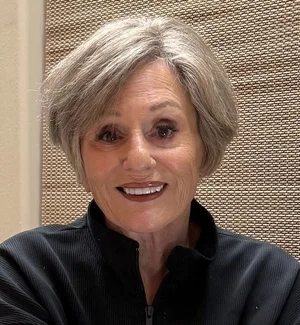
I'm Margot, a portrait photographer in Palm Desert, and over the years a meaningful part of my work has become sitting with families in the Coachella Valley during the last chapter of a loved one's life. I want to talk through this question honestly — where the discomfort comes from, what the difference is between morbid and meaningful, and how to decide what is actually right for your family — because no one else seems to be saying these things out loud.
Why this even feels like a hard question
If photographing a dying loved one feels taboo, that is not because there is something wrong with you. It is largely a quirk of the last hundred years or so.
For most of history, photographing the dying and the dead was completely ordinary. In the Victorian era, post-mortem photography was a respected and common practice — often the only image a family would ever have of a child or a parent. Sitting with the body, washing it at home, keeping a lock of hair, having a portrait made: these were normal rituals of love and grief. Death happened in the home, surrounded by family, and remembering it visually was simply part of how people coped.
What changed is that, somewhere in the twentieth century, dying moved out of the house and into hospitals and facilities. It became professionalized, hidden, something that happened behind doors. As death grew less visible in everyday life, it also grew more frightening, and the rituals that once surrounded it began to feel "morbid" — a word that mostly means we are no longer used to this.
So when you feel that flicker of "should I be wanting this?", you are not encountering a moral truth. You are encountering a cultural habit of looking away. Plenty of other cultures and faith traditions never adopted that habit, and they would find our squeamishness around remembering the dying to be the strange part.
Morbid versus meaningful: where the real line is
I think the word "morbid" is doing a lot of unfair work here, so let me try to separate two things that often get tangled together.
Morbid implies a kind of fixation on death itself — a fascination with decay, shock, or grimness for its own sake. That is genuinely not what these photographs are about.
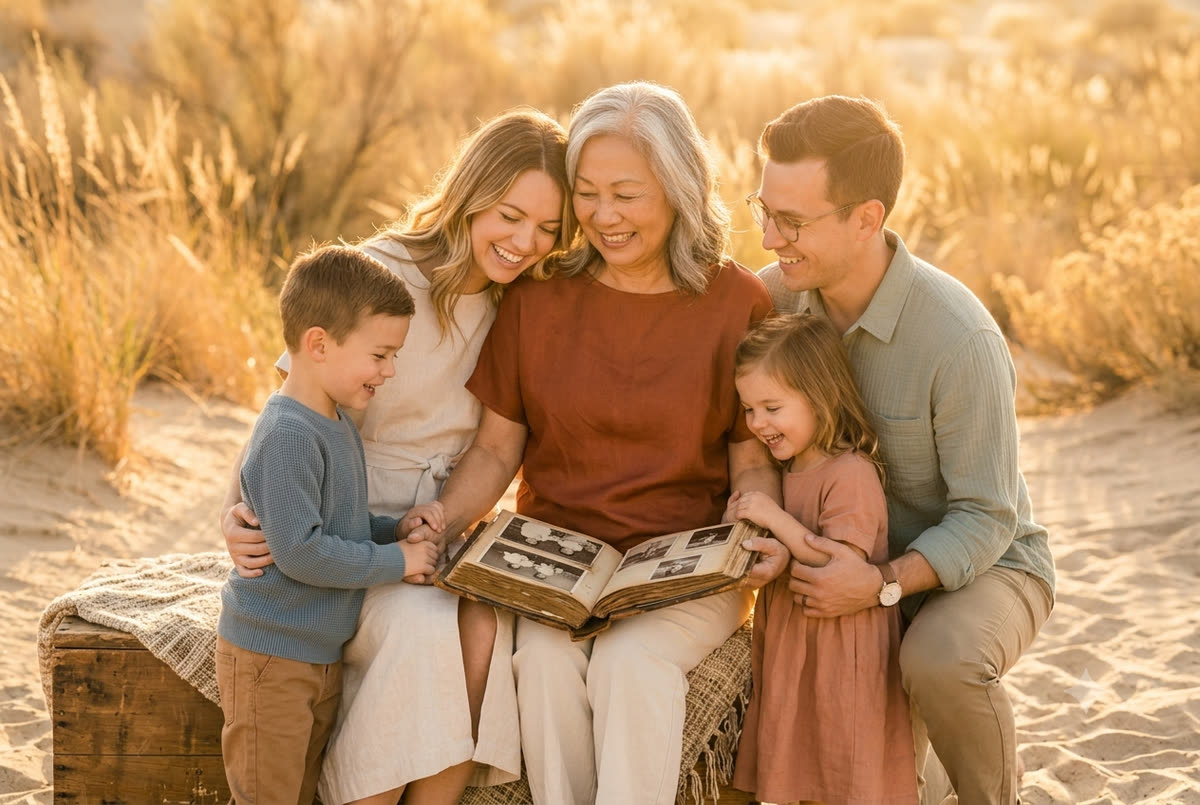
Meaningful is about the person, not the dying. When I photograph someone in their final season, I am not photographing illness. I am photographing a father telling the same joke he has told for forty years. I am photographing the way a mother's hands still move when she talks about her garden, even when she has grown too weak to tend it. I am photographing a grandchild's head resting on a grandmother's shoulder. The illness is in the room, yes. But it is not the subject. The love is the subject.
Here is a test I offer families when they are unsure: Picture yourself a year from now, looking at these images. What do you hope to feel? If the honest answer is grief softened by tenderness — "there she is, that's exactly who she was" — then this is meaningful work, and you should not let the word "morbid" talk you out of it. If the honest answer is that you want a clinical record of decline, that is a different impulse, and worth gently examining. In my experience, almost no one actually wants the second thing. What they want is to hold on to the person.
Why families are so glad they did it
I want to be careful here, because I never want to pressure anyone. But I would be doing you a disservice if I did not tell you what I have actually witnessed.
In all my years of this work, I have never had a family tell me they regretted making portraits while there was still time. Not once. The regret runs entirely in the other direction — toward the photos that were never taken, the voice no one thought to record, the hands no one captured before they were gone.
There are reasons these images matter so much afterward:
- They give grief somewhere to land. A real photograph of the person as they truly were becomes an anchor when memory starts to blur, which it does faster than anyone expects.
- They protect the right memory. Families often fear the final images will be the hard ones. In practice, a thoughtful portrait crowds out the harder hospital pictures your mind would otherwise replay. It gives you a better last image to keep.
- They are a gift to the children. Young grandchildren and great-grandchildren may have no other way to know a face, a smile, the size of a hand they once held.
- They let the person feel cherished. This is the part people forget. Being photographed with love, while you are still here to see it, is its own quiet comfort to the one who is leaving. It says: you matter, you are still you, and we want to remember.
I've written more about what this looks like in practice in my guide to end-of-life and legacy portrait sessions, if you want a fuller picture of what actually happens in a session.
"But what will other people think?"
This worry deserves its own answer, because it is often the loudest one. You may be afraid a sibling will think you are being maudlin, or that a friend will find it ghoulish, or that the person themselves will be hurt that you are "treating them like they're already gone."
A few honest thoughts on that.
First, the family member who objects most strongly before a session is very often the one most grateful afterward. Resistance in this season is usually fear wearing a disguise. People say "that's morbid" when what they actually mean is "I am not ready to face this." That is a feeling to be gentle with, not a verdict on whether the photos should exist.
Second, you are allowed to do this quietly. Not every decision needs a family vote. If photographs would comfort you, that is reason enough, and you do not owe anyone a justification.
Third — and this matters most — the person who is dying very often wants this. I have watched people light up at the chance to be seen as themselves one more time, to have a real portrait taken with the people they love, rather than spending their last weeks feeling like a patient. The fear that you are "reminding them they're dying" badly underestimates them. They know. What they may be longing for is to be treated as fully alive for an afternoon.
How to decide what's right for your family
Morbid or meaningful is not the only question. There is also: is this right for us, right now, in our particular situation? Here is how I help families think it through.
Start with the person, if you can
If your loved one is able to weigh in, ask them — simply and without a big production. "I'd love to have some pictures of us together. Would that feel okay to you?" Most people say yes, and many are visibly moved to be asked. If they say no, honor it completely. Their comfort comes first, always.
Check your own motive, kindly
You do not need a noble reason. "I don't want to forget her face" is more than enough. The only motive worth pausing on is if you feel obligated — like you should want this because someone told you to. Do it because it would bring you comfort, or don't do it. Both are valid.
Decide how much, and how close
This is not all-or-nothing. The "session" can be:
- Quiet and lifestyle-based — just being together, talking, holding hands, with the camera staying gentle and in the background.
- A simple portrait — the two of you, or three generations, in good light, looking like yourselves.
- Details only — wedding rings, hands, a favorite chair, the reading glasses on the nightstand. Some families want nothing of the face at all, and that is a complete and beautiful choice.
You set the boundaries. Nothing happens that you and your loved one have not agreed to.
Think about timing honestly
This is the one place I will gently push. Families almost always wait longer than they wish they had. "When things settle down" rarely comes in this season. If part of you is drawn to this, the kindest version is usually sooner, on a better day, while there is still energy for a real smile. I've written separately about the right time to make final portraits of an elderly parent, because timing is so often the thing people agonize over.
What these sessions are actually like
I think some of the fear comes from imagining something cold or clinical, so let me describe what really happens.
Almost always, we do this where your person is most comfortable, and that is usually their own home. Most of my sessions in this season happen right there in the rooms a family already loves — a living room in Palm Desert with the curtains pulled back for soft window light, a kitchen table, a favorite armchair by the patio doors, or a hospice room in Rancho Mirage. If your loved one is up for a short outing and the weather is kind, a shaded bench in a quiet park or a backyard garden in La Quinta works beautifully too, ideally in the gentler light of early morning or late afternoon. But none of that is required; home is more than enough. I work slowly and quietly, with whatever light the room already has — no studio rigs, no posing barked out, nothing hurried. If your loved one tires after fifteen minutes, we stop after fifteen minutes; tenderness matters more than any shot list.
A lot of what I do is simply create the space for the family to be together, and then quietly catch the real moments — the laughter, the resting head, the hand that reaches out. Often families tell me afterward that the session itself, separate from the photographs, was a gift: a warm afternoon of being fully present together, with permission to slow down. If you'd like to understand the emotional side of this season more deeply, I keep an anticipatory grief resource hub with both practical and emotional support for Coachella Valley families.
Common questions I hear
Is it wrong to photograph someone who can no longer consent?This is the most serious version of the question, and it deserves real care. If your loved one previously expressed comfort with photographs, or simply was a person who loved being part of family pictures, you can usually feel confident continuing in that spirit. Lean toward gentle, dignified images — togetherness, hands, the family gathered close — rather than anything that feels exposing. When in doubt, ask yourself whether they would feel honored or embarrassed, and let that guide you. Dignity is the whole point.
Should we photograph after death, not just before?Some families do, and it is not morbid — post-mortem and "vigil" photography is a real, respected practice, and for some it brings profound peace. It is deeply personal, though, and not for everyone. My own focus is on the time before, while there is still a smile to catch, but I never judge a family for wanting either.
What if I take the photos myself on my phone?Please do, with my whole heart. You do not need to hire anyone. Photograph the hands. Record a one-minute video of their voice telling a favorite story or saying your name. Get the ordinary moments, not just the posed ones. Those slightly blurry, real images are treasures. I exist for families who want help, not because help is required.
Will it upset the children to be part of this?Usually the opposite. Children handle honesty far better than we expect, and being included — sitting close, being in the picture — tends to comfort them rather than frighten them. What unsettles children is being shut out of something big they can feel happening anyway.
Mistakes to avoid
- Waiting for a "better time." It is the single most common regret. The better time is usually now, on a good day.
- Letting one person's discomfort decide for everyone. Make room for different feelings, but don't let fear of being judged rob you of something you'll be grateful for.
- Making it a big, exhausting production. Gentle and short almost always beats elaborate. Protect your loved one's energy.
- Focusing the camera on the illness instead of the person. Photograph who they are, not what is happening to them.
- Assuming the dying person doesn't want it. Ask. You may be surprised how much it means to them to be seen.
The honest bottom line
Is photographing a dying loved one morbid? No. Morbid would be a fixation on death. What you are feeling is something entirely different — the wish to hold on to a person you love, to keep their face and their hands and their particular way of being in the world. That is not dark. That is devotion. The silence our culture keeps around death is the strange thing, not your tender, completely human desire to remember.
Whatever you decide, decide it for your own reasons and no one else's. If holding onto these days would steady your family, I would be honored to help — in your home, on a good afternoon, with the same care I would want for my own mother. And if you are not sure yet, that is fine; sometimes the most useful thing is simply to talk it through with someone who does this work and won't flinch when you say the hard words out loud. That conversation costs nothing and commits you to nothing. You can reach me through my contact page whenever it feels right.