Sunrise vs. Sunset Desert Portraits
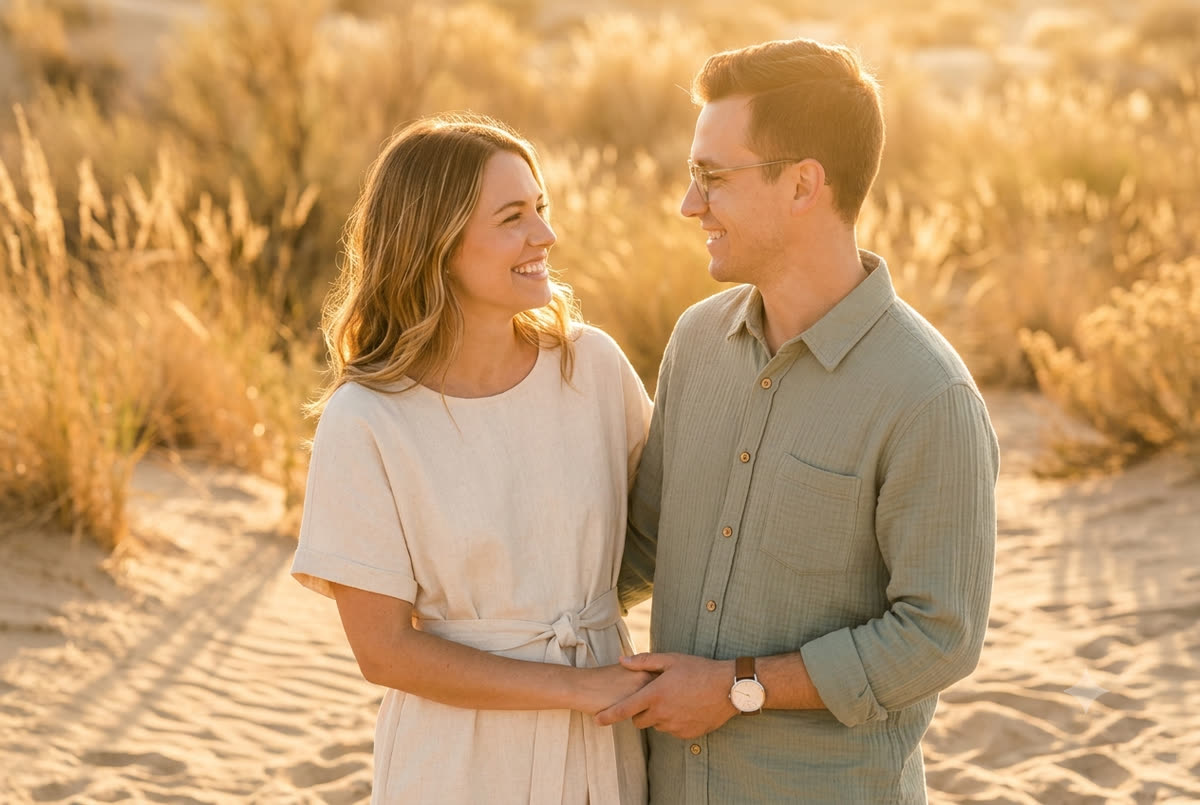
Most of my sessions actually happen indoors, in the soft natural light that pours through a family's own windows — the living room where everyone is comfortable, a sunlit nursery, the kitchen table where real life happens. But when a family would rather be outside, in one of our lovely local parks or gardens, the question of timing comes up almost right away: should we do our portraits at sunrise or at sunset? I love this question, because it means you already understand something essential about outdoor photography here in the Coachella Valley. The light is everything. Midday out here can be flat and unforgiving, and then twice a day it softens into honey. Both of those golden windows are beautiful. They are also genuinely different, and the right one for you depends on your family, your season, and the feeling you want to remember.
I've photographed both ends of the day across Palm Desert, Palm Springs, Rancho Mirage, Indian Wells, La Quinta, and out toward Indio for many years now, and I want to give you the real, lived-in version of this answer — not a generic checklist. By the end of this you'll know which golden hour suits an outdoor session, and you'll feel ready walking into it.
First, what "golden hour" actually means out here
Golden hour is the stretch shortly after the sun rises and shortly before it sets, when the sun sits low and the light comes in sideways instead of straight down. It's soft, warm, and directional, which is the most flattering combination there is for faces. Skin glows, eyes catch light, and the long shadows give the desert landscape its shape and drama.
In the Coachella Valley we're lucky. Our skies are clear far more often than not, our mountains — the Santa Rosas, the San Jacintos — give us a gorgeous backdrop, and our wide-open valley means nothing blocks that low sun. But "golden hour" is shorter than people expect. Depending on the season it's really a window of about 30 to 50 minutes of truly magical light, sometimes less in winter when the sun drops fast behind the mountains. That's why timing and a calm plan matter so much, and it's a big part of why sunrise and sunset don't feel the same even though both are "golden."
A note specific to our valley: because we're ringed by tall mountains, the practical sunrise and sunset are not the times you'll see on a generic weather app. The sun disappears behind the San Jacintos well before the official sunset, and it clears the eastern hills well after the official sunrise. I always plan around the real light here, not the printed clock time.
Sunrise desert portraits
What sunrise gives you
Sunrise in the desert is quiet in a way that's hard to describe until you've stood in it. The valley is still. The roads are empty. The air is cool and clean, and there's a stillness to the light that feels almost private. The color at sunrise tends to be a touch cooler and clearer — soft pinks and pale gold rather than the deep amber of evening — and the whole scene has a fresh, hopeful quality.
For families and especially for little ones, this can be the secret weapon. Children are at their absolute best in the early morning. They're rested, fed, not yet worn out by a long day. I've had toddlers who were giggling and curious at 6 a.m. who would have been melting down at 6 p.m. If you have young kids, please don't dismiss sunrise just because it sounds early. It's often the easiest, happiest session I photograph.
The honest trade-offs of sunrise
The obvious one is the wake-up. A summer sunrise here can mean meeting around 5:00 to 5:30 a.m., which means everyone is up, dressed, and hair-and-makeup-ready before that. For some families that's a dealbreaker, and that's perfectly fine. For others, the early start is worth it for the cool air alone.
That cool air is the second thing to know, and it cuts both ways. In our long summer — roughly May through September — sunrise is the only comfortable time to be outside for portraits. By 9 a.m. in July it can already be over 100 degrees, and no one looks relaxed when they're overheating. In the deep of winter, though, a desert dawn can be genuinely cold and even windy, occasionally in the 40s, so we dress for it and keep the session moving.
One more practical note: sunrise light builds quickly. We start in soft, dim, cool light and within twenty minutes it's brightening fast. It's a gorgeous progression to photograph, but it means we can't dawdle, and there's no "let's run a little late and catch up." When the light's ready, we go.
When I steer people toward sunrise
- Summer sessions (May–September). Honestly, for the hottest months I almost always recommend sunrise. It's a comfort and safety issue as much as a light one.
- Families with babies, toddlers, or young children. Morning moods are simply better.
- Anyone who wants solitude. Popular spots that fill up by evening are often completely empty at dawn.
- People who love a clean, fresh, airy look rather than a warm, moody one.
Sunset desert portraits
What sunset gives you
Sunset is the classic, and for good reason. The light at the end of a desert day is warmer and richer — deep gold sliding into amber, then those legendary Coachella Valley pink-and-purple skies as the sun drops behind the San Jacinto Mountains. There's a romance to evening light that's hard to beat. It wraps around people. For couples, engagements, and anniversary sessions, that warmth tends to match the feeling we're trying to capture.
Sunset is also simply easier to schedule for most people. No one has to wake at dawn. Out-of-town family can arrive, settle in, have a relaxed afternoon, and meet me in the early evening. For our snowbird season — roughly November through April, when so many of my clients are here for the winter — sunset sessions fit beautifully into a vacation day.
The honest trade-offs of sunset
The biggest one is energy, and it's the mirror image of sunrise. By the end of a full day, children are tired, and tired children show it on camera. We can work with it — and I'm patient — but if your kids fade in the evening, that's worth weighing honestly. A late-afternoon nap beforehand works wonders.
The second is that sunset spots are busier. The most beautiful, accessible places to catch evening light — certain parks, palm-shaded gardens, and popular overlooks — draw other photographers, families, and golden-hour walkers. It's rarely a problem, but it's not the solitude of dawn.
The third, in summer, is heat. Even at 7 p.m. in July, the desert is still radiating the day's warmth up off the ground, and it can stay genuinely hot until the sun is fully down. That's the main reason I lean away from summer sunsets for portraits — the air doesn't cool the way it does at dawn.
And like sunrise, sunset light is fleeting in the opposite direction. We go from bright, to glorious, to gone. Once the sun tucks behind the mountains the warm light disappears faster than you'd think, though we're often rewarded with a few minutes of soft afterglow and color that I love using for the final, quieter frames of a session.
When I steer people toward sunset
- Cooler months (October–April). Comfortable temperatures and unforgettable color.
- Couples, engagements, and anniversary sessions. That warm, romantic light fits the story.
- Families with older kids and adults who don't want an early alarm.
- Anyone who loves the warm, glowy, moody desert look the valley is famous for.
A quick side-by-side
If you want the short version of "sunrise vs sunset photos," here's how I think about it:
- Light color: Sunrise is cooler, cleaner, fresher. Sunset is warmer, richer, more golden.
- Mood: Sunrise feels peaceful and hopeful. Sunset feels romantic and dreamy.
- Crowds: Sunrise is nearly empty. Sunset is livelier.
- Temperature: In summer, sunrise is far more comfortable. In winter, sunset is usually the warmer of the two.
- Energy: Kids shine at sunrise; everyone's schedule prefers sunset.
- Light direction: Both are low and flattering — the real difference is the feeling, not the quality.
There's no wrong answer. There's only the answer that fits your people and your season.
How the desert seasons change the math
This is where local knowledge really earns its keep, because the calendar quietly makes the decision for you more often than you'd guess.
Summer (roughly May through September). I recommend sunrise for almost everything. The heat is genuinely intense, often well over 100 degrees, and it lingers into the evening. A 5:30 a.m. start sounds extreme, but you're cool, the light is soft, the world is quiet, and you're done before the day turns into an oven. And if an early alarm truly isn't for you, summer is the perfect season to stay indoors entirely — a relaxed in-home session in the natural light of your own windows sidesteps the heat altogether, which is exactly why so much of my warm-weather work happens right in my clients' homes.
Snowbird and peak season (November through April). Now the valley is glorious all evening, and sunset becomes the easy, lovely default. Temperatures are mild, the light is rich, and a relaxed late-afternoon session is a perfect cap to a desert day. This is when most of my couples and visiting families choose sunset, and I don't blame them one bit.
The shoulder weeks (October and parts of April/May). These in-between stretches are a treat because both windows are comfortable. If you're flexible, this is when I'll happily talk through which feeling you want rather than which one the thermometer allows.
If you're still weighing the bigger picture, my piece on the best time of year for desert family photos goes deeper on the seasonal calendar.
Mistakes I gently help people avoid
- Trusting the weather-app sunrise/sunset time. Our mountains move the real light by 20 to 40 minutes. I always plan to the actual light, and I'll tell you the meeting time that matters.
- Arriving exactly at golden hour. We want to be set up and warmed up before the best light lands so we can spend that precious window actually photographing, not parking and untangling shoes.
- Underestimating the cool of a winter dawn — or the heat of a summer dusk. Dress for the desert you're actually in, not the one on the postcard.
- Forgetting water and a light layer. Even short sessions go better with both. The desert is dry, and you'll feel it.
- Booking summer kids' portraits in the evening. It's the hardest combination — tired children plus residual heat. Morning is kinder to everyone.
- Skipping the toddler nap before a sunset family session. Twenty minutes of rest can change the entire afternoon.
So, which should you choose?
Here's how I'd guide a friend. If it's summer, or you have little ones, choose sunrise — you'll thank yourself for the cool air and the easy moods. If it's our beautiful cool season, you want that warm romantic glow, and an early alarm sounds miserable, choose sunset. If you're lucky enough to be photographing in the shoulder weeks, choose by feeling: fresh and quiet, or warm and dreamy.
And please don't agonize over it. Part of my job is to read the light and the people in front of me and make either window sing. I'll handle the timing, the location, and the pacing so the only thing you have to do is show up and be together. If you'd like, my notes on what to wear for Coachella Valley portraits and on the best desert locations for portraits pair nicely with whichever golden hour you pick.
Whichever you choose, we're after the same thing: an honest, warm picture that feels exactly like your family. Some of my favorite frames have come from a sleepy sunrise with cool pink light, and just as many from a glowing evening with the mountains going purple behind us. Either one can become the image you treasure for years.
If you're picturing a session — indoors in the natural light of your own home, or outside in one of our parks and gardens at golden hour — and you'd like help deciding what fits your family, I'd be glad to talk it through. Send me a note through my contact page, tell me about your people, your season, and where you'd love to be photographed, and we'll shape a plan around it.