Legacy & End-of-Life Photographer in La Quinta
Most of the people who reach me about legacy work in La Quinta start the email the same way: "I'm not even sure this is a thing, but —." It is a thing. And if you have gotten as far as typing that sentence, some part of you already knows why you want it. You have a parent in the Cove who is slowing down. A husband whose diagnosis has changed the shape of the year. A mother flying in for the season who you suddenly understand you have never really photographed, not properly, not in a way that would let your grandchildren know her face. You want to keep this person while you still have them. That instinct is right, and it is one I can help you act on.
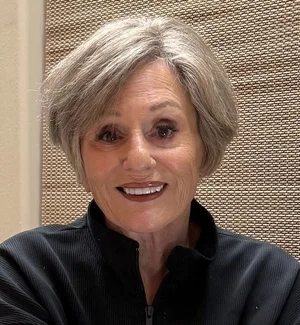
I am Margot. I have photographed families across the Coachella Valley for many years, and over time a quieter strand of that work has become some of the most important I do: legacy portraits and end-of-life sessions for La Quinta families who want a true, warm record of someone they love before that chance closes. This page is for you if you are wrestling with whether to call, when, and what it would even look like. Let me walk you through it plainly.
What "legacy photography" means — and how end-of-life work fits inside it
People use a handful of words for this, and they overlap, so let me sort them out:
- Legacy photography is the broad idea — a portrait session made specifically to preserve a person, a relationship, or a generation while you still can. It is not tied to a birthday or a holiday card. The whole purpose is the keeping.
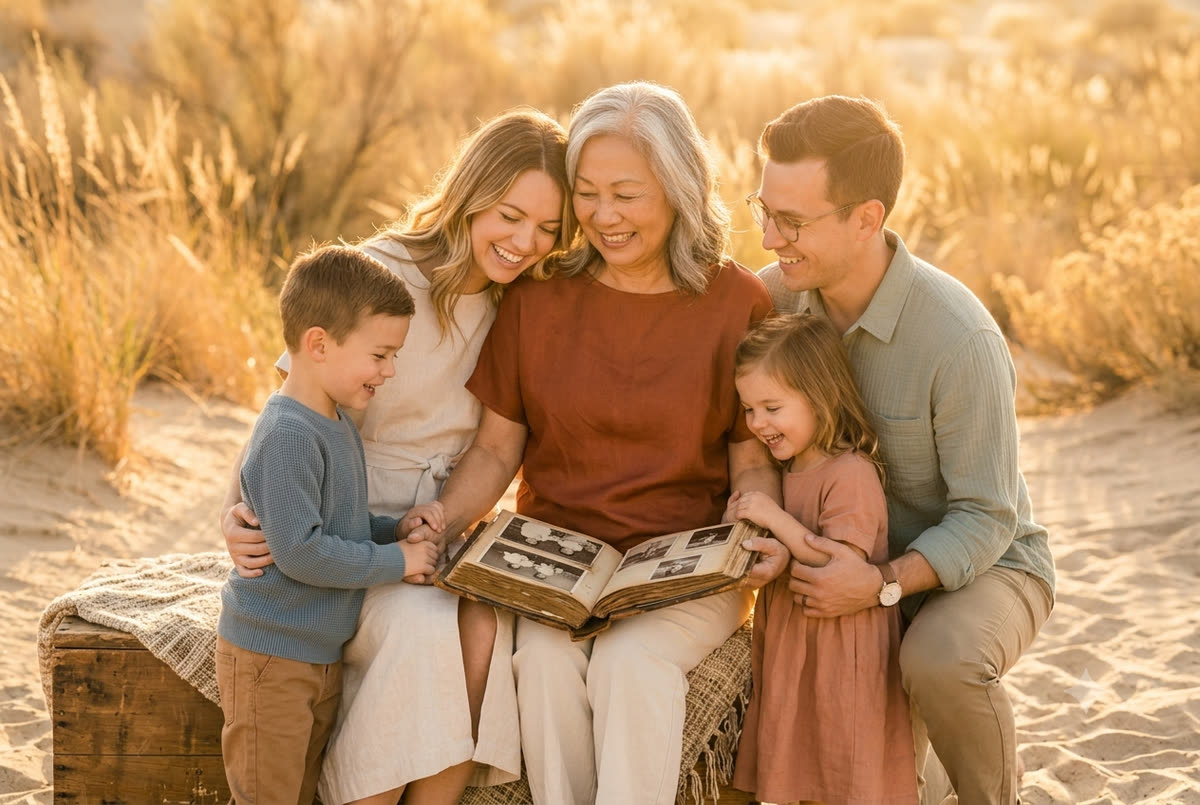
- Generational or heritage sessions gather the line together on purpose — grandparent, parent, child in one frame — so the resemblance and the connection are visible for decades. I write more about that in generational legacy sessions.
- End-of-life photography is legacy work made in the last chapter of someone's life — when illness, age, or hospice has entered the picture. It is gentle, documentary, and unhurried. I cover the practical side in depth in end-of-life photography services.
So end-of-life work is one urgent corner of legacy photography. The difference is mostly timing and pace. A heritage session might be planned three weeks out around a family reunion at the La Quinta Resort. An end-of-life session might happen the morning after you call, because today is a good day and we both know to honor that.
None of this is morbid, and none of it is the funeral or memorial work that comes afterward. This happens while your person is here — alert or resting, talking or quiet, at home off Eisenhower or in a care room near JFK Memorial.
Why La Quinta families call
La Quinta has a particular rhythm that shapes this work. It is a town of seasons and arrivals. Snowbird parents come down for the winter and you have them for a finite window. Adult children scatter across the country and reconvene here for a few weeks at a time. And it is a town with a real population of retirees who came for the golf and the quiet and have made the Cove, PGA West, and Trilogy their final home.
That means the families I meet here are often working against a clock they did not choose — a parent who only visits November through April, a loved one whose health is changing faster than anyone expected. The most common sentence I hear, months later, is some version of "I'm so glad we didn't wait." I have never once heard the opposite.
The people who reach out are usually:
- An adult child who realizes a parent's good seasons are numbered and wants the grandkids to truly know them.
- A spouse facing a hard diagnosis who wants honest pictures of the two of them, as they actually are now.
- A family already in hospice care who wants something tender to hold onto.
- Someone organizing a winter reunion who wants this gathering, specifically, kept — because it may be the last time everyone is in the same room.
What a session actually looks like in La Quinta
There is no single template. We build the session around the person's energy and what the family most wants to remember.
At home. Most of my end-of-life and legacy work happens where the person is most themselves — their own living room with the afternoon light coming over the Santa Rosas, the back patio in the Cove, the recliner by the window where they read every morning. Home means familiar smells, familiar chairs, and a person who does not have to perform. I work quietly and slowly, and I am comfortable around oxygen, hospital beds, caregivers, and the equipment of illness. None of it frightens me, and I will never make your loved one feel like a subject rather than a person.
In a care setting. If your person is at a memory care community, a skilled nursing facility, or receiving hospice support here in the valley, I come to them. I am used to working within visiting hours, around medication and rest schedules, and within whatever the staff need from me. We keep it short and gentle.
At a nearby park or garden, when there's energy for it. Some people are well enough, and want, to step just outside for a while — the shaded lawns and courtyards of Old Town La Quinta, a favorite garden or patio, the grass at the quiet edge of Lake Cahuilla at the end of the day. These stay close to home and stay easy. When we do go outside, the late, low golden hour is the kindest light there is — soft and forgiving — and it lets someone be out in a familiar, beautiful place one more time. We keep these short and plan around the cooler parts of the day.
What I am looking for, in any of these settings, is the same thing I have always chased: the one true gesture that is unmistakably this person. The way your father's hands fold. Your mother's particular laugh when a grandchild says something outrageous. The look between two people who have been married fifty years. The pretty light is the easy part. The real work is making everyone relaxed enough that the honest moment shows up — and then being patient enough to catch it.
What we make together
Depending on what matters to you, a session might include:
- Quiet, dignified portraits of the person alone — a real likeness, softly lit, made with patience.
- Connection frames — held hands, a forehead kiss, three generations on one bed, a grandchild reading aloud.
- The details that carry a whole life — the wedding ring worn thin, the reading glasses, the garden they tended, the hands.
- Voice and story, if you'd like — some families pair the session with a short recording of their loved one talking, so the photographs arrive with a sound.
You decide how much. Some families want only a few tender frames of two people together. Others want a full afternoon documented. We talk first, we agree on a shape, and we can change course at any moment during the session itself.
When to call — and why earlier is kinder
I want to be honest with you, because I think honesty is the more loving thing here: health can turn quickly, and the earlier we connect, the more options we both have.
If your person is comfortable, conversational, and able to sit up or move a little, that is a lovely time — we can be relaxed, and you'll get the widest range of images. If things are further along, we simply adjust: shorter sessions, softer expectations, more rest. There is no stage that is genuinely "too late" to make something meaningful. But earlier almost always means gentler, and it almost always means more.
In practice, for La Quinta families, this often means a same-week or even same-day call. I hold room in my schedule for these requests and treat them as the priority they are. If you reach out and your person is having a good morning, I will do everything I can to come while that window is open.
A few honest, practical notes
Don't wait for a "good" day to plan. Plan now; we can choose the day later. Booking does not mean the session has to happen this week — it means you are ready the moment a good window appears.
It does not need to be polished. You do not need to clean the house, find the right outfit, or get everyone camera-ready. Pajamas, bed-head, a favorite worn cardigan — these are the true things, and they age beautifully. The honesty is the point.
Tell me the truth about where things are. The more I understand about your person's energy, mobility, and medical situation, the better I can plan a session that protects them. Nothing you tell me will surprise or unsettle me.
Think about the whole family, not just the patient. Some of the most treasured frames are of the people gathered around — the daughter who flew in, the grandchild who doesn't quite understand yet. This is a record of a family in a tender season, not only of one person.
If the grief side of this is what's heaviest for you right now, you may find it helpful to sit with the anticipatory grief resource hub first — it will be there whenever you're ready to come back to the photographs.
Why these pictures matter more than we expect
I have watched it happen again and again. It is the unplanned, in-between frames that families end up treasuring most — a glance, a laugh, a hand resting on a shoulder. In ordinary life we assume there is always another chance to take that picture. In this season, there may not be, and that is exactly why these become the images people put by the door, the ones they look at every morning.
These photographs do not undo grief. But they give it somewhere to rest. They let children and grandchildren remember a real, warm, whole person — not only the harder final days. That is the entire reason I do this work, and I do not take lightly that you would trust me with it.
When you're ready
You do not have to have the details figured out — sorting them out is my job. Tell me a little about your person and where things stand: who they are, what's changing, and what you'd most want to keep. I'll write back soon to talk through what a gentle session could look like for your family. You can start that conversation here, and we will take the next small step together.