Grief Resources in the Coachella Valley
When someone you love dies, the desert can feel strangely the same and entirely different all at once — the same washed-out morning light coming through the blinds, the same wind off the mountains, and yet a hole at the center of the day where a person used to be. I have sat with a lot of families over the years, sometimes in the season right after a loss, sometimes years later when they finally feel ready to gather what's left of someone in photographs and stories. What I have learned is that almost everyone, at some point, needs help finding their footing again, and that good help is here — it just isn't always easy to find when you are tired and grieving and don't know where to look.
I made this page because people kept asking me. Not for photography — for the other thing. The questions tend to sound the same: Where do I even call? Is there a group? I lost my person and I haven't told anyone how bad it really is. So this is the most honest, useful list I can put together of grief support in Palm Springs and across the Coachella Valley, written for the person sitting at the kitchen table at 2 a.m. who needs to know they are not alone out here.
I am a photographer, not a counselor or a clinician. Please treat everything below as a starting point, not professional advice — and if you are in crisis right now, skip ahead to the crisis section first.
If you need help right now
Grief and crisis can overlap. If you are having thoughts of harming yourself, or you are frightened by how you feel, please reach out tonight — not next week.
- 988 Suicide & Crisis Lifeline — call or text 988, any time, day or night. Free and confidential. You do not have to be suicidal to call; you can call simply because you are drowning in grief and need a human voice.
- Riverside County mental health crisis line (CARES) — 1-800-706-7500, 24 hours. This is the county line for Palm Springs, Palm Desert, Rancho Mirage, La Quinta, Indio, and the rest of the valley.
- Crisis Text Line — text HOME to 741741 to reach a trained counselor by text, which can feel easier than talking out loud.
- The Friendship Line (Institute on Aging) — 1-800-971-0016, a 24-hour line specifically for older adults who are isolated, grieving, or lonely. So many of our seasonal residents and widowed neighbors are exactly who this line was built for.
- 911 — if there is an immediate medical emergency or someone's safety is at risk.
There is no shame in any of these numbers. The bravest thing I have watched grieving people do is pick up the phone.
Where to start when you don't know where to start
Grief is not a problem to be solved, but there are practical doors you can knock on, and each one tends to open onto the next.
- Start with hospice — even if your person wasn't on hospice care. This surprises people. Most local hospices offer bereavement support to the whole community, not just to families they served, and much of it is free. They are the deepest grief-care resource in the valley, and I'll list them below.
- Call your faith community if you have one. Many churches, synagogues, and temples in Palm Desert and Palm Springs run grief groups or can connect you to a pastoral counselor, regardless of how often you attend.
- Ask your primary doctor. A grief that won't lift, that's stealing your sleep and appetite for months, deserves a medical conversation. Your doctor can refer you to a therapist who takes your insurance.
- Use 211. Dial 211 (or visit 211 Riverside County) to be connected, free, to local services — counseling, support groups, senior services, food and financial help if the loss has thrown your household into hardship.
You do not have to do all four. Pick one. The point is to make grief a little less private.
Hospice & bereavement programs
This is the heart of grief care in the Coachella Valley, and it is more generous than most people realize.
- Hospice of the Valleys / local nonprofit hospices and the larger providers serving Riverside County run bereavement programs open to the community — typically 13 months of support after a death, including phone check-ins, mailings, and groups. If your loved one was cared for by a particular hospice, call them first; that support is part of what they do and it is included.
- Bereavement coordinators are some of the kindest, least-rushed professionals you will ever speak to. Even if you only want to be pointed in the right direction, calling a hospice bereavement office is rarely a wasted call.
- Ask specifically about specialized groups: spousal loss, loss of a child, loss after a long caregiving illness, and sudden or traumatic loss are often handled separately, because the shape of those griefs is so different.
If you are caring for someone who is dying right now, that is its own profound experience, and I've written separately about photographing a loved one in their final season — gently, without pressure, only if and when it feels right.
Grief support groups in and around Palm Springs
Groups help because they end the terrible loneliness of thinking you are the only one falling apart. A few kinds you'll find here:
- General bereavement groups through hospices and hospital systems (Eisenhower Health in Rancho Mirage and Desert Regional in Palm Springs both have, at various times, offered or referred to bereavement support — call their patient/family services line to ask what's running now).
- GriefShare — a faith-based, 13-week program that runs in cycles at churches throughout the valley. You can search by zip code on griefshare.org and find a Palm Desert or Palm Springs group, then drop into the session that fits where you are. New people are welcomed mid-cycle.
- Widow and widower groups. Given how many couples retire here, spousal-loss groups are common, and some are wonderfully social — meals, walks, coffee — as much as they are grief work.
- The Compassionate Friends — a national organization with chapters supporting families after the death of a child, at any age. Their meetings are peer-led by people who have walked it.
- LGBTQ-affirming grief support. Palm Springs has a large, proud LGBTQ community, and organizations like the LGBTQ Community Center of the Desert (The Center) offer counseling and support services where you will be seen for exactly who you and your person were to each other.
A note on seasons: many groups run on a "snowbird" rhythm. From roughly November through April, when our part-time residents are here, you'll find the most options meeting in person. In the deep summer heat, some pause or move online — so if you're grieving in July, lean harder on the hospice phone lines, telehealth therapy, and the national groups that meet year-round on video.
Counseling & therapy
Sometimes a group isn't the right fit, or grief tangles up with depression, anxiety, or old wounds, and one-on-one help is what you need. That is not a failure — it's good self-knowledge.
- Find a grief-specialized therapist. Look for someone who lists grief, bereavement, or loss as a specialty. Psychology Today's directory lets you filter by Palm Springs / Palm Desert, by insurance, and by telehealth.
- Check insurance and low-cost options. Ask your insurer for in-network grief counselors. If money is tight, ask therapists about sliding-scale fees, and call 211 about low-cost community mental health.
- Telehealth widens the field. If you live out in the eastern valley — Indio, Coachella, Thermal — or you simply can't face the drive, video therapy means you're not limited to whoever is closest.
- Complicated or prolonged grief — when months pass and you genuinely cannot function — is a recognized condition with real treatment. If that's you, please tell a doctor. You deserve more than just waiting it out.
Support for specific losses
Grief is not one thing. A few resources tuned to particular losses:
- Loss of a spouse or partner: widow/widower groups (above), and the practical-life help of 211 and senior centers for the mountain of paperwork, finances, and suddenly-solo logistics.
- Loss of a child or grandchild: The Compassionate Friends, and hospice perinatal/child-loss programs.
- Loss to suicide or overdose: ask hospices and the county behavioral health line about survivor-of-suicide-loss groups, which exist precisely because this grief carries a weight others don't always understand.
- Loss of a pet: real grief, and not silly at all. Local veterinary practices and the Animal Samaritans community often know of pet-loss support resources.
- Caregiver grief and "the long goodbye": if you lost someone slowly to dementia or a long illness, you may have been grieving for years before they died. The Alzheimer's Association (24/7 Helpline 1-800-272-3900) and local caregiver support groups understand this anticipatory grief.
Practical help when grief comes with hardship
A death often arrives with a stack of bills and a tangle of logistics. The Coachella Valley has resources for that, too:
- 211 Riverside County — the front door to food assistance, utility help, rent and housing resources, and senior services.
- Senior centers — the Joslyn Center (Palm Desert), Mizell Center (Palm Springs), and others offer meals, social connection, and case help that can be a lifeline for an older person living alone for the first time.
- Riverside County Office on Aging — 1-800-510-2020 — connects older adults and their families to in-home support, Meals on Wheels, and benefits counseling.
- Legal and estate questions — ask senior centers and 211 about free or low-cost legal clinics; you do not have to navigate probate at full freight while you're grieving.
What to expect, and a few gentle truths
If you've never grieved like this before, a little orientation can help:
- There is no timeline and no "right" way. Five months in or five years in, if you're still surprised by a wave of it in the grocery store, you are normal.
- Anniversaries and the calendar are hard. Birthdays, the date of the death, the first Thanksgiving, even the start of snowbird season when "everyone" comes back and your person doesn't. Plan a little tenderness for yourself on those days.
- Reaching out once is enough to start. You don't have to commit to a year of therapy to make one call. Many people try a group once, hate it, and find a counselor instead — that's not failure, that's finding your fit.
- Holding onto someone in tangible ways is healing, not morbid. Many families, when they're ready, gather photographs, voices, recipes, and stories into something they can keep. Grief and remembrance live side by side.
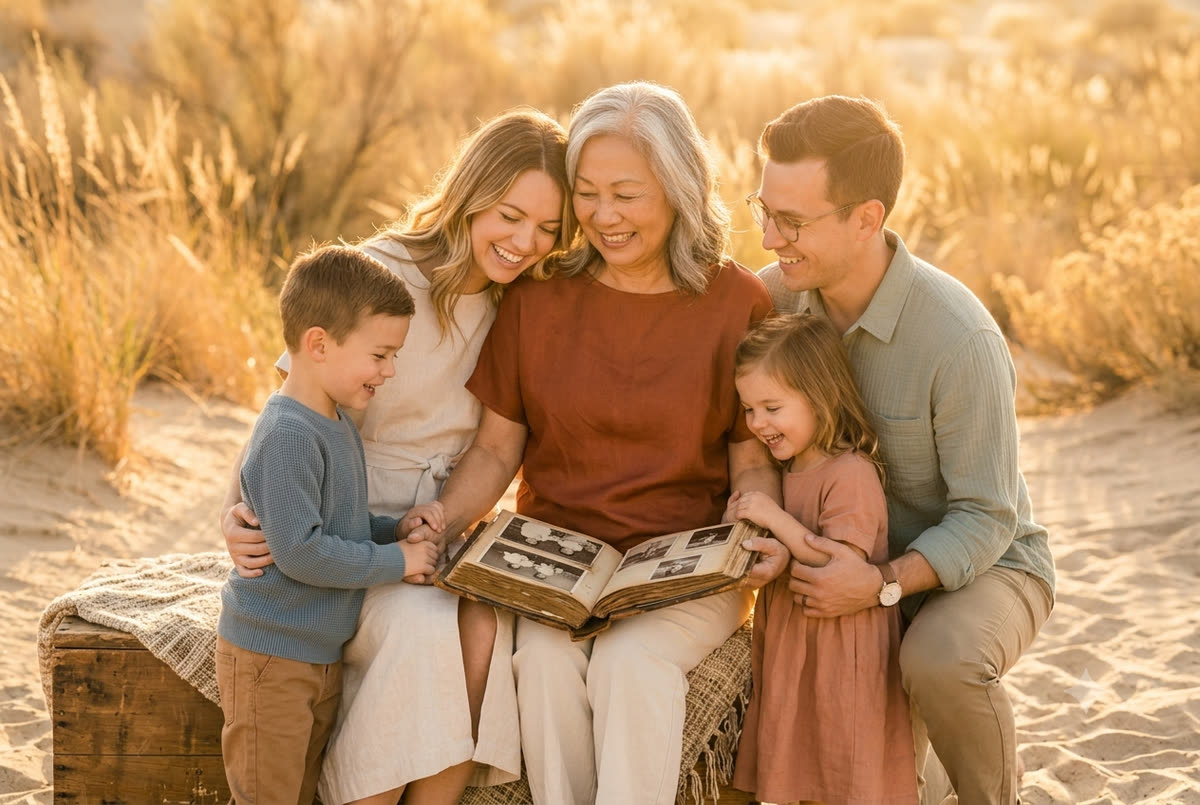
When that day comes — and there is no rush at all — some families like to mark the people who remain, the children and grandchildren who carry a face or a laugh forward. If that's something you find yourself thinking about, I've written about creating a family legacy portrait that honors who's been lost, and about the quieter work of preserving a loved one's stories and photographs. Only when you're ready — these things keep.
A note from me
I am not writing this to sell you a session. I'm writing it because I live and work among you, and I have watched too many good people in this valley grieve in silence, certain that everyone else has it together. They don't. Help is here — in a 24-hour phone line, in a circle of folding chairs at a church in Palm Desert, in a bereavement coordinator who will sit on the phone with you for an hour. Use it.
And if there comes a season — months from now, a year, whenever it feels true — when you want to gently gather what remains of someone into photographs you can hold, or to make a portrait of the family that's still here and still loving, I would be honored to help. I work the way that's easiest on grieving families: in your own home, in the soft daylight by the window, around the kitchen table where the stories actually live — or, if you'd rather be outside, in a quiet local park or garden in the gentle hour before sunset. Whenever that day arrives, you can reach me here, and we'll let the day unfold at whatever pace is yours.
Be gentle with yourself. The light comes back, a little at a time.