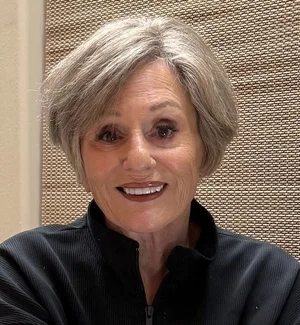
Capturing a Family Patriarch or Matriarch
There is a particular kind of phone call I have learned to recognize. The voice on the other end is a little careful, a little brave. Mom is turning ninety this winter. Or: Dad hasn't been himself since the surgery, and the whole family is flying in for Thanksgiving, and we have never — not once in all these years — taken a proper picture of him. Underneath the words is the thing nobody quite says out loud: we don't know how many more chances we get.
I want to talk plainly about that, because photographing the person at the head of a family is not the same as photographing anyone else. The matriarch or the patriarch is the person everyone else's stories point back to. When you make their portrait, you are not just taking a nice picture of an older adult. You are trying to hold onto the gravity of a whole family in one frame. That deserves some thought, and it deserves to be done while there is still time and ease to do it well.
Why this portrait is different
A senior session for a graduating high schooler is about who someone is becoming. A portrait of an eighty-eight-year-old grandmother is about who an entire family already is, because of her. The weight is reversed.
That changes a few practical things:
- Stamina is finite. A teenager can give me two hours and three outfit changes. An elder may have forty good minutes before fatigue sets in, and the best frames usually come in the first twenty. I plan the whole session around that reality rather than fighting it.
- The face has earned its lines. I am not trying to erase eighty years of living from someone's hands and eyes. Those lines are the point. My job is to light them honestly and kindly, not to airbrush a person into a stranger.
- The stakes feel higher to everyone. Families carry a quiet pressure into these sessions — a sense that this might be the picture. That pressure can stiffen a person right up. A good portion of my work is simply melting it.
Once you understand that this is a different assignment, every other decision gets easier.
Don't wait for the "right time" — it rarely announces itself
If I could change one thing about how families approach this, it would be the waiting. So often the call comes after a health scare, or worse, after a memorial when someone is hunting through phones for a photo good enough to print at poster size and coming up empty.
Please hear me on this: the right time is now, while your matriarch can still get her hair done the way she likes it, still tell the story behind the brooch she's wearing, still laugh at her own joke mid-frame. A portrait made in reasonable health, on a calm afternoon, looks nothing like a snapshot grabbed in a hospital chair. You can feel the difference, and so can everyone who looks at it for the next fifty years.
This is also why I gently encourage families to fold the elder's portrait into gatherings that are already happening. Which brings me to the calendar.
Timing it around desert life
In the Coachella Valley, the family calendar and the photography calendar line up better than almost anywhere I know.
Snowbird season (November through April) is the natural window. This is when the out-of-town children and grandchildren are actually here, when Grandpa isn't melting in the heat, and when the light is soft and generous. If your patriarch winters in Palm Desert, Rancho Mirage, or Indian Wells and the family converges for the holidays or for a milestone birthday, that visit is your opportunity. I keep my season fairly booked, so reaching out in early fall for a December or January date is wise.
Summer (roughly June through September) is harder but not impossible. The heat is genuinely dangerous for older adults, so I move those sessions indoors, or to the first hour after sunrise when it's still bearable. I'd rather photograph a ninety-year-old at 7 a.m. in their own cool living room than ask them to stand on a hot patio at any cost.
If the session is tied to a specific event — a ninetieth birthday, a sixtieth anniversary, a family reunion — we build around that day. There is something fitting about making the portrait on the occasion itself, while the dress is on and the spirit is high.
Where to photograph an elder, here in the valley
The best location for this kind of portrait is usually not the dramatic one. It's the comfortable one.
Their own home
My favorite place to photograph a matriarch or patriarch is almost always where they live. A person is most themselves in their own chair, by the window they always sit beside, surrounded by the photographs and objects of their own life. There's no travel to tire them, no unfamiliar setting to put them on guard. The light through a living-room window in a Sun City Palm Desert or Trilogy home, late in the morning, is some of the prettiest and most flattering light there is — soft, directional, kind to skin.
Home portraits also let me weave in the details that are the person: the hands resting on a worn Bible, the wedding ring worn thin, the reading glasses, the garden just outside the slider. Those frames become priceless almost immediately.
Quiet outdoor spots, chosen for ease
If we go outside, I choose places that ask very little of the body. Shaded courtyards, a bench under a date palm, the lawns at a place like Sunnylands in Rancho Mirage, or a country-club setting the family already belongs to. I want short walks, somewhere to sit, and shade. Desert golden hour — the hour before sunset, when the light goes warm and the Santa Rosa Mountains glow behind everything — is gorgeous, but I'll trade a little of that magic for a location where an elder can be seated and at peace. A relaxed face in good light beats a tense one in great light every single time.
A note on the middle of the day
The one stretch of desert light I steer around is the bright overhead sun near noon. It drops deep shadows under the eyes, asks people to hold an expression against the glare, and isn't kind to anyone who shouldn't be out in the heat. When the only hour a family can gather lands right in the middle of the day, that's all the more reason to stay indoors beside a window, where the light holds steady and gentle no matter what the clock says.
Putting your elder at ease — the real work
Most of what makes one of these portraits succeed has nothing to do with the camera. It's about helping a dignified older person feel relaxed and respected for forty minutes. A few things I do, and a few things families can do:
- I arrive early and just talk. Before I make a single frame, I sit down and ask about the painting on the wall, the grandchildren, where they grew up. People forget the camera is even there once they're telling a story they love. That story is usually when the true expression arrives.
- One trusted person stays close. A daughter or a grandson just out of frame, holding a hand, telling a familiar joke — this loosens a face faster than anything I can do. For someone with dementia, that familiar voice is essential and reassuring.
- We keep it short and let them rest. I'd rather do two short bursts with a sit-down in between than march through one long, exhausting set.
- Hearing and vision matter. I speak clearly, I face them when I talk, and I don't make someone strain to follow soft instructions from across a room. Small courtesy, big difference in the result.
- Glasses on, hearing aids in, ring on the right hand. I photograph people the way their family actually knows them. If Grandma has worn the same glasses for thirty years, taking them off makes a stranger.
When someone with cognitive changes is involved, I slow everything down and follow their lead. If you're navigating that, I've written more thoughts in photographing a loved one with dementia that may help you prepare.
What to wear, and what to bring
Clothing for an elder's portrait should be the clothes that feel like them, in colors that don't fight their skin or hair.
- Solid, slightly muted colors photograph beautifully against silver hair — soft blues, warm neutrals, deep greens, a quiet burgundy. I steer gently away from tight patterns and bright logos.
- Comfort first. A favorite cardigan they actually wear will always look more natural than a stiff outfit bought for the occasion.
- Bring the meaningful objects. A military cap, a beloved dog, a musical instrument, the apron she's baked in for decades, the hat he wears every morning. These aren't props. They're biography, and they give the portrait a story to tell.
- Jewelry that carries history. The anniversary watch, the pendant passed down — wear it. Decades from now a grandchild will recognize it.
Including the generations
Many families want both: the dignified solo portrait of the matriarch and the wider frames with everyone gathered around her. I always make sure we get the solo portrait first, while she's freshest, then bring people in.
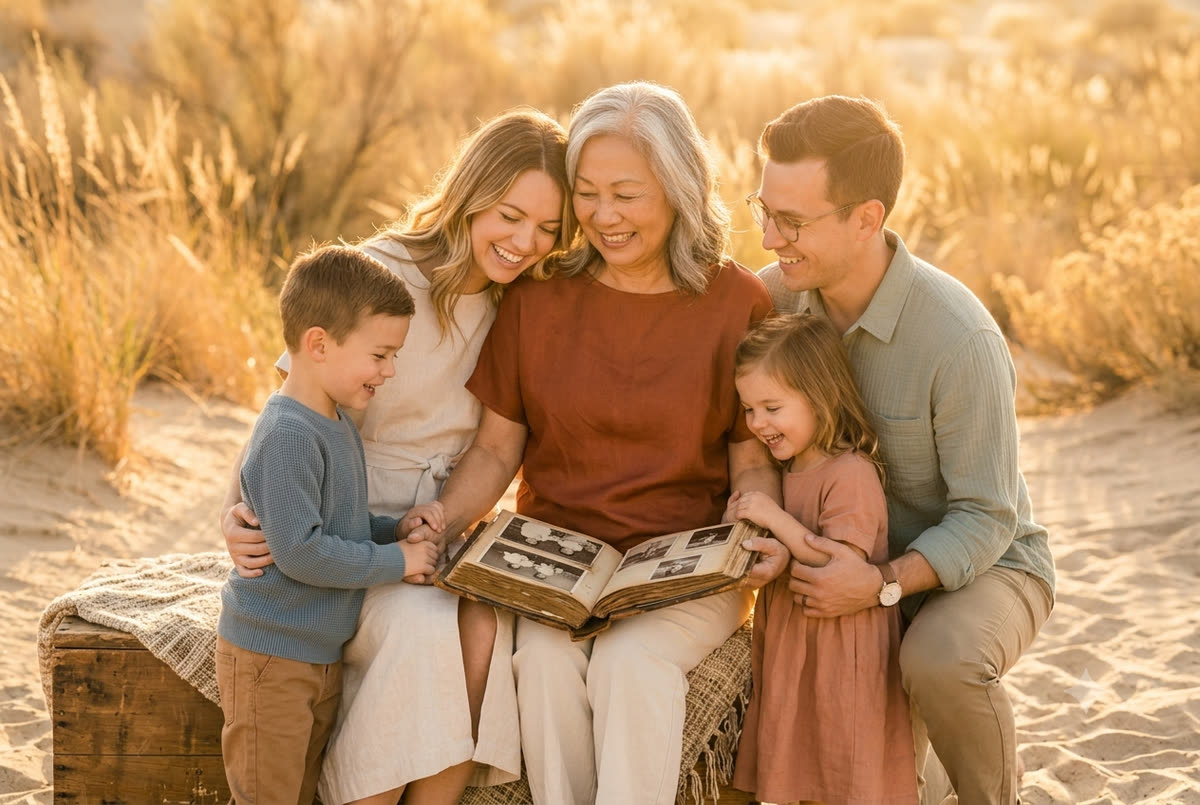
The four-generation photograph — great-grandmother, her child, her grandchild, and the baby — is one of the most meaningful images I make, and it can only be made within a particular and precious window of time. If you have four living generations right now, that's not a someday picture. That's a this-season picture. I write more about arranging those in planning a four-generation family portrait, and about the broader idea of documenting an extended family reunion in the desert when everyone flies in.
A small piece of advice: photograph the elder with people and alone. Years from now, the family will treasure both — the one that shows her place at the center of everyone, and the quiet one that's simply, fully her.
Common questions I hear
What if Mom says she hates having her picture taken?Nearly everyone says this, and nearly everyone ends up glad. I don't pose people into rigid smiles. I talk with them until they forget to perform, and the ease that comes through is what their family recognizes as her. The "I hate photos" feeling almost always comes from past experiences of being made to feel awkward. I work hard to make this the opposite.
What if he gets tired or has a bad day?We adapt. I build margin into the schedule, we slow down whenever a body needs it, and if forty minutes is all we have, forty minutes is plenty when we spend it well. There's no failing this.
Should we do it in black and white?I deliver these portraits in both, and there's a reason black and white suits an elder's face so well — it sets aside color and shows you the structure, the eyes, the lifetime of expression. Many families end up printing the black and white large and keeping color for the wider group shots.
How big should we print it?Bigger than you think. A portrait of your matriarch belongs on a wall, printed and framed, not lost in a phone. I help families choose a size and finish that will last for generations, because a file backed up to a drive that no one can find is not an heirloom. A beautiful print on the wall is.
A word on why this matters to me
Of all the work I do, these portraits are the ones I feel most responsible for. A wedding can, in theory, be re-photographed in spirit at an anniversary. This cannot. The chance to make a true, dignified, loving portrait of the person your family was built around is genuinely fleeting, and I have never once heard a family say they were sorry they did it. I have, too many times, heard the other thing.
So if there's a name and a face coming to mind as you read this — your grandmother, your father, the aunt who held everyone together — let that be the nudge. Don't wait for a milestone to give you permission.
When you're ready, I'd be glad to talk it through with you: when your family will be in town, what your matriarch or patriarch is comfortable with, and how to make an afternoon that feels easy for them and precious for everyone else. You can reach out to me here, and we'll find the right time together.