What to Wear for Multigenerational & Extended Family Photos
The text thread starts about three weeks before the session. Someone — usually the daughter who organized the whole reunion — sends a group message with a color swatch and the words "okay everyone, here's the plan." And then twenty-two people, three time zones, two teenagers who own nothing but black hoodies, and one father-in-law who has worn the same gray polo to every event since 2009 all have to land in roughly the same place by the day we all gather.
I photograph a lot of these, and most of them happen in the two settings I love best: inside a family's own home, where everyone is already relaxed and the light is soft, or at a nearby park, garden, or shaded patio just a few minutes from the front door. Extended families come together here in a way that few other places allow — grandparents settled in Palm Desert, adult kids flying in from Seattle and Chicago, cousins meeting the new baby for the first time. When everyone is finally in one place at the same time, somebody books a portrait, because who knows when it will happen again. That's the real weight of these pictures, and it's why the clothing question matters more than it does for a single couple or one tidy family of four.
So let me give you the honest, photographer's-eye version of how to dress a big group — not the Pinterest-perfect fantasy, but what actually holds up when there are eighteen people and a grandmother who needs to sit down.
Start with one idea: a palette, not a uniform
The single biggest mistake I see with extended-family groups is matching too hard. Eleven people in identical white shirts and jeans doesn't read as "elegant" in a photo — it reads as a corporate retreat or a cult, and worse, everybody blends into one undifferentiated blob. You lose the very thing these portraits are for: seeing each distinct face and personality.
The opposite mistake is no plan at all, where one person shows up in neon, another in a busy Hawaiian print, and the eye doesn't know where to land.
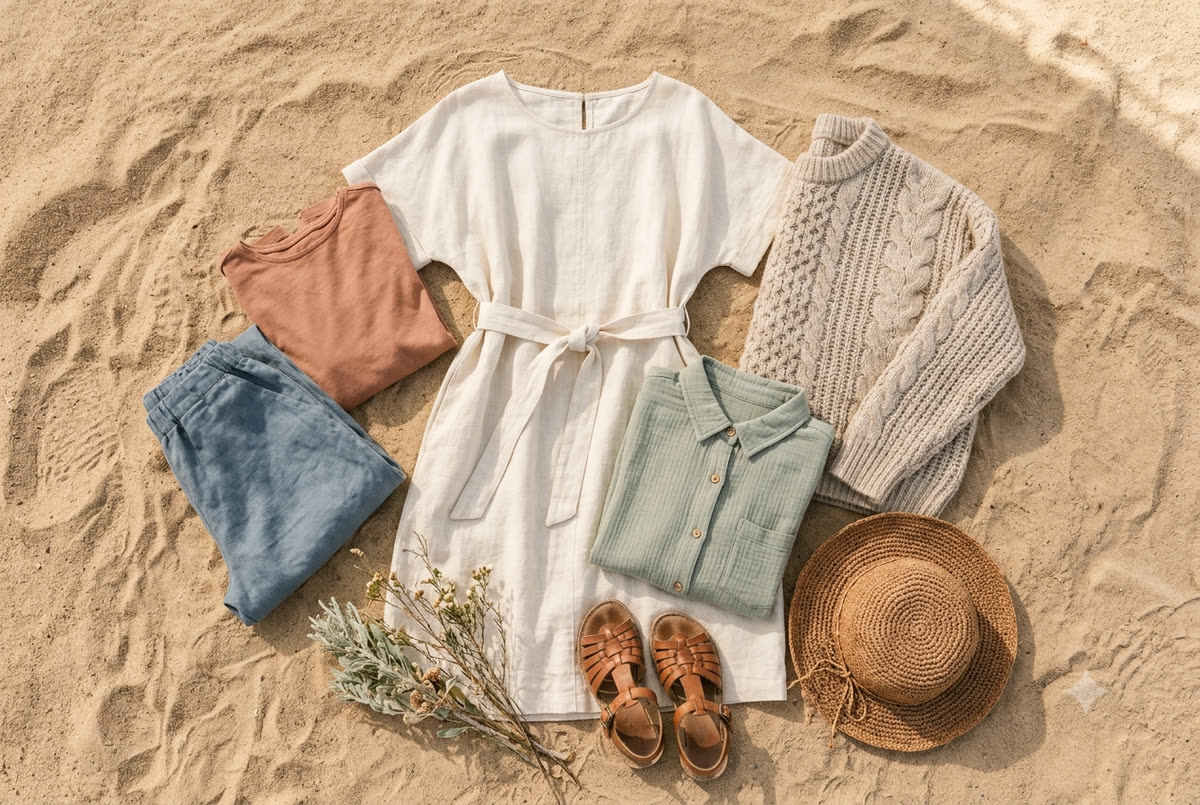
What works is a palette — a small family of colors that live happily together, worn loosely across the group. Think three to five colors, mostly soft and muted, that anyone can pull from. Everyone is in the same world without being in the same costume. Grandpa's olive sweater, your daughter's cream dress, your brother's dusty-blue button-down, the baby in oatmeal — that's a photograph. Eleven white shirts is a spreadsheet.
A few palettes that photograph beautifully against our landscape:
- Desert neutrals: cream, oatmeal, camel, soft white, warm gray. Timeless, and it glows in late-afternoon light.
- Sage and stone: muted greens, taupe, ivory, a touch of warm brown. Gorgeous against the Indian Wells and La Quinta foothills.
- Dusty blue and sand: chambray, slate, tan, off-white. Reads relaxed and a little coastal without being themed.
- Terracotta and clay: rust, ochre, cream, deep olive. Especially lovely in fall and against rock formations.
Pick one. Send it to the group with two or three example colors, not a paint chip and a ruler.
How to actually organize 15+ people
Coordinating one family is easy. Coordinating four households who only see each other twice a year is the real job, and it usually falls on one person. Here's how to make it painless.
Dress in "family units," not as one mass
Don't try to assign every individual a color — you'll lose your mind and your relatives. Instead, give each household (each nuclear family) the palette and let them coordinate within themselves. The Seattle family leans cream and sage; the local grandparents go warm neutral; your household takes the blues. Each little group looks intentional, and together they harmonize because they're all drawing from the same well.
This also solves the photo's quiet visual logic: when we group and regroup people during the session — all the grandkids, then each family with the grandparents, then the whole clan — the units already read as units.
Anchor on the hardest person to dress first
Every family has one. The teenager. The father-in-law loyal to his polo. The toddler who will not wear a collar. Start with them. Find the one thing they'll genuinely wear that fits the palette, build outward from there, and stop fighting the battles you can't win. A comfortable sixteen-year-old who doesn't feel costumed will give me a real smile. A miserable one in a stiff button-down will give me exactly what you'd expect.
Mind the grandparents — comfort is the whole game
In multigenerational sessions, the eldest generation is the reason we're all here, and dressing them well is partly about dignity and partly about logistics. A few things I've learned:
- Layers they can sit in. We'll do plenty of seated arrangements so Grandma and Grandpa are comfortable and central. Clothes that look good sitting — not just standing — matter.
- Sleeves are a kindness. Many older women feel more at ease with three-quarter or full sleeves, and it photographs softer and more timeless anyway.
- Shoes for the ground we're on. If we step outside onto a garden path or the decomposed-granite walkways at a local park, flat and stable beats fashionable-but-wobbly. Even indoors, comfortable shoes keep the eldest generation at ease.
- A light layer for temperature. If we're outdoors, the desert cools fast once the sun drops behind the mountains. A cardigan or wrap in the palette doubles as a styling layer and a warmth layer.
Texture is your best friend (and your secret weapon)
Here's the trick that separates a flat group photo from one with real depth: when colors are quiet and similar, texture does the work that bold color would otherwise do.
A cable-knit sweater next to a linen dress next to a corduroy jacket next to a gauzy blouse — all in the same cream-to-camel family — gives the photograph richness and dimension even though nobody is "popping." Texture lets a large group stay cohesive without going flat. So as people choose pieces from the palette, encourage variety in fabric: knits, linen, suede, denim, soft wovens, a little lace.
This is also how you keep eighteen people in neutrals from looking like a hospital waiting room.
What to avoid (the short, honest list)
- Logos, slogans, and big graphics. They date a photo instantly and pull the eye. This is the one I'd hold firm on.
- Tight, repeating patterns — small checks, thin stripes, fine herringbone. They can shimmer and buzz strangely on camera. One person in a soft, large-scale pattern can be lovely; a whole group in patterns is chaos.
- All-black or all-white as a group rule. A few black or white pieces inside a palette are fine, but a sea of either flattens faces and erases the individuality these portraits exist to capture.
- Brand-new shoes nobody has walked in. Blisters on uneven desert ground ruin moods fast.
- Neon and very saturated brights, which bounce color onto skin (especially under our intense light) and tend to fight with the warm tones of the landscape.
Dressing for the desert, season by season
Our climate shapes these sessions more than people expect, and it should shape the closet too.
Peak season (November–April). This is when most extended families gather here, and it's glorious — comfortable days, soft light, that famous low desert sun. You can do sweaters, layers, longer sleeves, richer fabrics. Mornings and the hour before sunset can be genuinely cool, so those palette-friendly layers earn their keep.
Late spring and fall shoulders. Lighter fabrics, breathable linens and cottons. Still pleasant, but I'd avoid heavy knits midday.
Summer (the brave and the local). If we're shooting in June through September, we go early — sunrise — or we shoot at dusk, and we keep fabrics light and breathable. Linen, loose cotton, flowing dresses. Nobody should be in wool when it's still ninety degrees at seven in the evening. For more on timing, I always point families to my notes on the best time of day for desert family photos.
A word on light and color: when we're outdoors at a park or garden, I time the session for the golden hour, and that light is warm. It gilds skin and turns cream and camel to honey. Indoors, it's a different but equally flattering story — soft natural window light, which is gentle and even and forgiving on every age in the room. Cool, muted tones — sages, dusty blues, stones — sit beautifully in either light, which is why I lean families toward them. Stark cool brights, by contrast, can look slightly off once outdoor light goes gold.
Match the clothes to the place
Where we shoot should inform how formal the clothing goes. Here are the settings I work in most, and how I'd dress each:
- A family home — living room, kitchen, backyard. My most-loved setting, and the most relaxed of all: barefoot grandkids on the rug, soft knits, the comfortable end of the palette. Soft window light does the heavy lifting, so there's nothing to dress around — just dress for ease.
- A local park, garden, or shaded patio. My second home base, and the easy outdoor option a short drive from the house. A touch more polished than indoors — sundresses, linen trousers, a light blazer on the dads — with flowy fabrics that catch a little breeze. The lawns and date-palm groves around Rancho Mirage and Palm Desert are lovely for this.
- Mid-century Palm Springs walls and architecture. Cleaner lines suit the backdrop; you can go a hair more graphic here, with simple solid colors and good tailoring.
- Open desert scenery, for the families who want it. Now and then a group wants the wider landscape — a preserve trail or the foothills around La Quinta and Indian Wells. It's not my everyday, but when we do it I'd dress it earthy and texture-forward: neutrals and terracottas, fabrics that move in the wind.
If you're not sure which setting fits your group, that's part of what we'll plan together. I also keep a fuller guide to choosing a location for your family session if you want to think it through ahead of time.
A simple plan you can send to the group
If you want to copy-paste something into that family text thread, here's the version that actually works:
- Our palette is [name your 3–4 colors]. Pull anything you like from these. You don't need to match anyone exactly — just stay in this family of colors.
- Coordinate within your own household, not across the whole group.
- Favor texture and softness over bold patterns and logos.
- Dress for comfort and the desert — layers for the cool evening, shoes you can walk in.
- When in doubt, go a little dressier than your instinct, but never so dressy you stop feeling like yourself.
That last point matters. The goal isn't a magazine shoot. It's that years from now, looking at this print on the wall, everyone still recognizes themselves in it — that this is unmistakably your family, in this place, in this season of your lives.
A few questions I get every time
Do we all have to be in long sleeves / pants? No. Mix is good. What you want is consistency of tone and formality, not of garment. A sundress and a button-down belong in the same photo as long as they share the palette.
What about the grandkids — can they be in their "fun" colors? Keep them in the palette, but lean into the softest, most playful end of it. Little ones in oatmeal, sage, and cream are timeless, and you'll be glad in ten years they weren't in cartoon graphics.
One family member refuses to coordinate. Now what? It happens, and it's rarely worth a fight. Get them into a neutral that won't clash — a soft gray, a tan, a denim — and we'll place them thoughtfully in the group. A photograph with everyone present and at ease beats a perfectly color-blocked one with someone sulking.
Should we bring a change of clothes? For most groups, no — wrangling eighteen people through an outfit change eats our light. For smaller multigenerational groups, sometimes one relaxed "second look" is worth it. We can decide when we plan.
When the day comes
By the time we meet, the clothing is settled and nobody's thinking about it anymore — which is exactly the point. What I'm watching for is the grandfather's hand on his grandson's shoulder, the sisters falling into the same laugh they've had since childhood, the great-grandmother in the center of it all. The outfits just need to get out of the way and let those moments be the loudest thing in the frame.
If you're gathering your family in the valley this season and want help planning a multigenerational session — palette, location, timing, all of it — I'd love to hear who's coming and what this gathering means to you. You can reach me here, and we'll build the whole thing together, well before the first relative steps off the plane.