The Heirloom Album & Wall Art
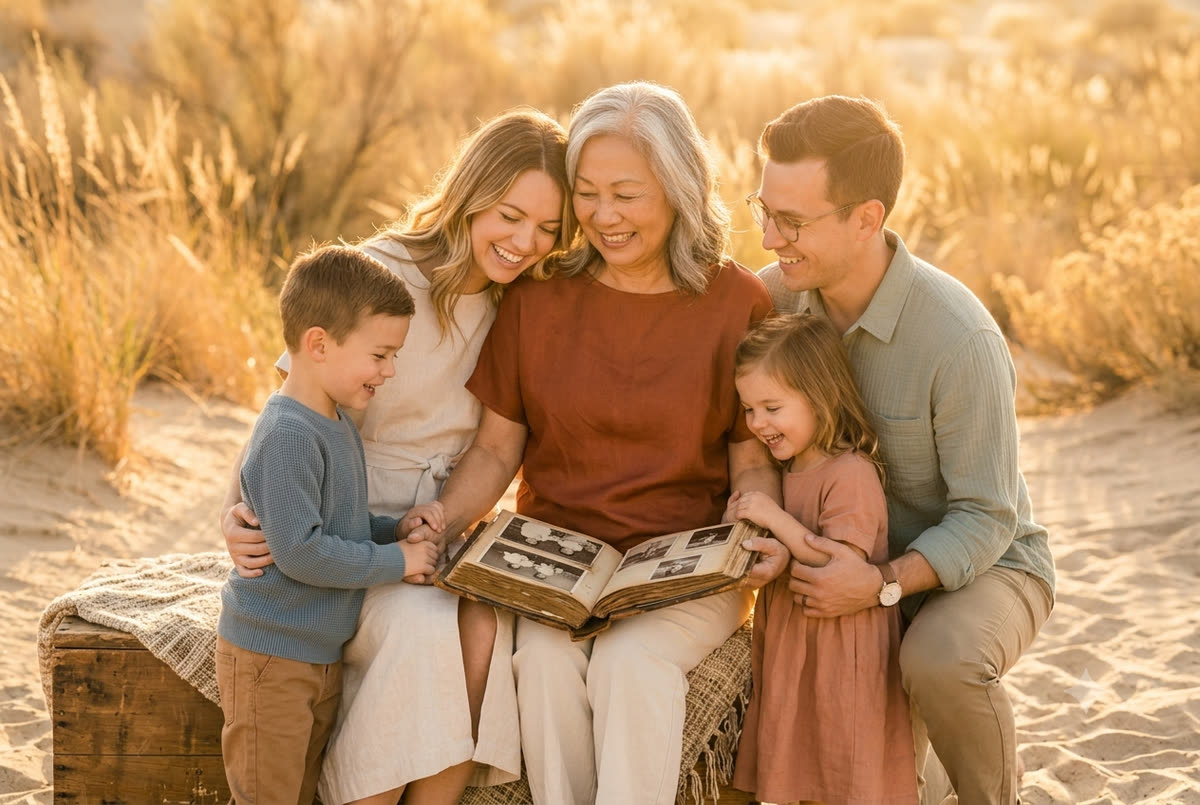
There is a moment near the end of every session I love most, and it has nothing to do with the camera. It is when a family gathers around my dining table months later, the prints spread out, and someone reaches for the one frame that stops the whole room. A grandmother's hand on a grandchild's shoulder. Two brothers laughing at something only they remember. That is the picture that becomes the album cover. That is the one that goes on the wall.
I started photographing families in the desert because I believed pictures were meant to be held and lived with, not scrolled past. A heirloom photo album and a piece of wall art are how a session stops being a file on a phone and becomes part of your home — and part of your family's memory long after the day itself has faded. This is the piece I wish every client read before our shoot, because the choices you make about prints shape how I photograph in the first place.
What "heirloom" actually means
The word gets used loosely, so let me be plain about what I mean. An heirloom is something built to outlast the person who commissioned it. It is meant to be handed down. That is a different standard than a nice print, and it changes every decision — the paper, the binding, the ink, the way a portrait is mounted and sealed.
A genuine heirloom photo album is not the soft-cover book you order from a phone app for a long weekend. It is archival, meaning the materials are chemically stable and won't yellow, crack, or fade through normal handling and the dry desert air. The pages lie flat so a portrait can stretch uncorrupted across the center seam. The cover is leather, linen, or fine cloth that ages gracefully rather than peeling. Done right, an album like this is still readable and beautiful in fifty or seventy years, which is precisely the point.
The same logic applies to wall art. A framed portrait that will hang in your La Quinta living room for two decades has to survive sunlight, temperature swings, and the simple fact of being looked at every single day. The materials matter more than most people realize until they've watched a cheaper print go pink behind glass.
Why printed work matters more here than almost anywhere
I want to be honest about something specific to where we live. The Coachella Valley is hard on photographs, and it is hard on digital memories in a different way.
On the physical side, our light is relentless. A portrait hung on a wall that catches afternoon sun through a west-facing window in Rancho Mirage or Indian Wells will fade fast if it isn't printed and protected properly. Our air is bone-dry for most of the year, which is actually kind to paper in some ways but brutal on cheap adhesives and bindings. So the craftsmanship of an heirloom piece isn't vanity — it is what lets the image survive the room it lives in.
On the digital side, I have watched too many families lose everything. Phones get dropped in a pool over a summer Saturday. Laptops die. A cloud account lapses when a card expires, and four years of a child's life vanish quietly. I deliver digital files with every session and I want you to have them — but a file is not a memory you can hold, and it is not one your grandchildren will stumble across in a closet someday. A printed album is the backup that doesn't depend on a password.
There's also something I've come to believe after many years of this work: a photograph you walk past every day does quiet work on a family. Children who grow up seeing themselves on the wall, framed and cared for, absorb a simple message — you belong here, and you matter enough to be kept. You cannot get that from an image that only ever lives on a screen.
The heirloom album, up close
When I design an album for a family, I'm not just dumping a gallery into a template. The album is a story, and a story has a shape.
How I build the story
I start with the single strongest image — the one that earns the cover or the opening spread. From there I sequence the rest the way the session actually felt: the wide, settling-in frames first, then the connection building, then the quiet in-between moments that are usually a family's favorites, then a closing image that lets the book exhale. I leave breathing room. A common mistake I see in self-made books is cramming twelve photos onto a page until none of them can speak. Restraint is what makes an album feel like an heirloom instead of a scrapbook.
What goes into a well-made album
A few things I insist on, and you should ask any photographer about:
- Lay-flat binding. The pages open completely flat so a portrait can span both pages without disappearing into the gutter. This is the single biggest difference between a real album and a consumer photo book.
- Thick, archival pages. Substantial pages that feel like something. They turn with weight and won't curl in dry desert air.
- A protective, lasting cover. Leather, linen, or fine fabric, often with the option to deboss a name or date. This is the surface that gets handled for decades.
- True color management. The prints inside are calibrated so skin tones look like your actual family, not orange or ashen. I proof these carefully before anything is bound.
- A size that suits the story. A milestone wedding may want a large, generous album; a yearly family session might live beautifully in a smaller, holdable book.
I also love making smaller companion albums — duplicates for grandparents, especially the snowbird grandparents who head back north in April and want the desert visit with them. A duplicate album in Minnesota or British Columbia is one of the kindest gifts I've seen families give.
Wall art: choosing the piece that anchors a room
Albums are intimate; you hold them, you turn the pages, they're for the people in the photograph. Wall art is public. It's the first thing a guest sees, and it sets the emotional temperature of a room. Choosing it well is part of what I help with — most people genuinely don't know how big a portrait should be, and they almost always guess too small.
The materials I work in
There is no single "best" — it depends on your home and the image:
- Framed fine-art prints. The classic choice. Archival paper, conservation matting, real glass or museum acrylic that cuts glare and blocks UV. This is what I'd recommend for a portrait hung where desert sun can reach it.
- Canvas. Warm, textural, no glass to reflect a room. Beautiful for a relaxed family image; it reads as soft and lived-in.
- Metal and acrylic. Modern, luminous, vivid color. These suit the clean lines you see in a lot of newer Palm Desert and Indian Wells architecture, and they hold up well.
- Folio boxes and matted prints. A middle path between album and wall — loose archival prints in a presentation box, easy to swap into frames or hand to family.
Sizing it right
The honest truth about scale: hold up your hand and imagine the frame, then go a size larger than your instinct. Above a sofa or a fireplace, a portrait should feel like it belongs to the wall, not float on it like a postage stamp. For a standard living-room wall I'm often suggesting a piece in the 30-by-40-inch range or a grouping of three. In a hallway or up a staircase, a sequence of smaller matched frames tells a story as you climb.
I will gladly mock pieces up to scale for your actual rooms before you commit. Bring me a phone photo of the wall and rough measurements and we'll solve it together — that step alone prevents the most common regret in this whole process.
How prints change the way I shoot
Here is a connection people miss: deciding to print before the session makes the session better. If I know a portrait is destined for a 40-inch wall piece, I shoot it differently — composition, spacing, where I leave room, how I light for a large print where every detail is visible. If I know we're building an album, I deliberately gather the quieter connecting moments that make a book feel whole, not just the posed hero shots.
So when we talk before your shoot, I'll ask what you imagine living with afterward. Even a rough idea is enough — it lets me serve the finished thing you actually want, rather than handing you a gallery and wishing you luck.
What to expect, start to finish
For families new to this, here's the rhythm:
- A conversation first. We talk about your family, your home, and what you hope to keep. This is where wall and album ideas start.
- The session. Most often right in your own home, where everyone is most themselves and soft window light does the gentle work — or at a nearby park, garden, or shaded patio. When we do head outdoors, I plan around golden hour for that warm, even glow; a favorite green corner in Old Town La Quinta works beautifully too.
- The reveal. A few weeks later we sit down together with the images. I help you choose, sequence the album, and size the wall piece. This is the part clients tell me they didn't expect to love so much.
- Crafting and delivery. The album and prints are made to archival standards and delivered ready to live with. I help with hanging guidance too.
If you'd like to understand more about the desert-specific side of all this, I've written about how to protect family photographs in the desert climate and about planning a multi-generation portrait session during snowbird season. Both touch directly on why printed heirlooms matter so much here.
A few honest answers to common questions
Do I have to decide on prints before the session?No — but telling me your hopes ahead of time genuinely improves the result. You can also decide everything at the reveal once you've seen the images large and in person.
Can grandparents get their own copy?Yes, and they're some of my favorite pieces to make. Duplicate albums and matched prints travel well to wherever your family is scattered.
Will the album really last?With archival materials and ordinary care — kept out of direct sun and standing water — yes, for generations. That is the entire definition of an heirloom, and it's the standard I hold the work to.
What if my walls are already full?Then a folio box or a beautifully made album might be exactly right. Not every family wants gallery walls, and the work should fit your home, not fight it.
Let's make something you'll keep
The photographs I'm proudest of aren't the ones that did well online. They're the ones I know are hanging in a hallway in Palm Desert, or sitting on a shelf where a child will find them in thirty years and recognize their own face looking back. That is what an heirloom album and wall art are for — turning a single afternoon into something your family gets to keep, and hand down, and be glad of for a very long time.
If you've been thinking about a portrait that becomes part of your home rather than your camera roll, I would love to talk it through with you. Tell me about your family and the wall you have in mind, and we'll design something worth keeping — reach out here whenever you're ready.