Family Photos at Joshua Tree
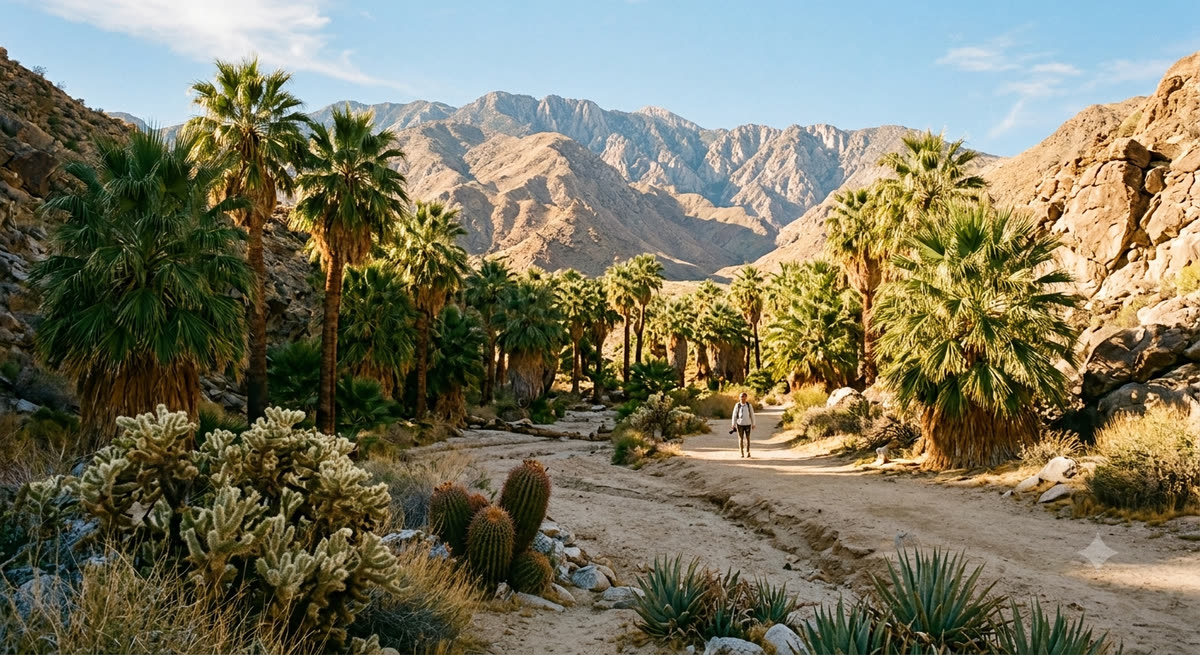
Most of the families I photograph never leave their own neighborhood. We work in living rooms with the afternoon sun pouring through the windows, or in the gardens, parks, and patios tucked all across Palm Desert and the Coachella Valley — the everyday settings where children are most themselves and nobody has to perform. That is the heart of what I do. But every so often a family wants something grander to mark a milestone, and the conversation turns to Joshua Tree. There is a particular kind of light out there about an hour before sunset, when the low sun catches the twisted arms of the trees and the boulders go warm and gold and the whole desert seems to soften. It is one of the more spectacular places I am occasionally invited to work, and if it has been calling to you, this guide is everything I have learned about doing it well.
If you live in Palm Desert, Palm Springs, Rancho Mirage, or anywhere across the Coachella Valley, Joshua Tree is practically in your backyard, and it makes an unforgettable backdrop for a once-in-a-while family portrait. But it rewards a little planning. The desert is glorious and it is also genuinely hot, dry, and big, and a family session out here goes much more smoothly when you know what to expect. So let me walk you through everything I have learned about photographing families at Joshua Tree, from the best time of year to what to pack to where exactly we should meet.
Why Joshua Tree is such a special place for family photos
I think families are drawn to Joshua Tree for the same reason I am: it does not look like anywhere else. The Joshua trees themselves, with their shaggy, reaching silhouettes, give a portrait an instant sense of place. Pile on the giant tumbled granite boulders, the wide skies, the desert scrub going gold in the evening, and you have a setting that is dramatic without anyone having to do anything but be together in it.
For families in particular, that openness matters. There is room to roam. Kids can climb a low boulder, run between the trees, or simply explore while I work, and the photographs that come out of that are the ones families treasure most — the real, in-between moments, not the stiff "everybody say cheese" lineups. The landscape gives children something to do, and that takes all the pressure off. Some of my favorite frames from these sessions are the ones where nobody was looking at the camera at all.
It is also wonderfully timeless. A family portrait styled to a passing trend can start to feel dated in a few years. The desert does not go out of style. Twenty years from now, those images will still feel like exactly the place you remember.
The best time of year for Joshua Tree family photos
This is the single most important thing to get right, so let me be direct about it. Joshua Tree is a desert, and the season you choose will shape your entire experience.
Late fall through early spring (the sweet spot)
If you are local to the Coachella Valley, you already know the rhythm of our seasons, and it applies here too. November through April is the ideal window for family photos at Joshua Tree. It is the same stretch that draws everyone to the desert in winter — the days are warm and comfortable rather than punishing, the light is gorgeous, and being outdoors with children is genuinely pleasant. Mornings can be crisp, especially up at elevation (Joshua Tree sits higher than the valley floor, so it runs cooler than Palm Desert), so I usually suggest layers for early sessions.
Wildflowers can appear in spring if we have had a wet winter, which adds something lovely, though they are never guaranteed in the desert. Do not plan a whole session around them, but enjoy them if they come.
Summer (proceed with real caution)
I will be honest with you, because keeping your family comfortable and safe matters more than any photograph: I generally steer families away from midday summer sessions at Joshua Tree. From roughly June through September, daytime temperatures out there can climb well past 100 degrees, and that is not a setting for young children or grandparents to be standing around in. If you have your heart set on a summer session, we keep it very short and do it right at sunrise, when it is briefly cooler, and we bring more water than you think you could possibly need. More often, in high summer I will gently suggest we move the whole thing indoors to your home, where the light is soft and the air is cool, and save the desert for the fall.
Golden hour, always
Whatever the season, outdoors we shoot at the edges of the day — the hour after sunrise or, more commonly, the hour or two before sunset. This is non-negotiable for me, and not because it is a cliché. Overhead light at noon flattens faces and drops hard shadows in all the wrong places. Golden hour light is soft, warm, and directional, and it makes skin glow and the whole landscape come alive. When clients ask why we cannot just meet at lunchtime, this is why. The difference is night and day, literally.
In the Coachella Valley, sunset timing swings a lot across the year — closer to 4:40 in December and nearly 8:00 in June — so the actual clock time of our session shifts with the season. I always send you exact timing once we pick a date.
Where in Joshua Tree we might shoot
People are sometimes surprised to learn how varied Joshua Tree is. "Joshua Tree" can mean a few different things, and it helps to know the distinction.
- Joshua Tree National Park is the protected park itself, with its famous dense stands of trees, the dramatic boulder formations, and iconic spots like Hidden Valley, Cap Rock, and the Cholla Cactus Garden. It is stunning, and it does require a park entrance fee and, for professional photography, awareness of the park's permit rules (more on that below).
- The town of Joshua Tree and the surrounding high desert — including areas around Yucca Valley and Pioneertown — offer wide-open desert landscapes with Joshua trees that are gorgeous and often less crowded, sometimes on land where access is simpler.
For most families, I tend to favor locations that are easy to reach, easy to park near, and not a long hike from the car, because a half-mile scramble over rocks with a toddler and a diaper bag is no one's idea of fun. We want the beauty without the ordeal. When you book, we talk through your family — ages, mobility, how adventurous everyone is — and I match the spot to you. A family with teenagers who love to climb gets a different location than grandparents joining for a multigenerational portrait.
If the drive up from the valley feels like a lot with little ones, please know it is not the only way to get a beautiful portrait — and honestly, most of my sessions never go that far. The Coachella Valley itself has lovely parks, gardens, and golden-hour backdrops minutes from home. I write more about those in my guide to desert golden hour family sessions in Palm Desert, and an in-home session is always on the table too.
Permits, fees, and the practical rules
I handle the logistics so you do not have to worry about them, but I want you to understand what is involved.
If we shoot inside Joshua Tree National Park, there is a standard park entrance fee per vehicle, valid for several days, and it is a good idea to arrive with that sorted (you can buy a pass online ahead of time). The National Park Service also has rules about commercial and professional photography, and for certain types of shoots a special use permit may be required. As your photographer, staying on the right side of those rules is my responsibility, and I keep current on what the park asks of us. A small, low-key family portrait session is different from a large production, but I would rather we do everything properly than risk a problem on the day.
A few non-negotiable desert ethics, for all of us: we stay on trails and durable surfaces, we never climb on or damage the Joshua trees (they are slow-growing and protected, and a broken limb does not come back in our lifetimes), and we pack out everything we bring in. Teaching kids to tread lightly in the desert is part of the experience, honestly.
What to wear for a Joshua Tree family session
Outfits trip up more families than anything else, so here is my honest, practical advice.
- Lean into earth tones and soft, warm neutrals. Creams, camels, rust, terracotta, sage, dusty blue, soft white, warm browns. These colors live in harmony with the desert and they photograph beautifully against the golden light and pale boulders.
- Build from a shared palette. You do not all need to wear the same thing — matching outfits can feel a little dated. Instead, pull everyone's looks from two or three complementary colors so the family reads as a set without looking like a uniform.
- Choose flowing fabrics. The desert almost always has a breeze at golden hour, and a long dress or a loose linen shirt that moves in the wind gives us those gorgeous, alive images. Stiff, structured outfits do not catch the light the same way.
- Avoid big logos, bright neons, and busy patterns. They pull the eye away from your faces. We want the focus on your family, not on a graphic tee.
- Dress for the ground and the temperature. Closed-toe or sturdy shoes are wise — there are rocks, spiny plants, and uneven sand. And remember the elevation: bring a layer for cooler mornings or as the sun drops, because the desert cools fast once the light goes.
If you want, send me photos of your outfit ideas before the session and I will happily give feedback. I do this for families all the time, and it takes the guesswork out of getting dressed.
Bringing kids to the desert: what to expect
Family sessions with young children are my joy, and they go best when nobody expects perfection. Here is how I approach them, and how you can help.
- We work with your kids, not against them. If your toddler wants to run between the trees or inspect a rock for ten minutes, wonderful — that is where the magic photos hide. I work at the children's pace and follow their lead far more than I direct it.
- Time it around naps and meals. A hungry, tired child is a hard sell anywhere, and the desert is no exception. We pick a session time that works with your little one's day, and you bring snacks and water for after.
- Pack the essentials. Water for everyone (more than you think), sun hats, sunscreen applied before we start, a small first-aid kit, and a favorite toy or two. I usually keep a few tricks of my own in my bag.
- Let go of the lineup fantasy. The image where all four kids are looking, smiling, and still at the same instant is lovely when it happens, but it is not the heart of the session. The heart is your two-year-old belly-laughing on your husband's shoulders while the sun goes down. Trust me on this.
For more on keeping little ones happy in front of the camera, I put together a whole piece on stress-free family photos with toddlers and young kids that I share with desert families often.
A few common mistakes to avoid
After many family sessions, I can tell you the things that trip families up out here — and they are all easy to sidestep.
- Booking midday. I have said it already but it bears repeating: flat overhead light at noon is the most common reason outdoor family photos disappoint. We shoot golden hour.
- Underestimating the drive and the heat. From Palm Desert, the drive up to the park is a real commitment, and the conditions up there are not the same as the valley floor. Build in buffer time and water.
- Over-planning poses. The families who arrive determined to recreate a Pinterest board of stiff poses tend to enjoy it less. Come ready to simply be together and let me capture it.
- Forgetting the elevation chill. People dress for desert heat and then freeze when the sun drops. Layers.
- Skipping the park pass or permit awareness. If we are inside the national park, this matters. I will guide you, but do not show up to the gate unprepared on your own.
How a session with me usually flows
Most of my family sessions happen close to home — in your living room with the curtains open and the window light coming in soft, or at a favorite valley park or garden where the kids can roam. A Joshua Tree session works exactly the same way at heart, just with a bigger backdrop and a little more planning. When you reach out, we start with a relaxed conversation about your family — who is coming, the kids' ages, what you picture, what you will do with the images. From there I suggest a setting that suits you — your own home, a park near you, or the desert — along with a season, a time, and a simple guide on what to wear and bring. On the day, if we are outdoors we meet at golden hour; if we are at home, we plan around the brightest, softest stretch of window light in your afternoon. Either way I keep things easy and playful, no barking directions. I am watching for the small, genuine moments — the inside joke, the spontaneous hug, the way your daughter looks up at you — because that is what I am really there to capture. Afterward, I carefully edit your gallery and deliver images that feel warm, honest, and timeless.
Years into this work, the part that still gets me is the detail you could never plan — the gap-toothed grin, the way a child reaches for a parent without being asked. That is the frame I am always waiting for, and it shows up just as readily on your own couch as it does among the Joshua trees.
Let's plan your family session
If family photos out among the Joshua trees have been on your mind, I would love to help you make them happen — at the right time of year, in the most beautiful light, with everyone comfortable and cared for. And if the drive feels like a lot right now, we can start simpler and just as lovely: an afternoon in your home or a park near you, with the desert saved for another year.
Either way, reach out through my contact page and tell me a little about your family and what you are picturing. I will write back with honest thoughts on timing, light, and the setting that would suit you best, and we will go from there.