Assisted Living in Palm Desert: A Family Guide

Most families don't go looking for assisted living until something forces the question. A fall in the night. A pot left on the stove. A pile of unopened mail, or a parent who has quietly stopped driving and is now quietly stopped at home. By the time we start touring communities, we are usually tired, a little frightened, and trying to make a careful decision at the worst possible moment to be making one.
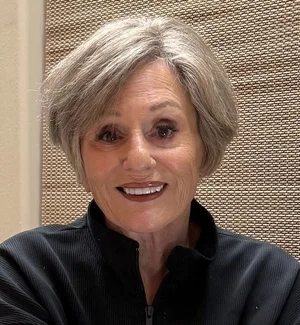
I'm a portrait photographer, not a placement counselor — but over many years of working with older adults and their families across the Coachella Valley, I've sat in a great many living rooms during exactly this season. I've watched my own friends move parents from a Palm Desert house they loved into a community a few miles away, and I've photographed people on both sides of that move. So I wanted to write the guide I keep wishing someone had handed those families: plainspoken, specific to the desert, and honest about the parts the brochures skip.
This is part of my Valley Guides for Elders series. It won't tell you which community to choose — only you and your family can do that. But it should help you walk in knowing what to look at, what to ask, and roughly what it costs out here.
First, what "assisted living" actually means
The phrase gets used loosely, and the confusion costs families real money and real heartache. In California, these are distinct things:
- Independent living is essentially an apartment for seniors — meals, activities, housekeeping, no hands-on care. It suits someone who is fully capable but wants community and no yard work.
- Assisted living (licensed in California as a Residential Care Facility for the Elderly, or RCFE) is for someone who needs help with the activities of daily living — bathing, dressing, grooming, getting to the bathroom, managing medications, getting around safely. They are not bedbound and not medically fragile; they simply can't manage alone anymore.
- Memory care is assisted living designed and secured for people with Alzheimer's or another dementia. It's often a wing within a larger community, with locked exits, more staff per resident, and programming built around cognition. If your parent wanders or gets disoriented, this is the level to ask about. I've written separately about photographing a loved one in memory care, because that move carries its own grief.
- Skilled nursing (a nursing home) is medical care — round-the-clock licensed nurses for people who are seriously ill or recovering. Assisted living is not this, and an honest community will tell you when your parent has outgrown what they can legally provide.
Here's the distinction that trips people up most: assisted living is fundamentally non-medical care. RCFEs are licensed by California's Department of Social Services, not the health department. They help with daily life. They do not, by law, provide skilled nursing. When you tour, one of the most important questions is what happens when needs increase — because they will.
Why the desert is a little different
The Coachella Valley is one of the most senior-dense regions in the country, and that shapes everything about elder care here.
There are a lot of options, clustered close. Between Palm Desert, Rancho Mirage, Indian Wells, La Quinta, Palm Springs, and Indio you'll find everything from small six-bed board-and-care homes tucked into residential neighborhoods to large resort-style campuses. Palm Desert and Rancho Mirage in particular have a high concentration of well-regarded assisted living and memory care communities, many built in the last couple of decades and designed for this climate.
The snowbird rhythm is real. Much of the valley empties out from roughly May through September and fills again November through April. This matters more than you'd think. Communities are busier and harder to get into during snowbird season; the activity calendars are fullest then, too. If your parent is a longtime winter visitor who now needs to stay year-round, ask specifically what summer feels like inside — how many residents remain, whether dining and programming scale back, and whether the staff thins out in the off-season.
Summer is not a small thing. Desert summers are brutal — long stretches well over 110 degrees. For an assisted living resident, that means outdoor time effectively disappears from June into September, and a community's indoor life becomes everything. Walk the interior common spaces and ask what people actually do all day in July. Reliable, well-maintained air conditioning isn't a luxury here; it's a safety issue. Ask how the building handles a summer power outage, because they happen.
The two-home problem. Many valley families are split between a desert home and somewhere cooler — the coast, the Northwest, back East. If you're an adult child managing a parent's care from afar, factor in how close the community is to whoever is local, and whether they'll help coordinate with out-of-town family.
What it costs out here — honestly
This is the conversation the glossy tour avoids, so let me be direct.
Assisted living in the Coachella Valley generally runs in the range of roughly $4,500 to $8,000+ per month, with memory care typically $1,000–$2,500 a month higher than standard assisted living in the same building. Small residential board-and-care homes can sometimes come in lower; large luxury campuses in Rancho Mirage or Indian Wells run higher. These are ballpark figures — get current quotes — but they'll orient you.
The number on the brochure is rarely the number you'll pay, and that's the part to pin down:
- Base rent vs. care levels. Most communities charge a base monthly rate for the apartment and meals, then add a care fee on top, tiered by how much help your parent needs. They assess your parent and assign a level. Ask exactly what each tier includes and what bumps someone to the next one. This is where the real cost lives.
- The entrance/community fee. Many charge a one-time move-in fee, often a few thousand dollars. Ask if it's negotiable, especially in the slow summer season.
- À la carte add-ons. Medication management, escorts to the dining room, extra bathing assistance, incontinence care, and "two-person assist" transfers are frequently extra. Get the full price list in writing.
- Annual increases. Rates typically rise every year. Ask what the increases have actually been over the last three years, not what's "typical."
A crucial reality for valley families: traditional Medicare does not pay for assisted living. It covers medical care, not custodial room-and-board care. Most people pay privately — from savings, the sale of a home, or long-term care insurance. A few things worth chasing down:
- Long-term care insurance, if your parent bought a policy years ago. Dig for it; people forget they have it.
- VA Aid and Attendance, a pension benefit that can meaningfully offset costs for wartime veterans and surviving spouses who qualify. Many eligible valley families never apply.
- California's Assisted Living Waiver, a Medi-Cal program that can cover assisted living for income-qualified seniors — but slots are limited and waitlists are long, so start early if this might apply.
- A fee-only elder law attorney or geriatric care manager in the valley can be worth every dollar for sorting out the financial and legal picture before you commit.
How to actually choose: touring like a detective
Brochures and websites all blur together. The community is the people, and you only see the people in person. A few rules I'd offer:
Visit more than once, and visit unannounced. A scheduled tour is a performance. Drop in around 11:30 on a weekday and watch lunch. Show up on a Sunday afternoon. The off-script visit tells you the truth.
Trust your nose and your ears. Persistent odor means understaffing or poor care, full stop. Listen, too — is there laughter and conversation, or a TV blaring to an empty room? Are call lights answered promptly?
Watch the staff with the residents who can't advocate. How do aides speak to the quiet woman in the wheelchair by the window — by name, with warmth, crouched to her eye level? Or briskly, talking over her? That interaction, with the resident who has the least power, tells you more than any amenity.
Eat a meal there. Food is the heartbeat of daily life in assisted living, and it's where communities cut corners. Sit down for lunch. Is it appetizing? Are there real choices? Do staff know who needs a softer diet or help cutting things up?
Questions worth asking on every tour
- What is your staff-to-resident ratio, on day shift and on the overnight shift? (Nights are where neglect hides.)
- What's your staff turnover been this past year? High turnover is the single biggest red flag.
- Is there a licensed nurse on-site, and during what hours? Who's there at 2 a.m.?
- How do you handle a fall or medical emergency — what's the protocol, and how fast is the response?
- What happens when my parent's needs increase? Is there a level of decline that means they'd have to leave, and how is that decision made? (Ask about "aging in place" honestly.)
- How are medications managed, and by whom?
- May I see the most recent state inspection report, and have there been any citations? (California posts RCFE inspection records publicly through the Department of Social Services — look the community up before you fall in love with it.)
- What does a typical Tuesday in August look like, activity-wise?
- What are all the costs — base rate, care tiers, community fee, and every add-on — in writing?
The move itself — and the part nobody warns you about
Even when it's clearly the right call, this transition is a loss, and it's worth treating it as one rather than rushing past it.
A few practical things ease it:
- Bring the familiar. Their own chair, the quilt, the photographs on the wall, the bedside lamp. A new apartment that smells and looks like home settles a disoriented mind faster than anything staff can do.
- Expect a hard few weeks. Many residents are anxious, angry, or tearful at first and then settle. Staff will often gently suggest you give it space early on. That's not them brushing you off; the adjustment is real and it's usually temporary.
- Don't over-promise. "It's just temporary, we'll have you home soon" feels kind in the moment but erodes trust when it isn't true. Honesty, gently delivered, holds up better.
And here's the piece I care about most, the reason a photographer is writing this guide at all. A move into assisted living is one of those threshold moments worth marking before it passes. Families spend enormous energy on the logistics — the deposits, the medication lists, the furniture — and almost none on the person at the center of it. Yet this is exactly the season when you most want a real portrait of your mother while she's still steady on her feet, still herself, still able to sit in good light and tell you a story.
Most of my work with families like yours happens right at home — most often in a parent's own living room, in soft window light, among the chairs and photographs and small objects they've gathered over a lifetime. I've photographed parents that way in the last quiet weeks in the family home, and again in their new apartment once they'd settled and made it theirs. Both are worth having. If your parent loves being outdoors and the weather's kind, a shaded back patio or a favorite local garden works beautifully too, with the warm light near the end of the day. If your parent is moving from a longtime desert home, a relaxed at-home portrait session before the move captures the place and the person together one last time. And if you've got a few generations in town for the transition — which often happens — it's a natural moment for a legacy family portrait you'll be grateful for later.
A few questions families ask me
How do I know it's actually time?The honest signals are safety and isolation: falls, missed medications, weight loss, scorched pans, getting lost on familiar roads, or a parent who has slowly stopped doing the things that gave their days shape. One emergency is a wake-up call; a pattern is the answer. If you're losing sleep over their safety, that's data.
Assisted living or in-home care?It depends on the person and the math. Around-the-clock in-home care in the valley often costs more than assisted living once you need more than a few hours a day, and it can leave a parent isolated. Assisted living trades the privacy of home for safety, meals, and built-in social life. For some, especially the very social, the community is genuinely happier. For a homebody with strong local support, staying put with help can be right longer.
My parent only winters here. Where should they be?Generally, place a parent near the family member who'll be most involved day to day, not near the prettier house. If the local anchor is here in the desert, the valley's deep bench of communities is an advantage. If the involved child is elsewhere, weigh that hard.
What if they flatly refuse to go?Common, and painful. Sometimes a respite stay — a short trial run, which many communities offer — turns a hard "no" into "this isn't so bad." Touring together, where they have real say, beats presenting a done deal. And sometimes a trusted doctor or a geriatric care manager can say the thing an adult child can't.
Before you start touring
If I could leave you with one thing, it's this: walk in informed and unhurried, and lead with your own eyes over the marketing. The right community for your father is the one where the staff knows his name, the building is genuinely cared for, the costs are laid out without sleight of hand, and you can picture him having an ordinary good day there in the dead of a desert summer.
And while you're sorting the logistics, don't let the person disappear behind the paperwork. If you'd like to mark this chapter with a portrait — at the family home before the move, or in the new place once it feels like theirs — I'd be honored to help, gently and on your family's terms. You can reach me here whenever the moment feels right.