A Guide to Multigenerational Travel in Greater Palm Springs
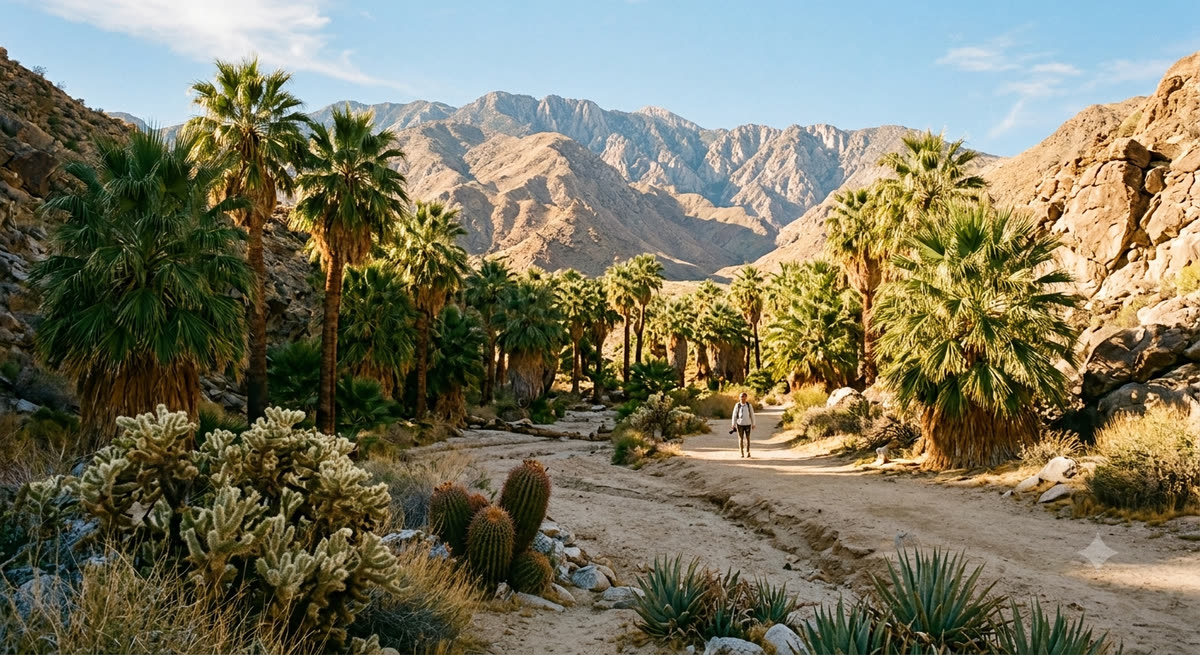
The first thing families tell me when they arrive in the desert with three generations in tow is that they cannot believe they all fit. Grandparents who wanted a pool. Teenagers who wanted Wi-Fi and a door they could close. A four-year-old who wanted to throw something into water, repeatedly, forever. Somehow the Coachella Valley absorbs all of those needs without anyone having to compromise much, and I think that is the quiet reason this stretch of Southern California has become one of the best places in the country to gather a whole family under one roof.
I have lived and photographed here for a long time, and a good share of my sessions are exactly this: a family that flew in from Minnesota or Vancouver or Phoenix, rented a house with a pool, and gave me ninety minutes on a soft morning to make pictures of everyone together before they scatter back to their separate cities. I have watched what makes these trips sing and what makes them fray. So this is the guide I wish someone had handed me — not a list of attractions you could find anywhere, but the real logistics of moving a family that spans seventy years through a desert resort town, and doing it so everyone actually enjoys it.
Why the desert works for three generations
Most vacation destinations are built around one age group. Theme parks exhaust the grandparents. Wine country bores the kids. The desert is unusual because its center of gravity is the backyard — the pool, the patio, the long flat afternoon — and almost everything else is optional and close by.
A few things make Greater Palm Springs genuinely easier than other multigenerational destinations:
- Single-story living is everywhere. So much of the housing stock here, especially the mid-century and resort homes, is on one level. That matters enormously when someone in the group uses a cane, a walker, or just doesn't love stairs.
- Short drives. Palm Springs to Palm Desert is about twenty-five minutes. Most of the things you'll want to do sit along a single corridor — Highway 111 and Interstate 10 — so you are rarely committing a sick toddler or a tired grandparent to an hour in the car.
- Warm, dry, predictable weather from November through April. No humidity, very little rain, and the kind of dependable sunshine that lets you plan an outdoor breakfast a week out and actually have it.
- A genuinely slow culture. Nobody here is in a hurry, and that gives a multigenerational group permission to move at the pace of its slowest and youngest members without feeling like they're falling behind.
When to come: timing a trip for every age
Timing is the single biggest decision, and it changes completely depending on who is in your group.
Snowbird season (November through April)
This is the sweet spot for most families. Daytime temperatures sit in the comfortable 70s and low 80s, evenings are cool enough for a sweater, and the desert is at its most alive. If you have grandparents who feel the heat, or little ones who wilt, this is your window.
The trade-off is that everyone else knows it too. Thanksgiving, the winter holidays, and the stretch around the music and tennis festivals in March and April are when houses book up months ahead and prices climb. If your family calendar is flexible, the deep value is in early December and the first half of January — gorgeous weather, far fewer crowds, and lodging you can actually negotiate.
Summer (June through September)
I won't pretend the summer is mild — daytime highs routinely pass 110, and that is not a number to wave off when you're traveling with an 80-year-old and an infant. But summer has a real argument for the right family. Rates on resort homes fall dramatically, pools feel like the whole point rather than a bonus, and if your group is built for it — older kids, healthy adults, a willingness to live by a "pool at dawn, indoors at noon, patio at dusk" rhythm — you can have a beautiful, affordable, nearly private week.
If you do come in summer, build the day around the heat rather than against it. More on that below.
The shoulder months (May and October)
Quietly my favorite recommendation for families who want a balance. The crowds have thinned, the rates have softened, and the weather is hot but still manageable — warm enough to swim every day, not yet brutal. October mornings in particular are some of the loveliest light of the entire year.
Where to stay: the lodging decision that makes or breaks the week
For a single couple, a hotel room is fine. For three generations, where you sleep is the trip. Get this right and almost everything else falls into place.
Rent a house with a pool — usually the right answer
For most multigenerational groups, a private vacation rental beats a hotel, and it isn't close. A four- or five-bedroom home in Palm Desert, La Quinta, Rancho Mirage, or Indian Wells gives you:
- A private pool and spa — no fighting for hotel chairs, no closing time, and a place the kids can be loud without anyone shushing them.
- A full kitchen, which quietly solves the hardest meal of the day. Breakfast with a toddler and a grandparent on different schedules is so much gentler when you're not herding everyone to a restaurant at 7 a.m.
- Bedrooms with doors and distance. Teenagers can have their own wing. Grandparents can take the primary suite far from the nursery. Everyone gets to retreat, which is the secret to surviving close quarters.
- A gathering space — the great room and the patio — where the whole family naturally collects without anyone organizing it.
When you're choosing a rental, look past the photos and ask the practical questions: Is there a step-free path from the driveway to the front door and out to the pool? Is the pool fenced or gated if you have little ones? Can the pool be heated (essential in winter — an unheated pool in January is a cold ornament)? Is there a ground-floor bedroom so grandparents aren't climbing stairs to bed? Is the AC zoned, so the room a grandparent finds comfortable and the room a teenager finds comfortable can differ by ten degrees?
The mid-century neighborhoods of Palm Springs proper — the Movie Colony, Las Palmas, the Mesa — are magical, but many of those classic homes have small bedrooms and quirky layouts. For a big group I often steer families toward the newer resort communities and country clubs farther down the valley in Indian Wells and La Quinta, where the homes are larger, flatter, and built for exactly this.
When a resort makes more sense
There are families for whom the cooking and the household management of a rental is the opposite of a vacation, and that is completely valid. The valley's full-service resorts — the big properties in Rancho Mirage, Indian Wells, and Palm Desert — can be wonderful for three generations because they outsource the labor. Multiple pools (including dedicated kids' pools and quiet adult pools), on-site dining, a spa for the grandparents, and connecting rooms or suites so the family can be near each other without being on top of each other.
The honest trade-offs: it costs more for the same number of beds, the family is more scattered across rooms, and you lose the kitchen and the single shared living room that does so much to keep everyone together. A good middle path some families love is a resort with villa-style or multi-bedroom units — you get the shared space of a house with the room service and pool staff of a hotel.
Building a day everyone can live with
The most common mistake I see is over-scheduling. A family rents a beautiful home with a pool and then plans something for every block of every day, and by Wednesday the four-year-old is melting down and the grandparents are quietly exhausted. The desert rewards the opposite instinct.
My rule of thumb for a multigenerational trip: one anchor activity per day, and only one. A morning outing or an afternoon outing — not both. The rest of the day belongs to the pool, the shade, and the long unstructured hours that are actually what people remember.
A rhythm that works across the ages, especially in the warmer months:
- Early morning (7–10 a.m.): the best window for anything active or outdoors — a walk, the tram, a garden, photos. Everyone is fresh, the light is soft, and the heat hasn't arrived.
- Midday (10 a.m.–4 p.m.): pool, lunch at home, naps for the littlest and the oldest, books and shade for everyone else. In summer this is non-negotiable; in winter it's simply pleasant.
- Evening (after 5 p.m.): the desert exhales. This is the time for dinner out, a stroll, ice cream, the patio.
This structure also happens to be how you protect the two most vulnerable members of the group — the youngest and the oldest — whose tolerance for heat and stimulation is lowest and who set the real ceiling on the day.
Things to do that genuinely span the generations
The trick with a wide age range is to favor activities where each generation can engage at its own level in the same place, rather than activities aimed at one group that the others merely tolerate.
A few that reliably work for the whole family:
- The Palm Springs Aerial Tram. You ride a rotating car up the cliff face of San Jacinto and step out, in about fifteen minutes, into pine forest that can be thirty or forty degrees cooler than the valley floor. Grandparents love the view and the café at the top; kids love the dramatic ride; in winter there may even be snow to throw. Go in the morning, bring layers, and know there's a fair bit of walking up top if you want to hike.
- The Living Desert Zoo and Gardens in Palm Desert. This is the closest thing to a universal crowd-pleaser I know. Giraffes you can feed, a carousel and a little train for the small ones, shaded gardens and benches for the grandparents, and enough ground to fill a morning. Arrive at opening; the animals and the people are both happiest before the heat.
- Sunnylands Center and Gardens in Rancho Mirage. Free to walk the gardens, beautifully flat and accessible, with a gentle one-mile loop that suits a stroller and a walker equally. The kind of slow, lovely morning the desert does so well.
- Moorten Botanical Garden and the desert nature preserves. Easy, shaded, and a chance for the older generation to sit while younger kids explore.
- El Paseo in Palm Desert — the valley's elegant shopping street — for an afternoon of strolling, galleries, sculpture, and gelato that genuinely entertains teenagers and grandmothers in equal measure.
- A date-shake pilgrimage. The Coachella Valley grows most of the country's dates, and a stop at one of the date farms for a milkshake made from them is exactly the kind of small, specific, only-here ritual that becomes family lore.
For the gentlest version of any of these, lean toward the flat, shaded, low-impact stops where grandparents can take their time, and keep the outings with little ones short and close to a snack, a bathroom, and a shady place to sit.
Eating together when everyone wants something different
Food is where multigenerational trips quietly succeed or fail, because the toddler, the teenager, and the grandparent rarely want the same thing at the same time.
Two habits make it easy:
- Let the rental's kitchen carry the hard meals. Stock up on day one — there are full supermarkets all along Highway 111. Breakfast at home, in pajamas, at everyone's own pace, removes the single most stressful logistic of the day. A grocery run is also a wonderful way to involve the grandparents, who often love to cook for the family.
- Save restaurants for dinner, and pick places with range. The valley is full of patios with broad menus that can please a picky six-year-old and a particular eighty-year-old at the same table. Old Town La Quinta, downtown Palm Springs, and El Paseo all have clusters of family-friendly patios. Reserve early in season — the good tables go fast from December through April.
The logistics nobody warns you about
A few practical things that come up again and again with the families I photograph:
- Hydration is a medical issue here, not a suggestion. The dry air pulls water out of you without the warning of sweat. The very young and the very old dehydrate fastest. Have water everywhere — the car, the pool bag, every room.
- Sun protection for the generations that forget it. Hats and sunscreen for the kids who won't sit still and the grandparents who grew up before sunscreen was a habit. The desert sun is stronger than it feels.
- Plan for an afternoon lull. Build the day so there's a window where the house is quiet and people who need to rest can. It prevents the late-day unraveling.
- Rent at least one car with easy entry. If anyone in the group has limited mobility, a higher vehicle they can slide into rather than drop down into makes a real difference over a week.
- Mind the time change and the jet lag, especially for grandparents flying in from the East Coast and toddlers on a fragile nap schedule. Give the first day to nothing but the pool.
Why I'd plan one session into the week — and how
I'll say this plainly because it's the whole reason I do what I do: the reason these trips matter is that the entire family is in one place, which almost never happens. Cousins who live in different states. A grandparent who is harder to travel to each year. The baby who will look nothing like this by next winter. You have assembled, at real effort and expense, the rarest thing — everyone, together, relaxed — and it will dissolve back into separate flights in a few days.
That is exactly the moment worth photographing, and it's why I'd gently encourage any family gathering here to set aside one morning for pictures.
A few things I've learned about doing it well on a trip like this:
- Morning is kindest. Indoors, the late-morning light coming through the big windows is soft and flattering, and the house is at its calmest before the day's heat and fussiness set in. If we step outside to the patio or a garden, the hour after sunrise gives that warm, golden light. Either way, everyone is at their best — and so are the photographs.
- Keep it to ninety minutes. That is genuinely all I need, and it's about the limit of a toddler's and a grandparent's patience anyway. One short, well-timed session beats a long one that ends with everyone frayed.
- The rental itself is usually where I'd shoot. Most of my work happens right inside the home — the living room where everyone piles onto the couch, the kitchen mid-breakfast, the shaded patio and pool out back. This is where the family actually lived together this week, and it makes the truest pictures. If you'd like a backdrop with a little more scenery, one of the valley's botanical gardens or a shaded local park a few minutes away works beautifully too.
- Don't fuss over wardrobe. Comfortable clothes in soft, harmonious colors are all it takes. I care far more about the look that passes between a grandmother and a grandchild than about whether everyone is in white linen.
What I'm always after is the one honest moment that's unmistakably your family — the way your father laughs, the way the youngest reaches for the oldest — the picture you'll be grateful to have long after the trip itself has blurred. If you want to think through the timing and the ages in your group before you come, I've also written about scheduling a desert family portrait around the seasons.
A short planning checklist
If you take nothing else from this, take these:
- Come November through April if you can; aim for early December or January for the best balance of weather and value.
- Rent a house with a heated pool and a ground-floor bedroom unless full-service hotel ease is worth more to you than togetherness.
- Plan one anchor activity per day and let the rest be unstructured.
- Build the day around early mornings, sheltered middays, and easy evenings.
- Cook the hard meals at home; save restaurants for dinner.
- Take the water and the sun seriously for the youngest and oldest.
- Set aside one soft morning to photograph everyone while they're all in one place.
If a family gathering is bringing you to the desert and you'd like one easy morning to hold onto it, tell me who's coming and what you're hoping for. You can share your trip and your family right here, and together we'll find a morning that fits the rhythm of your week.