Spring Wildflower Portrait Sessions
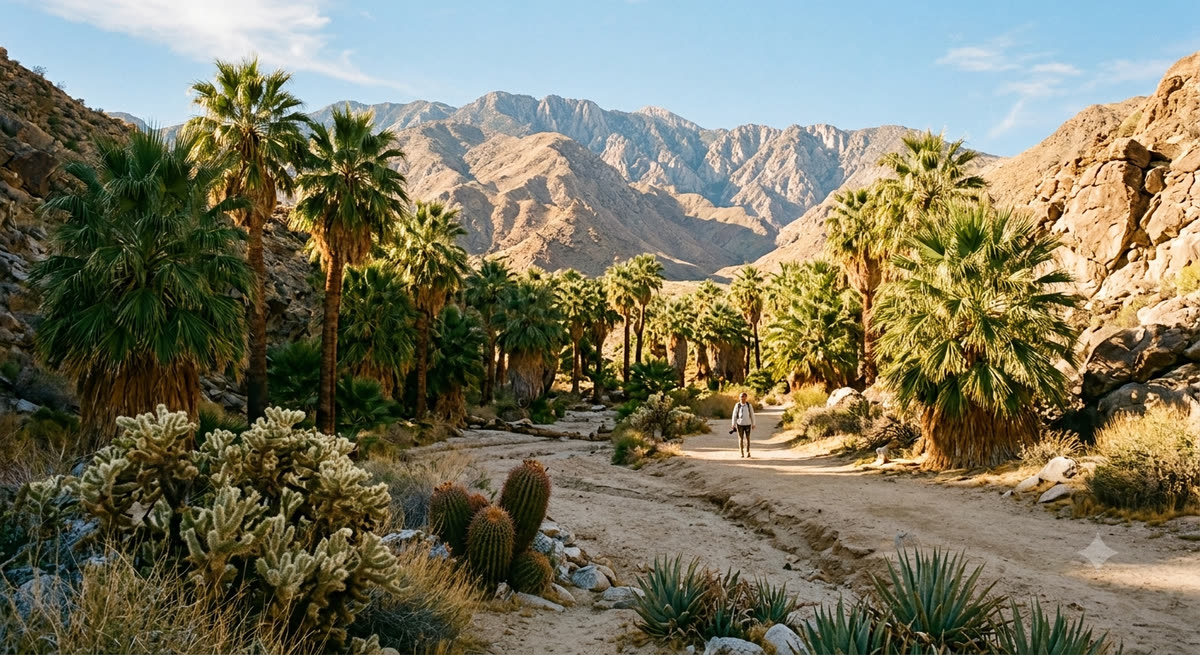
There is a short, magical window every spring when the Coachella Valley does something most people never expect from a desert. After the right winter rains, the sand and rocky washes fill in with color — gold desert sunflowers, purple sand verbena, the bright pop of brittlebush — and for a few weeks the landscape I photograph all year long looks completely transformed. If you have ever seen a photo of a family standing among the wildflowers with the mountains glowing behind them and thought I want that for us, this guide is for you. Most of the year I photograph people right where they feel most themselves — in their own living rooms, out on a shaded patio, or at a familiar neighborhood park or garden close to home. But when spring color arrives, I love offering a seasonal option that takes us a little farther afield, and it has become one of my favorite times of year to make pictures.
I want to give you the honest, local version of how this works: when the blooms actually happen, where we can go, what to wear, what to expect, and the small mistakes that can cost you the shot. The desert keeps its own schedule, and the more you understand it, the more relaxed and beautiful your session will be.
When desert wildflowers actually bloom
The honest answer is that it depends almost entirely on the rain. Desert wildflowers are not a date on the calendar — they are a response to winter weather. A good bloom needs steady rainfall through the late fall and winter, gentle warming temperatures, and not too much drying wind in early spring.
In a typical year for the Coachella Valley and the low desert around us:
- Late February through March is the heart of the season at our lower elevations — the valley floor, the washes, and the desert preserves around Palm Desert, La Quinta, and Indio.
- Late March into April brings color to slightly higher and cooler spots, so the bloom moves uphill as the season goes.
- A "super bloom" — those once-in-several-years carpets of flowers you see go viral — only happens after an unusually wet winter. Most years give us beautiful, photographable pockets of color rather than full carpets, and those are wonderful too.
Because the timing shifts year to year, I tell clients who want desert wildflower photos to think in terms of a flexible window rather than a fixed day. If you can give me a two or three week range in late winter and early spring, I can watch the bloom reports and the desert itself and pick the moment when the color is at its peak. The flowers do not wait, and the best sessions happen when we stay a little nimble.
Spring is simply a lovely stretch for portraits here — the weather is mild, the air is soft, and the desert is at its most generous in the weeks before summer heat takes over.
Where we go for desert wildflower photos
The valley gives us a real range of places to find spring color, and the right one depends on what you want your portraits to feel like. Here are the settings I work with, starting with the ones I reach for most often.
Local parks, gardens, and cultivated color
This is where the great majority of my spring sessions happen. Our neighborhood parks, the local desert gardens, and the planted resort and community landscapes around Palm Desert, La Quinta, and Indio fill with gorgeous spring color, and they are wonderful for families with little ones or grandparents who need easy footing, shade, water, and a restroom close by. You get real blooms and that warm desert backdrop without the long drive or the rough ground — color that is reliably there on the day we have planned, in a setting where everyone can relax. For most of the families I photograph, this is the sweet spot, and it is what I recommend first.
The open desert washes and preserves
If you have your heart set on that wide, untouched, "just us and the wildflowers" look, the natural desert is out there for the rare year it cooperates — the sandy washes and protected preserve land around the valley. Areas near the Coachella Valley Preserve outside Palm Desert and Thousand Palms, the desert edges around La Quinta and Indio, and the open land along the foothills can fill in with desert sunflower and verbena after a wet winter. These spots give low desert scrub, distant mountains, and a lovely golden glow, but they depend entirely on the bloom and on the rules of the land, so I treat them as a special-occasion option rather than a default — and only when the color is genuinely there.
A longer outing: higher desert color
Some clients ask about driving up and out of the valley into higher, cooler desert, where the bloom comes a little later and the landscape shifts toward more dramatic rock and yucca. It can be beautiful if your spring window runs into April, after the valley floor has finished. It is a bigger commitment of time and travel, so I mention it as a possibility rather than a routine choice — most people are happiest staying close to home.
A note on responsibility: the wild blooms are fragile, and many of the best spots are protected land. Whenever a session does take us into the open desert, I photograph in a way that respects it — we stay on durable ground and existing paths, we never trample into the middle of a bloom for a shot, and we follow the rules of whatever preserve or park we are in. Beautiful photos are never worth damaging the very thing that made them possible. If you love this kind of landscape, you may also enjoy my thoughts in Golden Hour in the Coachella Valley on how this light behaves through the seasons.
The best light for wildflower portraits
The flowers are only half of the picture. The desert light is the other half, and in spring it is some of the loveliest light of the year.
Because these are outdoor sessions, I almost always plan them for golden hour — the hour or so just after sunrise or just before sunset. In that soft, low, warm light the flowers seem to glow from within, skin tones look their most flattering, the shadows go gentle, and the mountains pick up gorgeous color. The flat overhead light of midday does the scene no favors, so it is the one window I steer people away from.
Between the two ends of the day, here is how I think about it:
- Sunrise is cool, quiet, and almost private — far fewer people out in the desert, soft air, and lovely for couples and calm older children. The trade-off is an early alarm.
- Sunset is warmer and easier for most families, especially with young kids, and it gives that classic glowing-desert feeling. It is my most-requested window for wildflower sessions.
Spring weather in the valley is forgiving, but it can be breezy. A little wind actually photographs beautifully — hair and dresses in gentle motion add life — but I keep an eye on the forecast so we are not fighting a gusty afternoon.
What to wear among the wildflowers
Because the desert in bloom is already full of color and texture, I guide clients toward clothing that complements the scene rather than competing with it. A few simple ideas that work almost every time:
- Soft, earthy, and muted tones — cream, sand, warm white, sage, dusty blue, terracotta, soft rust. These sit beautifully against gold and purple flowers and the tan of the desert.
- Flowy fabrics with movement — a long dress or skirt that catches the breeze looks wonderful in this landscape and adds a sense of motion.
- Pick a shared palette, not a uniform — instead of everyone in identical outfits, settle on two or three colors and let each person wear their own take on them. It reads natural and ages well.
- Avoid tiny busy patterns and bright neons — they pull the eye away from faces and clash with the natural color.
- Comfortable shoes you can walk in, even if you change into something prettier for the photos. Garden paths and plantings can be uneven underfoot, and open desert is sandy.
I am always happy to talk through outfits before your session — sometimes a quick text photo of what you are considering saves a lot of second-guessing. For families, my guide on What to Wear for Family Photos in the Desert goes deeper into building a palette that works for everyone.
What to expect on the day
I want your session to feel like an experience, not a chore, so here is how a wildflower session usually goes.
We meet at our chosen spot a little before golden hour so we are not rushing. Many of these places mean a short walk from where we park to the best color, so we build in time for that, and I will have already scouted the area. From there, I keep the pace easy and let the session unfold — I do not pose people into stiff, awkward positions. Instead I give you simple things to do together, a little direction, a little prompting, and then I watch for the real moments in between. With wildflowers around you, those moments come easily: a child crouching to look at a flower, a couple laughing as the wind catches a dress, a grandmother resting her hand on a grandchild's shoulder.
A typical session runs about 60 to 90 minutes, which is plenty of time to relax into it and still finish while the light is gorgeous. With young children especially, I never hurry — the best frames almost always come once everyone has settled in and forgotten the camera is there.
A few practical things to bring: water (the desert is dry even in spring), sunscreen and a hat for before and after we shoot, a small brush or comb for windblown hair, and snacks if little ones are along. I will handle the rest.
Practical desert tips and mistakes to avoid
After many springs out here, these are the things that make the difference between a good wildflower session and a great one.
- Do not wait for the "perfect" full bloom. Many people delay deciding, hoping for a super bloom, and miss the season entirely. A modest bloom photographs beautifully, and waiting often means waiting a whole year.
- Be ready to move quickly. When the color peaks, it can fade within a week or two. I keep flexible dates for clients during the bloom so we can go when it is right.
- Watch the wind, not just the sun. A still morning after a windy week can be the perfect moment.
- Mind the desert wildlife. Spring brings everything back to life, including bees on the flowers and the occasional snake warming up. I always choose safe spots and keep an eye out, especially with children.
- Protect the bloom. Stay on durable ground, keep to paths and the edges of flower patches, and never pick or trample. Photos last; the flowers should too.
- Book before the season starts. My spring calendar fills quickly because the window is so short. If you know you want wildflower photos, the time to reach out is winter — December through February — so we can hold space.
Who wildflower sessions are perfect for
Honestly, almost everyone — but a few moments shine especially bright among the spring blooms. Engagement and couples sessions look romantic and effortless in this setting. Maternity photos are stunning with that soft light and flowing fabric. Families with children get to be playful and natural, and the flowers give little ones something wonderful to explore. And milestone portraits — a senior, an anniversary, a multigenerational gathering while loved ones are in town — feel extra special set against a landscape that only looks this way for a few short weeks each year.
That fleeting quality is exactly what I love about desert wildflower photos. They capture not just your faces but a specific, rare moment in this place I call home — a season you cannot fake or recreate later. Years from now, those images will hold both your story and the memory of the spring the desert bloomed.
If spring color is something you would like woven into your portraits, send me a note while it is still winter. We can mark off a flexible window, decide whether a local park or garden suits you best or whether you want to chase a wilder bloom, and then keep an eye on the season together. When the color arrives, we will be ready to go. You can tell me what you have in mind here.