Senior Portraits for Xavier Prep
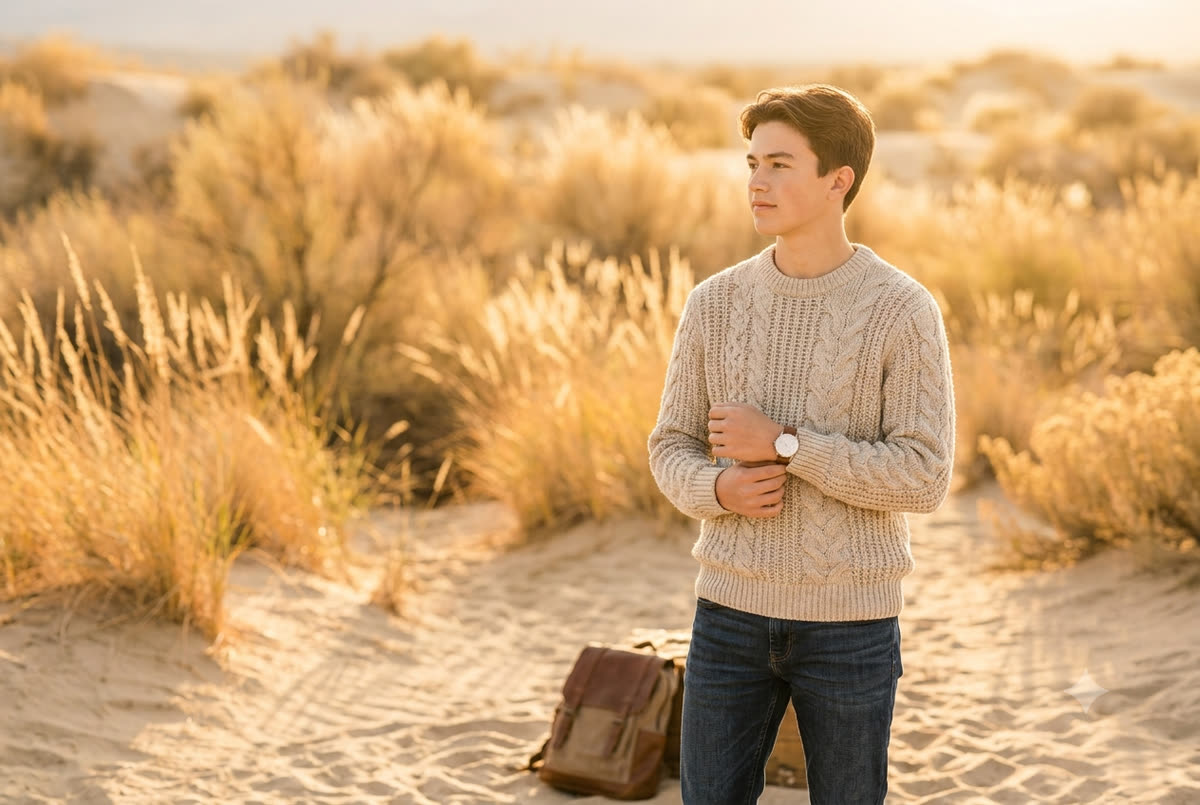
Most of my favorite senior portraits start somewhere ordinary — a sunlit living room, a backyard the family has loved for years, a quiet bench in a Palm Desert park. Senior year moves quickly. One moment you are dropping your student off on Frank Sinatra Drive for the first day of freshman year, and the next they are standing in front of my camera, nearly grown, ready to step into whatever comes after the tassel turns. Senior portraits are how we hold still for a moment in the middle of all that motion. They are not just a yearbook requirement to check off. They are a small, honest record of who your child is right now — and I take that seriously.
If your student attends Xavier College Preparatory High School in Palm Desert and you are starting to think about senior pictures, this is the guide I wish every family had before they reached out. I want you to walk in feeling prepared and at ease, knowing exactly what to expect and how to get the most out of our time together.
What "senior portraits" actually means at Xavier Prep
It helps to separate two things that often get tangled together.
First, there is the official yearbook headshot. Xavier Prep, like most high schools in the valley, contracts with a yearbook photography company that handles the standard cap-style or drape headshot used in the senior section of the yearbook. That image follows the school's specifications — background, crop, attire — and is usually photographed on campus or at a scheduled session the school organizes. You will hear about that one directly from the school, and it is worth getting the deadline on your calendar early in the fall.
Second, there are personal senior portraits — the ones families come to me for. These are yours. We are not bound by a school template. Most often I photograph these right in your home, in the soft light from your own windows, or in a nearby park or garden where your student feels at ease — and when a family wants a wider desert backdrop, we can add that too. We bring in the things your senior loves, photograph them in three or four outfits, and create images you will actually want to frame, print, and send out with graduation announcements. This is the session that captures personality, not just a face for the record.
Both matter. The school headshot serves the yearbook. The personal session serves your family, your walls, and your memory. Most of the families I work with do both, and I always recommend confirming the school's official deadline first so we can plan your personal session around it without any stress.
When to book — and why fall is the sweet spot
Timing is the single most common thing families get wrong, so let me be direct about it.
The best window for personal senior portraits in the Coachella Valley is late September through November, and again in March and April. Here is the reasoning:
- Summer is brutal. July and August routinely push past 110 degrees here. For an outdoor session it is genuinely unpleasant and unflattering — nobody looks relaxed when the heat is pressing in. (An air-conditioned, window-lit session at home is the comfortable exception, and one reason in-home sessions travel so well through any season.) I avoid mid-summer outdoor sessions entirely.
- Fall light is the prize. By October the heat eases, the golden hour stretches long and gentle, and the desert takes on that soft, glowing quality I love. This is when the valley photographs best outdoors.
- Yearbook deadlines come early. If your student wants a personal portrait to also serve as their yearbook photo (some families coordinate this), you need to shoot before the school's submission cutoff, which is often in the fall. Confirm the date with Xavier Prep's yearbook office and build backward from there.
- Senior fall fills up fast. Between homecoming, college applications, sports, and the school's own photo dates, autumn is the busiest stretch of the year for Xavier families — and for my calendar. Booking early means you get the date and time you want rather than whatever is left.
My honest advice: reach out in August or early September to plan a fall session. Even if we end up shooting in October, having it on the calendar early means we can be choosy about the day, the light, and the location.
Where we shoot — starting at home, then out into the valley
My signature setting is the one your student already knows. I photograph most personal senior sessions in the family home and yard, or in a familiar local park, garden, or patio a few minutes from Xavier Prep's Palm Desert campus. There is a reason for that: a senior who is comfortable looks like themselves, and nothing builds comfort like home ground. The bedroom they have grown up in, the back patio where the family eats dinner, the reading nook by a sunny window — these places hold real life, and that thread of real life is what makes a portrait feel like them.
From there, I match any added location to the student — an athlete, an artist, and a future engineer should not all stand in front of the same wall. If your family wants to fold in a scenic Coachella Valley backdrop, here are the spots I recommend most:
- A neighborhood park or botanical garden. Lawns, mature trees, fountains, and shaded paths give soft, flattering light and an easy, unfussy feel — my most-used outdoor setting for seniors.
- Palm Desert's El Paseo. Clean architecture, the public sculptures along the median, and a polished, grown-up feel. Lovely for a student who wants something a little more editorial and city-flavored.
- Old Town La Quinta and the Indian Wells / La Quinta resort corridors. Warm Spanish architecture, courtyards, and bougainvillea — softer and more romantic.
- Palm oases and date groves near Rancho Mirage, Indian Wells, and Indio. Rows of green fan palms frame a subject naturally and give images real depth, without venturing far off the road.
- A wider desert vista, if you want drama. For the student who really wants that big-sky, sculpted-sand look, we can plan a short outing to an open stretch at golden hour. It is a lovely option to add — just know it is the exception in how I usually work, not the default.
The best sessions almost always begin somewhere that means something to your family — the home itself, the field where they played, the studio where they paint — and add a scenic spot only if it earns its place.
How to plan the light: window light at home, golden hour outside
Light is the quiet engine of a good portrait, and I match it to the setting.
For an in-home session, I work with the natural light from your windows. A north- or east-facing room in the morning, or any bright window with the harsh midday glare diffused by a sheer curtain, gives that soft, wrapping light that flatters every face. We will scout your home together — often the best spot is a corner you walk past every day without noticing how beautifully it glows. No flash, no fuss, just real daylight in a space your student already knows.
For an outdoor session, I shoot at golden hour — the hour or so after sunrise or, more commonly, before sunset. Outside, this light is the whole game. It wraps softly around the face, eases shadows, and gives skin a warm, healthy glow that flat afternoon light cannot. Our start time will shift through the season: an October session might begin around 4:30 or 5:00 in the afternoon, a March session a little later. I will always give you the exact call time, and I ask families to build in a small cushion so we are set up and relaxed before the best light arrives, not scrambling for it. The working window is generous, but the truly beautiful light is finite, and I want every minute of it on your student.
If your senior is not a morning person — and most are not — an afternoon at home or an evening golden-hour walk is the easy choice. If they are, an early window-lit session at home, before the day gets going, is quiet and unhurried. Both are wonderful.
What to wear — outfits that photograph beautifully
Wardrobe is where families feel the most uncertain, so let me make it simple. Plan on two to four outfits for a personal session. A good progression looks like:
- A polished, classic look. Something a little dressed up — a nice top or a simple dress, clean lines, the kind of image that works for a graduation announcement and a frame on grandma's mantel.
- A relaxed, true-to-them look. Jeans and a favorite sweater, the outfit they actually reach for. This is usually where the best, most natural smiles happen.
- A meaningful look. A sports jersey, dance attire, a band shirt, scrubs for the future nurse, a letterman jacket. Anything that says this is what I cared about in high school.
A few wardrobe principles that always hold:
- Lean toward warm, soft colors — earth tones, rust, cream, denim, muted greens. They flatter skin in window light and harmonize with a garden or desert backdrop instead of fighting it. Avoid neon and very bright white, which can glow oddly.
- Skip busy logos and tiny patterns. They date quickly and pull the eye away from the face. Solids and gentle textures photograph best.
- Bring layers and accessories. A jacket, a hat, jewelry — small additions that let one outfit become two looks.
- Comfort matters more than you think. If your student is tugging at a stiff collar, it shows in their shoulders and their eyes. Pick clothes they can move and breathe in.
- Mind the shoes. If we are heading to a park or out onto uneven ground, bring the photogenic pair and a practical pair for getting between spots.
When we book, I will send a more detailed wardrobe guide and I am always happy to look at options ahead of time. You are never on your own with this.
What to expect on the day
I know that standing in front of a camera can feel awkward, especially for a seventeen-year-old who would rather be anywhere else. My whole approach is built to dissolve that. I keep things light and easygoing — I talk the whole time, I guide every pose so no one has to wonder what to do with their hands, and I watch for the real moments in between the posed ones. That is where the magic lives: the genuine flicker of who someone actually is, the small laugh or the steady gaze that no one could fake. Catching that is what sets a portrait apart from a snapshot, and it is the part of this work I love most.
Here is the rhythm of a typical session:
- We meet at the location at the call time, usually a little before the best light.
- We start easy — a few simple setups to let your student settle in. The first few minutes are always the stiffest; that is completely normal and it passes fast.
- We move through outfits and a couple of nearby spots, mixing posed portraits with relaxed, candid frames.
- Parents and siblings are welcome to come, and we can absolutely grab a few family frames while everyone is dressed up — many families treasure these as much as the solo portraits.
- We wrap as the light fades, usually with everyone in a much better mood than they expected.
A personal session generally runs about an hour to ninety minutes of actual shooting. Unhurried, but efficient — I respect that your senior has homework, practice, and a social life waiting.
After the session: choosing, printing, and keeping these forever
Once we have photographed, I carefully edit your gallery and deliver a curated set of finished images — warm, honest, and true to the light we worked in. I am a believer in printing. A senior portrait that lives only on a phone is a portrait you will rarely see again. The ones that matter end up framed on a wall, tucked into a graduation announcement, gathered in an album your student takes with them when they leave home. I will help you choose and order prints so these images become something you can hold, not just scroll past.
A few honest mistakes to avoid
After many years of senior sessions in this valley, the same few regrets come up. Let me save you from them:
- Waiting too long. Families who call in spring of senior year often find the good fall light has passed and the calendar is tight. Book early.
- Booking an outdoor session at mid-day or mid-summer. Flat overhead light and 110-degree heat are not your friends. Outside, trust golden hour; when the weather or calendar won't cooperate, a window-lit session at home is the easy answer.
- Over-coordinating outfits to the point of stiffness. Let your student look like themselves. The goal is a real person, not a catalog.
- Forgetting the meaningful look. Years from now, the jersey, the instrument, or the apron will be the frame that makes everyone smile.
- Treating it as a chore. This is one of the last formal portraits of childhood. Walk in with a little reverence and a lot of warmth, and the images will carry it.
If you are mapping out this whole season, you might also find my notes on planning desert family portraits at golden hour and what to wear for Coachella Valley portrait sessions helpful — many of the same principles apply, and senior year is a wonderful excuse to capture the whole family while everyone is still under one roof.
Let's capture your senior
Senior portraits are one of my very favorite sessions to photograph. There is something moving about catching a person right on the threshold — still your child, already becoming who they will be. I would be honored to give your Xavier Prep senior a session that feels like them: most likely beginning in the warm window light of your own home, and stepping out into a favorite park or a glowing desert evening if that is where the story leads.
If your student's senior year is underway, now is the moment to put it on the calendar. Send me a note through my contact page, tell me a little about your senior — what they love, where they feel most themselves — and we will plan a session that gives you images worth printing and keeping for the rest of their life.