Legacy & End-of-Life Photographer in Desert Hot Springs
Desert Hot Springs has always been a place people come to rest. The hot mineral water draws folks up the hill to slow down, to heal a little, to take a breath the rest of the valley does not seem to allow. So it makes a quiet kind of sense that some of the most tender work I do happens here — sitting with a family in a small spa apartment or a hillside home, making honest portraits of someone they are not ready to be without.
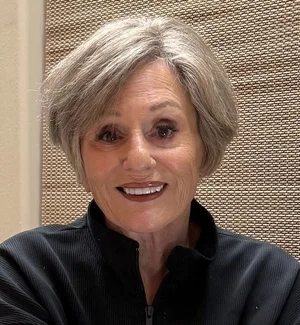
I'm Margot. I've photographed people across the Coachella Valley through every chapter of life — squirming newborns, restless teenagers, couples on their wedding day — and over the years more and more of my work has turned toward the other end of that arc: the parents and grandparents in their last good seasons, and sometimes their last weeks. This page is about that work in Desert Hot Springs specifically. If you've found your way here because someone you love is fading, or simply getting older faster than you expected, I want to walk you through what this is, how it goes, and how to reach out without feeling like you're asking for something odd. You aren't. You're doing something quietly heroic.
What legacy and end-of-life photography actually is
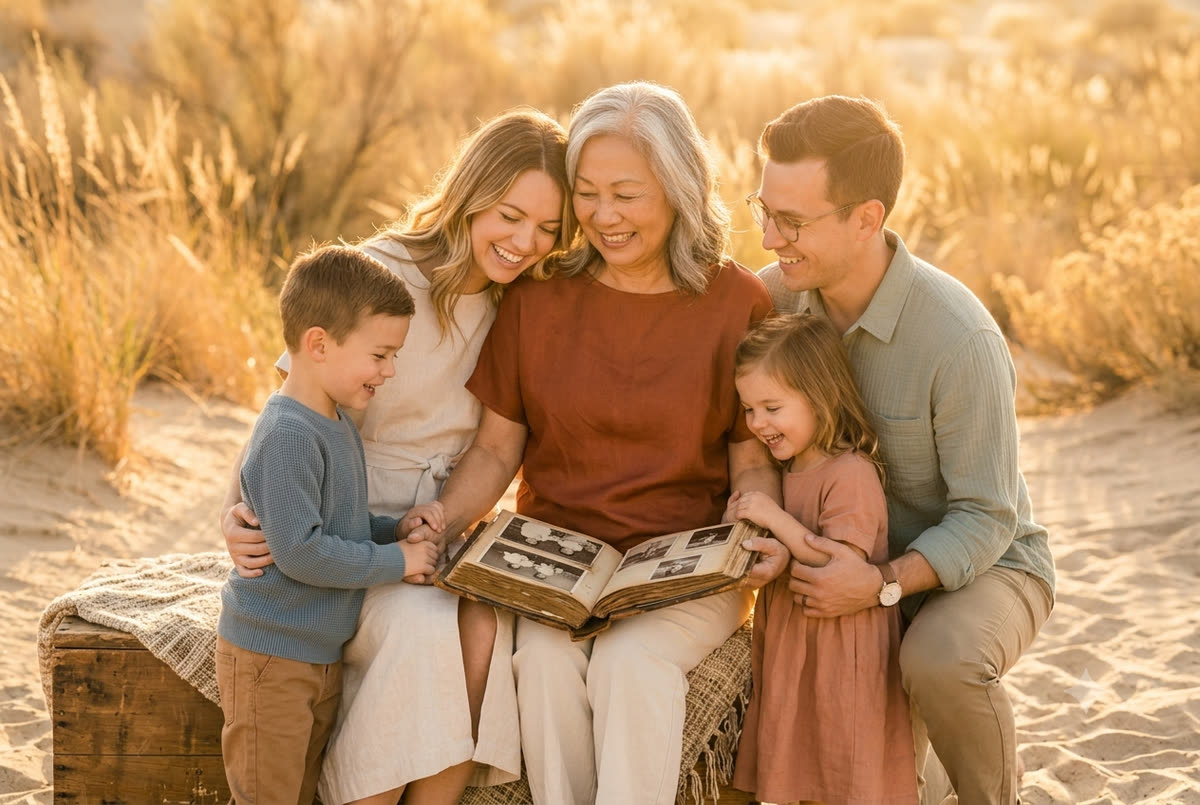
"Legacy photography" is the gentle name for portraits made on purpose to hold onto who a person is, while they're still here to sit with us. It covers a wide range. For some families it's a celebration — gathering three generations on a winter visit while everyone is finally in town, photographing a grandmother surrounded by the people who adore her. For others it arrives in a much harder season, when a parent is in hospice or memory care and the calendar has narrowed to days that matter.
Both are the same thing at heart. Both are about making sure a person is remembered as a whole, warm, particular human being — the way they laugh, the way they hold a cup of coffee, the way their hands look folded in their lap — rather than as a blur of a difficult final stretch.
I don't lean on clinical words when I'm with you. I use the phrase "end-of-life photography" on this page because it's honest and because it's what people type into a search bar at two in the morning. But in the room, with your family, we are never talking about endings. We're paying close attention to a life. You'll feel that distinction the moment we begin.
If your situation is more on the celebratory side, you may find generational legacy sessions closer to what you're picturing. If it's something more time-sensitive and tender, stay with me — most of what follows is written for you.
Why families in Desert Hot Springs reach out
DHS has a particular shape to its community, and it shows up in who calls me. This is a town of long-time residents, of people who came for the mineral baths and the quiet and never left, and of snowbirds and visiting families who land here in the cooler months. So the calls tend to come from:
- Adult children who live out of state, in town to visit a parent — often in that November-to-April window when the whole family is finally on the same patch of desert at the same time.
- A husband or wife who wants one true, beautiful portrait of their spouse while there's still light in the eyes and stories to tell.
- Families with a loved one in hospice, assisted living, or memory care somewhere in the valley, who want the grandchildren to remember a real face and not a hospital bed.
- Older adults themselves, clear-eyed, who decide they'd like to leave behind a dignified portrait for the people they love.
If you recognize yourself anywhere in that list, you're exactly who this work is for.
Why these particular photographs matter so much
I've noticed the same thing for years, and it never stops moving me: it is almost never the posed, everybody-smile frame that a family ends up treasuring. It's the in-between — a hand resting on a shoulder, a private laugh, the particular way your father tilts his head when he's really listening. In ordinary life we assume we'll always have another chance to catch that gesture. In this season, we might not, and that's precisely what makes the picture irreplaceable.
Months later, families tell me which image ended up framed by the front door. It's hardly ever the formal one. It's the photograph of their mother's hands, or of grandfather grinning at a great-grandchild he'd only just met. These pictures don't erase grief. But they give it somewhere soft to land, and they let the children and grandchildren who come after meet a genuine person instead of a story secondhand.
How a session unfolds up here
Most legacy and end-of-life sessions happen wherever your person is most at ease. In Desert Hot Springs that usually means one of a few familiar settings.
At home. A hillside house with the San Jacinto wall filling the window, a tucked-away place off Pierson or Palm Drive, a shaded patio with the wind turbines turning slow on the pass below — home is where someone is surrounded by their own light and their own things, and it nearly always makes the most honest pictures. If your parent has lived in the same Desert Hot Springs house for decades, that house belongs in the portrait.
In a care setting. I work quietly and respectfully in hospice houses, skilled nursing, assisted living, and memory care communities throughout the valley, and I'm comfortable around medical equipment and a busy staff. I can frame to keep the details that matter and gently leave out the ones that don't.
At a spa hotel or resort. Desert Hot Springs is built around its mineral water, and many families gather at one of the small spring-fed hotels when relatives come to town. If your loved one is staying at a resort, or simply finds peace soaking in the warm water, I'm glad to come to you there. It keeps everyone close to comfort and rest.
Outdoors, when health allows. A wheelchair-friendly courtyard, a quiet stretch of garden, a few minutes on a patio in the soft early light — if your person has the energy for a short time outside, it can be lovely.
A word about our light and weather, because in Desert Hot Springs it genuinely shapes the plan. From late spring into fall, the heat up here is real and the afternoons are bright and unforgiving; I will never ask a fragile person to sit out in that. We work indoors near a window, or step outside only in the kind, cool edges of the day. In the cooler months, that long late-afternoon light coming across the open desert toward the mountains is gentle and forgiving, and a brief spell on a patio can be a real gift if your person is up to it. Either way, I bring soft, flattering light with me, so we're never at the mercy of the bright overhead sun.
The visit itself is slow on purpose. I arrive quietly, usually with very little gear in sight, and I spend the first while simply being in the room — letting your person settle, letting me read the family. Then I photograph gently around the edges of an ordinary afternoon: the conversation, the holding of hands, the small rituals. If we make formal portraits, we make them when the moment feels right, never against a clock. Most visits run somewhere between forty-five minutes and a couple of hours, but I follow your loved one's energy. If fifteen minutes is all the day has in it, fifteen minutes is plenty.
When to call — and why a little earlier is kinder
If there's one regret families share with me afterward, it's some version of "I wish we'd called sooner." I never want to pressure anyone, and I also want to be honest with you: health can turn fast, and the earlier we connect, the more we can do together. When someone is comfortable, talkative, and able to sit up a little, we have room to take our time and let the afternoon breathe. When things are further along, we simply soften everything — shorter visits, gentler expectations, more rest built in. There's no point that's truly "too late" to make something meaningful, but earlier is almost always easier on everyone, your person most of all.
In practice, here in the valley, this often means a same-week or even same-day call. I hold room in my schedule for these requests and treat them as the priority they are. If you reach out on a morning your person is having a good day, I'll do whatever I can to come while that window is open. And because timing matters so much in this work, I make a point of getting the edited images back to you quickly — sometimes a few key frames the very same day.
How to prepare, without wearing yourself out
Please don't exhaust yourself cleaning or arranging. A few small things help, and nothing more is asked of you:
- Think of a handful of objects or spots that carry meaning — a favorite chair by the window, a worn quilt, a wedding ring, a soaking robe, the kitchen table. Mention them and we'll weave them in.
- Decide who you'd like in the frame. Spouse, children, grandchildren, the dog who never leaves their side. Multigenerational pictures are among the most cherished, so if family is in town for the season, that's a beautiful reason to gather everyone at once.
- Choose comfortable clothing, not formal. Soft, solid colors photograph kindly — but if your person is most themselves in a particular old cardigan, that's the right choice.
- Let go of "looking sick." Families often worry about thinness, tubes, or a hospital gown. With the right light, the right angles, and a little care, the love in the room always reads louder than the illness. We can keep certain things out of frame entirely if you'd rather.
- Pick the best time of day. You know your person's rhythm better than anyone. Mornings are often steadiest. We build the whole visit around when they're most awake and most themselves.
Questions families here often ask
Is it strange to want this? Not at all. For generations, families made portraits in exactly these moments — we've simply grown unused to it. Wanting to remember is one of the most human things there is, and choosing to act on it is brave.
Will the photos be sad to look at? Most families tell me the opposite. I make warm, honest pictures, not clinical ones. You'll see the person, not the diagnosis.
What about privacy? Your trust is everything to me. Nothing is ever shared publicly without your explicit permission, and a great many of these sessions stay entirely private to the family. You are always in control of who ever sees them.
Can you work with hospice and care staff? Yes. I'm unobtrusive in those settings and coordinate easily with nurses and caregivers across the valley.
Do you also photograph aging parents who aren't ill? Absolutely, and I love that work. Many families simply realize Mom is getting older and they have no good recent picture of her. That alone is reason enough.
What you'll have when we're finished
You'll receive a collection of carefully edited, high-resolution images that are yours to keep, print, and pass down within your family for as long as it exists. I believe deeply in printed photographs, especially for legacy work — a framed portrait on the wall, an album small hands can turn the pages of. When you're ready, I'm always glad to help you turn the session into something physical: prints, an album, an enlargement for the hallway. Whether you stop at the digital files or build something larger from them is entirely your call; the photographs themselves are the heart of it.
A note on cost, and on care
In these circumstances I keep the conversation about money simple and humane, and I never want it to be the reason a family goes without. When you reach out, tell me what you're facing and we'll find a way that works. For me, this part of my work is far more a calling than a transaction.
If you've read this far for someone you love, I'm sorry for the weight you're carrying, and I'm honored you'd even consider letting me into this chapter. Legacy photography is a small, steady act of devotion — a way of saying you were here, you mattered, and we will not forget your face. If you'd like to think it through a little more, my page on end-of-life photography services goes deeper on the practical side.
Whenever you're ready — whether your person is having a bright week or a fragile one, or you simply have a question turning over in your mind — I'd be grateful to hear from you. Send me a note through my contact page, tell me a little about your loved one and where they are in Desert Hot Springs, and we'll figure out the next small step together.